SIA's net profit down 35.7% to $191m in Q3
Blame the absence of a gain from SilkAir's sales.
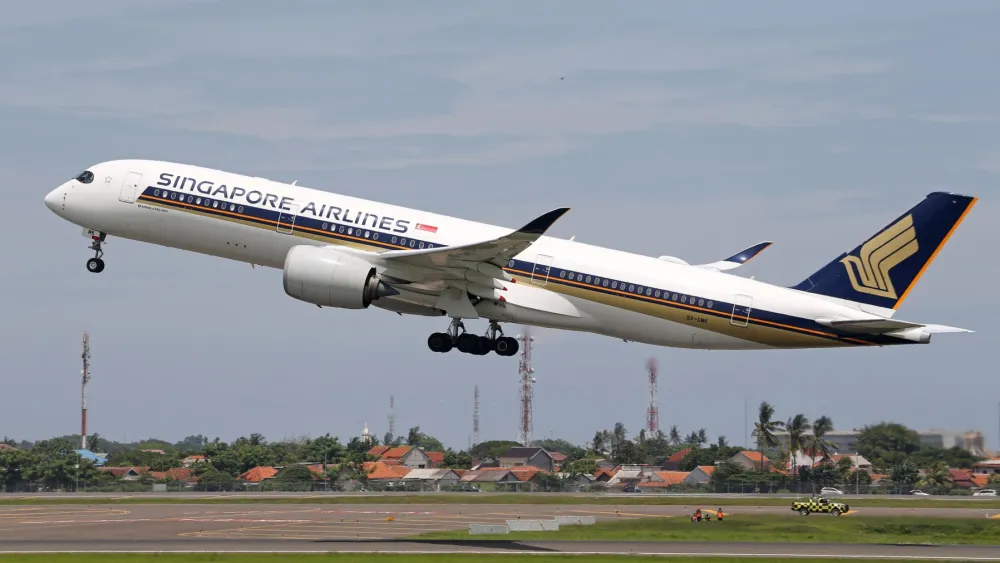
The SIA Group reported an operating profit of $293m in the quarter ending in December, $5m higher compared to last year. However, due a $79m write-down of the Tigerair brand and trademark as well as the absence of a gain from SilkAir’s sale and leaseback of four 737-800s reported last year, its quarterly net profit was down 35.7% to $191m.
Group revenue fell $97m YoY to $3.8b, mainly attributable to lower passenger flown revenue in a weak-yield environment. The Parent Airline Company saw its flown revenue decline by $167m, which was partly compensated by growth from Scoot (+$45m). Cargo and mail revenue improved by $8m, boosted by stronger freight carriage.
The group also reported a contraction in expenditure to $3.5m, as net fuel costs declined largely due to the reduction in fuel hedging loss.
Here's more from SIA:
SilkAir’s operating profit was $3 million lower than last year (-9.1%). Total revenue increased $3 million, as passenger carriage rose 10.1%, partly offset by a 7.4% slide in passenger yield. Capacity expanded 10.4% and passenger load factor fell by 0.3 percentage points to 71.3%. Expenditure increased $6 million on the back of capacity expansion, overshadowing growth in revenue.
Scoot saw its operating profit increase by $2 million compared to the same quarter in the last financial year. Total revenue was up $49 million (+35.5%), bolstered by a 44.3% increase in passenger carriage, albeit diluted by weaker passenger yield (-7.1%). Capacity expanded more rapidly, by 51.8%, resulting in a passenger load factor decline of 4.2 percentage points to 80.8%. Expenditure rose $47 million (+39.2%), while unit cost dropped 8.9%.
Tiger Airways’ operating result remained flat year-on-year. Passenger carriage was constant on the back of a marginal capacity drop (-0.9%), and passenger load factor inched up 0.8 percentage points to 83.9%. Revenue declined by $7 million, primarily due to weaker passenger yield (-5.5%). This was offset by a reduction in expenditure, which was mostly attributable to lower net fuel costs.


























 Read Here
 Advertise
 Sign Up