Singapore to raise building height limits near airports
The actual allowable building height and development intensity are being reviewed.
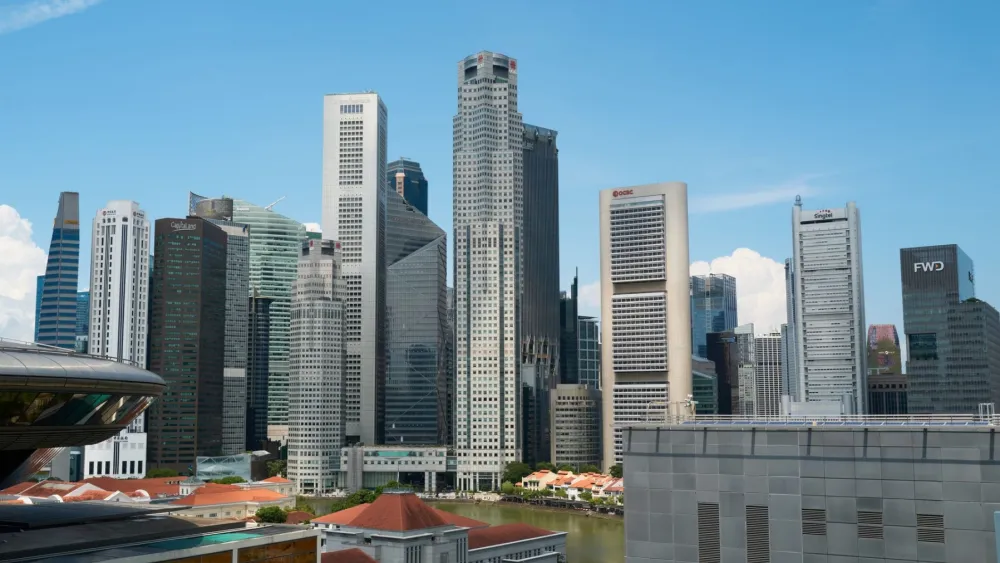
Height restrictions near Singapore’s airports may be raised by as much as 15 storeys for residential developments or up to 9 storeys for industrial and commercial buildings, according to a recent rule revision.
On 5 August 2025, the Civil Aviation Authority of Singapore (CAAS) revised Singapore’s civil aviation regulations to bring into effect the revised set of Standards and Recommended Practices (SARPs) for Obstacle Limitation Surfaces (OLS) in Annex 14 to the Convention on International Civil Aviation.
The revised regulations will enable aircraft operations in Singapore to be safeguarded with more precision according to the specific type of operations at each airport and free up more airspace surrounding airports in Singapore for development. Specifically, this will present opportunities for building height limits and development intensity to be raised in some parts of Singapore.
OLS, which are determined based on Annex 14 to the Convention on International Civil Aviation, define the surfaces or volume of airspace around aerodromes that must be kept free from obstacles to ensure safe aircraft operations and cannot be released for other uses.
In 2013, the International Civil Aviation Organization (ICAO) called for a significant review of the ICAO OLS SARPs. In 2015, an OLS Task Force (OLSTF) was established to undertake this review. The objective of ICAO’s review was to ensure the OLS requirements, which were first established in the 1950s, are effective in protecting airspace around an airport against obstacles such as buildings that could potentially affect aviation safety. Singapore was the chair of the OLSTF since 2017.
The revised OLS SARPs developed by the OLSTF were accepted by the ICAO Council on 28 March 2025 and became effective internationally on 4 August 2025 (Montreal time).
The OLSTF used a data-driven approach, and took into account technological developments in aircraft avionics and air navigation systems. It also sought and incorporated input from States, industry and other ICAO technical panels in its review.
“Singapore is honoured to contribute to this major review including through our chairmanship of the international taskforce. It will support developments and benefit many countries around the world, including for land-scarce Singapore,” Han Kok Juan, Director-General at CAAS said.

























 Read Here
 Advertise
 Sign Up