Punggol turns into live testbed for underwater robotics push
The SIT–BeeX facility will enable real-world trials of autonomous maritime systems.
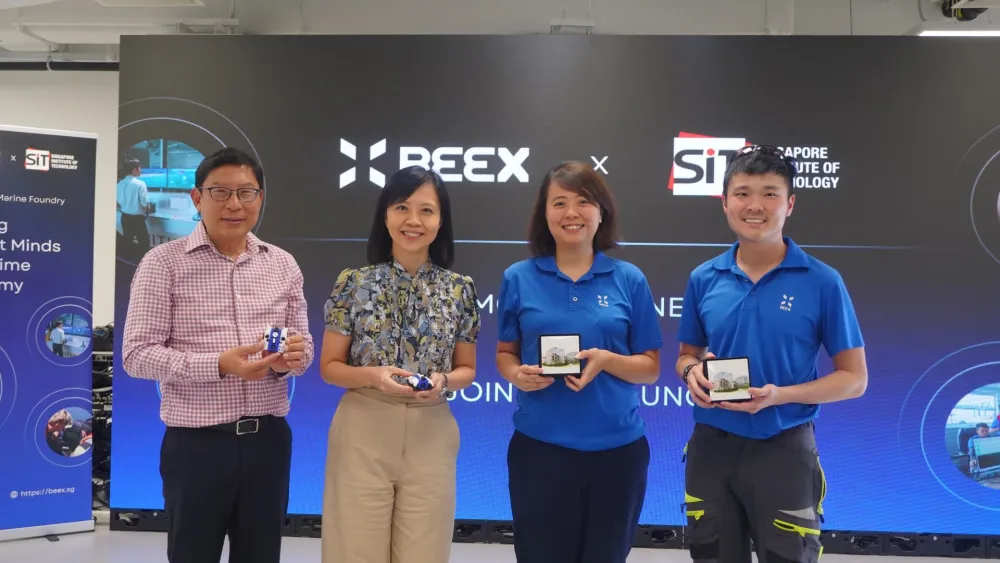
The Singapore Institute of Technology (SIT) and autonomous underwater robotics company BeeX have launched a maritime robotics facility at SIT’s Punggol campus, focused on testing and developing autonomous underwater systems in real-world conditions.
The Autonomous Marine Foundry (AMF) is located within the Punggol Digital District, where autonomous underwater systems will be tested for use cases including infrastructure inspection, environmental monitoring and coastal protection.
The collaboration combines SIT’s applied learning and engineering capabilities with BeeX’s autonomous underwater vehicle technologies.
The partners said the facility will support applied research and system development in maritime robotics.
Testing activities will focus on validating autonomous systems for underwater inspection and coastal monitoring, with an emphasis on translating research outputs into operational applications.
The collaboration will also explore applied research in underwater autonomy, robotics integration and infrastructure monitoring.
This includes the use of autonomous underwater vehicles as sensor platforms for monitoring coastal protection structures and detecting anomalies.
Talent development forms part of the initiative. SIT students will participate in Integrated Work Study Programme (IWSP) attachments, capstone projects, and mentorships with BeeX engineers working on robotics and autonomous systems.
Students from SIT will also take part in the 2026 Maritime RobotX Challenge in Singapore as part of Team OtiPrime, with BeeX providing technical guidance in autonomous systems, sensing and robotics integration.
SIT and BeeX said they will also develop workshops and applied learning programmes focused on robotics engineering.



























 Read Here
 Advertise
 Sign Up