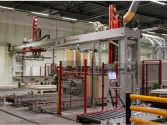
Here’s why the Australian property market is luring struggling S-REITs
It’s got superior lease terms and continuous demand.
Struggling Singapore REITs (S-REITs) in the industrial space will likely find greener pastures in Australia.
According to a report by Moody’s, S-REITs on the prowl for overseas investments will likely gravitate towards Australia, given the country’s mature, stable and well-regulated real estate environment.
In 2016, Australian industrial supply will likely enjoy sustained demand for logistic and distribution centre space in 2016. Moody’s cited property services Colliers International, stating that about 1.8m sqm of industrial property was in the development pipeline last year, the highest level since 2009.
Moreover, Australian lease terms are usually more attractive than that of Singapore assets. Typical rental structure include annual rental escalations of at least 3% to 4% in Australia, compared with 1% to 2% in Singapore. The high-quality assets that S-REITs acquired in Australia typically have longer lease tenure of five to seven years, compared with one to three years in Singapore.
Australian warehousing and logistics assets are also typically located on freehold land, which lengthens industrial REITs’ weighted average land lease to expiry. Contrast this with Singapore industrial lands, which are typically leasehold for 30 to 60 years.























 Read Here
 Advertise
 Sign Up