What a "New World" order means to Singapore
By Raymond FooSingapore has enjoyed stability and prosperity since independence for numerous decades. A peaceful environment coupled with business friendly policies have allowed the country to flourish and attract foreign direct investment.
With a vibrant economy, the country is able to invest in its citizens through increasing human capital, which further enhance our competitiveness in the global economy.
To continuously provide for her citizens, Singapore has to remain relevant to the world. Such path would inevitably mean the need to place the country in the node of the global network.
Cosmopolitan workforce and society
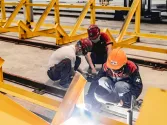
By creating a global outlook in Singapore, there is a need to welcome international talents to our shores. Likewise, to meet the demand for infrastructure development, we will need to welcome foreign labors and mid-skilled workers to our country to help us develop our nation as a whole.
With myriad of complementary skills sets, our country can become an attractive business hub for businesses to deep root in our home.
This would eventually lead to a more cosmopolitan workforce with workers of diverse backgrounds and cultures. Our living landscape will therefore be shaped as new entrants add diversity to our existing way of life.
There will be places where new migrants and workers gathered together and form ethnic enclaves. This is common in societies around the world, such as Chinatown in European capital cities and North American countries.
Remaining Vigilant in a “New World” order
The continuous and endless integration of new cultures often spark off a society that slowly sheds its past and perhaps leading to a “New World “ order. Some segments of the society may develop their own informal rules and tacit knowledge of ideas.
Their constant interaction in the enclave areas can potentially create strong shared bonding among the group. After all, these new migrant labors have similar destiny of coming to Singapore to strive for a living.
The crowding of certain ethnic in a particular group over time created an “imagined community” through some level of mental affinity even without day to day contact as discussed by Benedict Anderson in his book, “ Imagined Communities”.
It is a cycle that countries will have to handle and cope as power relations in a more cosmopolitan society become tangled and complex. Unless a country becomes homogenous even in its course of development like the case of Japan, sensitive issues from a complex mix of labor force in a country cannot be avoided.
Singapore unlike Japan does not have a large domestic demand or talent base to kick-start and sustain its development and thus would be risky to have a “less” open economy than its current state.
Endless pursuit for Stability
Despite such complexity in governing a more plural society, it is not an impossible task. External uprising of power struggle and violence can have ripple effect on individual’s pursue of rights and strength unconsciously. The need to balance domestic demands and nation development is an uphill task.
Nevertheless, the rational goal is always to reach a path of stability as it creates certainty to investors and our community. A torn fabric in the society is tough to mend but not impossible to heal.
There is a need for members in the community not to amplify resentment or violence, which are seeds to unsettle the foundation we have built thus far.
Singapore is bound to face challenging social issues and unrest in its course of development. This new development will challenge the status quo of our society conditions and even excites us from time to time; however, we must retain our core values towards building a cohesive and stable society.
With these guiding values, the future challenges ahead of Singapore can be surmounted as a nation.





















 Read Here
 Advertise
 Sign Up