Singapore banks’ asset quality to be hit by prolonged Ukraine invasion
Risks related to Russian energy exposure remain the biggest issue for global markets.
Singapore banks face a possible negative impact on their asset qualities should uncertainties arising by the Ukraine invasion by Russia persist.
“If the uncertainty extends over time, it might have some negative impact on banks’ asset quality, all the more so to those countries with close ties with Russia. The most obvious in Singapore since Russian energy companies are present there,” Alicia Garcia Herrero, Natixis’ chief economist for the Asia Pacific, told Singapore Business Review.
Overall, however, Asia’s financial markets—including that of Singapore—are generally not very exposed to Russian-related risks, according to Natixis’ Garcia Herrero.
“We only have Rusal in the Hangseng and very few syndicated loans,” she noted.
Garcia Herrero said that banks' biggest risk is if Russian financial institutions are moved out of SWIFT, as well as any sanctions on Russian debt secondary trading.
More generally, if the conflict is extended, Garcia Herrera said that it may be unlikely for the US Federal Reserve to hike 50 basis points given the uncertainty, even if the 40% hike in gas prices would probably warrant the hike more than before.
Energy woes
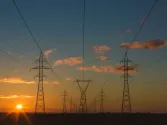
The energy sector has been named as amongst the likeliest to be severely hit by the Ukraine invasion.
Kelly Bogdanova, vice president and portfolio analyst at RBC Wealth Management, said that energy sector risks are ever-present, especially if sanctions hit the Russian energy sector, or if the pipeline carrying natural gas from Russia, via Ukraine, to Europe is damaged.
“The RBC Capital Markets commodity team points out that there is not enough spare liquefied natural gas capacity to replace Russian pipeline gas should pipeline to Europe be cut off. Furthermore, natural gas storage levels in Europe are much lower than normal—there is little room to maneuver,” Bogdanova warned.
Half of Europe’s energy supplies originate in Russia, and in the interim, global energy prices have grown volatile given the conflict, with oil prices soaring to $100 per barrel, reported American asset manager Nuveen. “We expect high energy prices to cause further inflationary pressure in the U.S. and globally, even as winter begins to thaw,” the report read.
Apart from the energy sector, uncertainties around the severity of sanctions to be imposed add risks for the equity markets, as well as the agriculture and metals markets, and global economic growth in general, according to RBC Wealth Management’s Bogdanova.



























 Read Here
 Advertise
 Sign Up