Short work-weeks hit 1,230 at a four-year high
Affected workers rose from 960 in the previous quarter.
Employers increasingly turned to short work-weeks and temporary layoffs in the first quarter (Q1) of 2026, with the number of affected workers rising to 1,230, the highest level since the fourth quarter (Q4) of 2021, according to Ministry of Manpower (MOM) Labour Market Survey.
The figure marked the fourth consecutive quarterly increase, up from 960 in the previous quarter and nearly double the 620 recorded in the second quarter (Q2) of 2025.
The increase was driven mainly by the construction and manufacturing sectors with the number of affected workers in construction rising to 390 from 80, whilst manufacturing increased to 260 from 170.
By occupation, the largest increase was amongst production and transport operators, cleaners, and labourers, where the number climbed to 710 from 350.
Most affected employees were placed on short work-weeks rather than temporary layoffs with workers on short work-weeks increasing to 940 in Q1 2026 from 680 in the Q4 2025.
Non-PMETs continued to account for the majority of employees on short work-weeks, at around 700 workers during the quarter.
MOM said the rise in short work-week and temporary layoff arrangements came despite low retrenchment levels and a still-robust vacancy market, as firms used reduced working hours to manage temporary shifts in manpower demand.
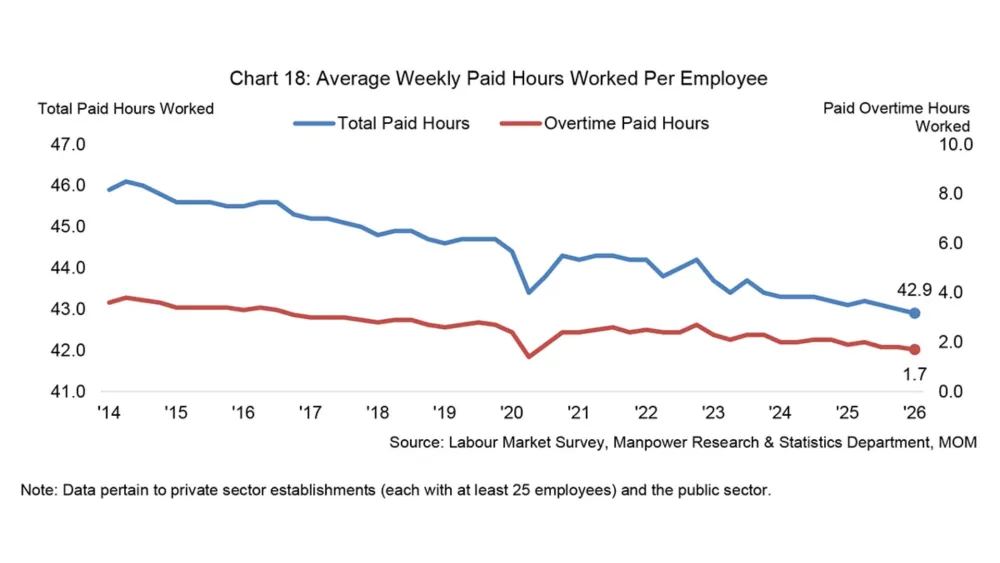
The ministry also noted that average weekly total paid hours worked per employee continued to decline, falling to 42.9 hours in March 2026 from 43.2 hours in June 2025.



























 Read Here
 Advertise
 Sign Up