Singapore’s 55% Mid-East oil reliance threatens 3% GDP target
Analysts warned that a full-scale conflict may raise local production costs.
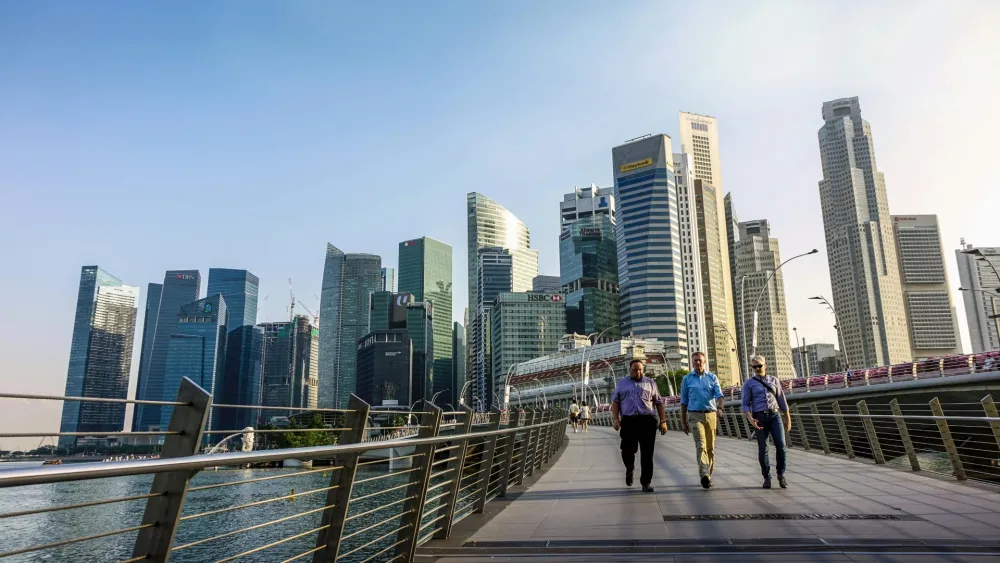
Escalating Middle East tensions threaten Singapore’s economic outlook, as the city-state’s heavy dependence on imported energy could lead to higher costs, inflation, and slower growth if conflicts disrupt supply, RHB said.
“We are most cautious on Singapore,” analysts said. “An escalation of the conflict poses significant risks to global energy markets, with direct implications for Singapore’s highly import-dependent economy."
RHB said that if the situation persists, it could create downside risks to Singapore’s full-year gross domestic product (GDP) growth, currently projected at 3.0%. Headline and core inflation are forecasted at 1.5% for 2026, though the bank highlighted potential upside risks given global price pressures.
The report also noted that during the pre-Lehman period (Jan 2007 – Jun 2008), a 1% rise in Brent crude prices corresponded with a 0.16 percentage point decline in industrial production (IP) and a 0.09 percentage point increase in consumer price index (CPI).
More recently, during the Russia-Ukraine conflict (Nov 2021 – May 2022), a 10% increase in Brent prices led to a 0.6 percentage point drop in Singapore’s IP and a 1.0 percentage point rise in CPI.
Despite these risks, RHB maintains its 2026 full-year IP growth forecast at 4.0%, whilst cautioning that uncertainties in the global geopolitical landscape could affect outcomes.
UOB Global Economics and Markets Research earlier said that the Middle East conflict will likely impact inflation more than growth in the near term.
About 7–8% of Singapore’s CPI is linked to oil and gas, including electricity, gas, petrol, transport, and airfares.
UOB expects the Monetary Authority of Singapore (MAS) may raise the S$NEER band slope by 50bps at the April 2026 MPS, though a July adjustment is also possible.
Deputy Prime Minister and Minister for Trade and Industry Gan Kim Yong also said the conflict could prompt a reassessment of Singapore’s GDP.
The Ministry of Trade and Industry (MTI) recently upgraded its 2026 GDP forecast to 2–4%, up from 1–3%. RHB maintains its full-year forecast at 3%, noting Singapore has limited direct exposure to the Middle East in trade and tourism. A full-scale conflict, however, could push up oil prices, raising production costs and inflation.
Senior Minister Lee Hsien Loong also highlighted that energy price increases from the conflict will affect countries beyond the Middle East. Singapore imports up to 55% of its crude from the region, making it moderately vulnerable. UOB warned that every $12.80 (US$10) per barrel increase in oil could lift core inflation by 30–40bps.
RHB said Singapore’s export performance in 2026 remains optimistic but cautioned on global uncertainties.
On monetary policy, market swap pricing indicates a 58.2% chance of a US Federal Reserve rate hike in October 2026, compared with prior expectations of at least two cuts by December.
RHB continues to expect two FFR cuts but sees a slightly higher probability of a 25 basis point cut in the second half of 2026.
Cross-economy inflation signals remain mixed. Japan’s CPI eased to 1.3% YoY in February, whilst UK CPI held steady at 3.0%.
In contrast, higher US import prices (+1.3% MoM) and rising unit labor costs in 4Q25 suggest inflationary pressures had already been building before the recent oil price spikes.
Regionally, RHB views Malaysia as the least impacted ASEAN economy, whilst Singapore faces the greatest vulnerability.
Meanwhile, Indonesia’s exposure is expected to remain contained, supported by diversified energy sourcing, whereas Thailand may experience more significant impacts due to higher energy intensity and external dependence.




















 Read Here
 Advertise
 Sign Up