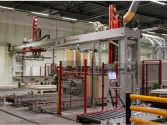
Trade-related sectors may slow as 2026 growth moderates
Manufacturing and trade activity were key drivers of the recent 5.3% and 5% expansions.
Singapore’s economy, after expanding 5.3% and 5% in the past two years, is expected to continue its performance in 2026, raising questions about whether the city-state is experiencing a structural uplift in growth potential, DBS analysts said.
Concerns about an aging population, deglobalisation, geopolitical tensions, and climate change remain, whilst recent economic trends have shown steady growth.
Much of the recent expansion has been supported by cyclical factors, such as surging demand for electronics exports.
“It is an entirely different matter to assert that the economy is undergoing a structural upshift in potential GDP growth rate,” DBS said. “For an economy already characterised by one of the highest per capita income levels in the world, that would be a striking claim.”
Growth in manufacturing and trade‑related sectors may slow compared with the previous year, even as AI‑related investment, infrastructure spending, and resilient electronics and biomedical production continue to support output, Maybank said in its previous report.
It also cited external demand and ongoing construction activity as factors likely to sustain momentum early in the year.
UOB and RHB also earlier said Singapore’s robust performance in 2025 may not fully carry over into 2026, with growth expected to moderate amid emerging trade risks and a slowing global trade cycle.
DBS said potential GDP growth typically comes from changes in demographics, capital formation, and productivity. “Singapore has a constrained yet productive labour force, especially in manufacturing.”
Whilst no general uptrend in labour productivity is visible, productivity in the information and communications technology sector has picked up noticeably in recent years.
Meanwhile, foreign direct investment (FDI) flows in 2024 reached $192b, double the level seen a decade ago, with substantial funds channelled into electronics and pharmaceuticals manufacturing. Finance and insurance remain the largest recipients of FDI.
A key driver of potential growth beyond efficient labour and capital allocation is the adoption of technology and innovation.
Economists refer to this as total factor productivity (TFP), which measures the portion of output growth that cannot be explained by changes in labour or capital inputs. TFP reflects factors such as technological progress and improvements in production organization, meaning that higher productivity allows the economy to produce more output with the same or fewer inputs.
Data from Singapore’s Department of Statistics showed that after a 15-year period of modest TFP growth averaging 0.7% annually prior to the pandemic, the metric surged to an average of 2.8% over the past two years—accounting for more than half of the country’s recent economic growth.
“Given the buoyant trend in investments and ongoing technology adoption, especially related to artificial intelligence, we are hopeful that the trend would continue in the coming years,” the report said.
“An uplift in growth potential would be a testament to long-term policy making in improving the capital stock, human capital, and harnessing technological progress,” it added.

























 Read Here
 Advertise
 Sign Up