Johor-Singapore SEZ expected to boost cross-border investment
The country accounted for almost two-thirds of the region’s total inflows.
New initiatives such as the Johor-Singapore Special Economic Zone (JS-SEZ) are expected to support further cross-border investment and operational integration, according to UOB Global Economics & Markets Research.
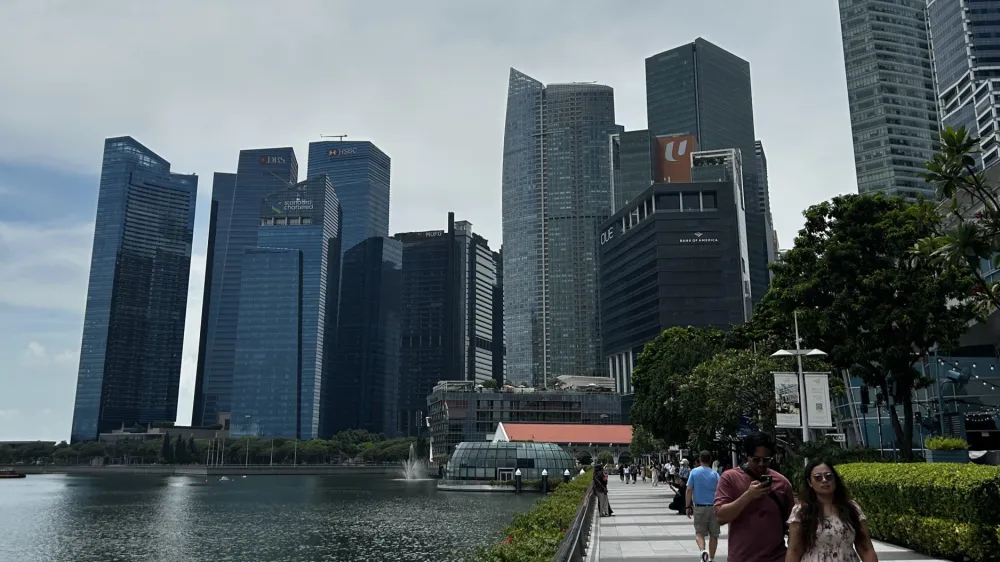
Foreign direct investment (FDI) into Singapore reached a record high of $181.0b (US$143b) in 2024, rising 6% year-on-year (YoY) and reinforcing the city-state’s role as ASEAN’s primary investment destination.
The increase marks Singapore as the second largest recipient of FDI globally, just behind the United States, UOB said, citing the latest UNCTAD World Investment Report.
The strong performance was attributed to Singapore’s position as a regional financial hub and preferred base for headquarters and treasury centres, backed by political stability, infrastructure, and clear policy direction.
FDI to the broader ASEAN bloc grew nearly 10% YoY to $284.8b (US$225b) in 2024, its second-highest level on record.
Singapore accounted for almost two-thirds of the region’s total inflows.
By contrast, global FDI rose just 3.7%, and when adjusted for financial conduit flows in Europe, global inflows actually declined 11%. This was the second straight year of double-digit contraction.
Looking ahead, UOB maintains a positive outlook for ASEAN’s investment prospects, citing the region’s economic fundamentals and policy coordination.
Whilst ASEAN’s average GDP growth may slow to around 4% in 2025, UOB expects a recovery to 5% in 2026 as the region continues to attract capital amidst global supply chain reconfigurations and trade realignments.
Singapore is expected to retain its leading role in this shift, driven by ongoing investor confidence and its connectivity across the region.

























 Read Here
 Advertise
 Sign Up