Wealth inequality in Singapore surpasses other APAC nations
Inequality rose by 22.9% between 2008-2023.
Wealth inequality in Singapore has surged by almost 30% from 2008 to 2023, surpassing that of Asia-Pacific neighbours, including Indonesia, Hong Kong, Taiwan, and Mainland China.
The UBS Wealth Report 2024 measures the level of wealth inequality in markets by the Gini coefficient, which for Singapore hit 70 in 2023, up from 57 in 2008.
UBS clarified that rising inequality in Singapore doesn't mean the inhabitants in the nation are "worse off" than those in Hong Kong SAR, where inequality has decreased by nearly 6%.
“Inequality benefits from being combined with absolute wealth levels to paint a comprehensive picture of a society's wealth profile,” UBS said.
Inequality has risen concurrently with Singapore’s average wealth, according to the UBS Wealth Report 2024.
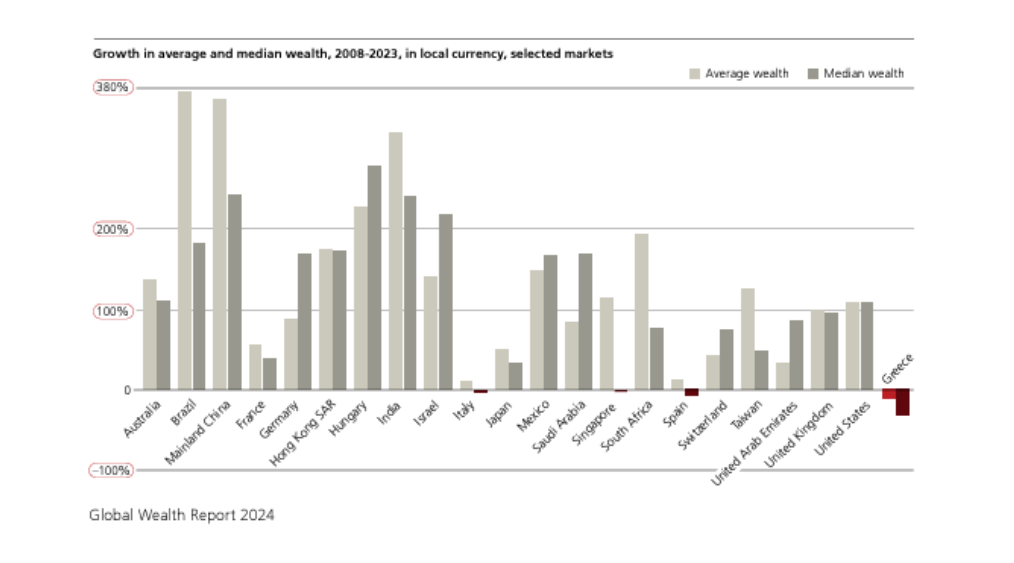
Between 2008 and 2023, Singapore recorded an average wealth growth of 116%. The average wealth of adults in Singapore is US$397,708.
Meanwhile, the number of USD millionaires in Singapore has reached 333,204 in 2023 and is expected to increase by 13% to 375,725 in 2028.
“Most of the rise in wealth has benefited the upper-income brackets,” UBS reported.

























 Read Here
 Advertise
 Sign Up