Equity market faces momentum risks amidst Middle East tensions
The global market backdrop also contributed to investor caution.
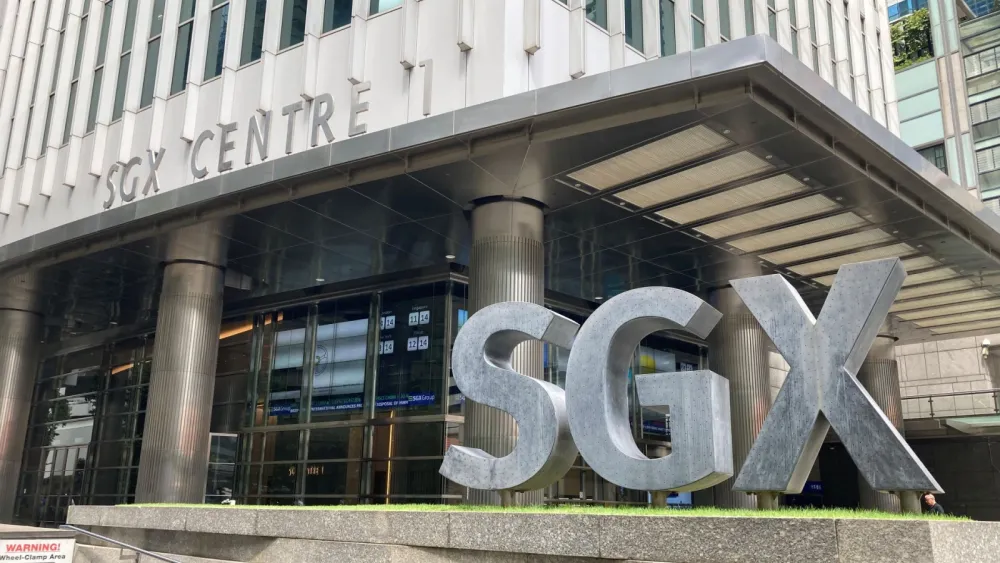
Tensions in the Middle East could weigh on Singapore’s market momentum in the coming weeks, even as the Straits Times Index (STI) rose 1.8% month-on-month in February to close at 4,995.07, briefly hitting a record high of 5,041.33, according to a report by UOB.
Selective stock strength helped offset mixed banking sector earnings, with strong corporate results and upcoming initial public offerings providing support.
Corporate earnings were a key driver of the STI rebound. Yangzijiang Shipbuilding emerged as the top performer, posting a 24.6% increase in the second half of 2025 profit (2H25) and full-year earnings up 30.2% year-on-year, supported by a strong orderbook and higher newbuild prices. Seatrium saw full-year profits double in 2025, driven by improved margins and a rebound in oil and gas activity.
UOL Group also reported higher 2H25 profits and proposed a special dividend, whilst Singapore Airlines delivered stronger operating profits on record-high revenue, though net earnings declined due to the absence of prior-year one-off gains
Banking results were mixed, with UOB reporting weaker fourth quarter profits amidst margin compression, whilst OCBC slightly exceeded expectations.
Singapore’s manufacturing sector remained resilient, providing additional support for the equity market. UOB said that the purchasing managers’ index edged up to 50.6 in February, marking the seventh consecutive month of mild expansion.
Growth was driven by new orders, exports, and employment, though factory output and input purchases expanded at a slower pace.
Demand from the electronics and semiconductor cluster continued to be a key driver, whilst supplier deliveries lengthened for the second consecutive month amidst geopolitical uncertainties.
The global market backdrop also contributed to investor caution. Wall Street posted a softer month, with the S&P 500 down 0.5% and the Nasdaq Composite declining 0.9%, as concerns over AI stock valuations weighed on technology sectors.
Geopolitical tensions in the Middle East, following US and Israeli strikes on Iran, have raised concerns about potential disruptions to oil supplies through the Strait of Hormuz, reducing expectations for near-term US Federal Reserve rate cuts, according to UOB.
A report by DBS Insights Direct said that STI and sector performance could shift depending on Middle East developments. Technical support levels of 4,760–4,800 may provide buying opportunities if tensions remain short-lived, whilst elevated oil prices and ongoing uncertainty could weigh on transport and interest rate-sensitive sectors.
Investors are advised to buy on market dips, supported by attractive dividend yields and Singapore’s safe-haven status, which could mitigate volatility.
Analysts also identified potential winners in the defence sector (ST Engineering), defensive high-yield names (Netlink), and oil & gas-related companies (Nam Cheong, Seatrium) if tensions persist. Interest-rate-sensitive REITs may be pressured by an uncertain Federal Reserve outlook, while technology stocks could benefit from ongoing AI tailwinds.
DBR also pointed to opportunities in resilient companies amidst macro uncertainty. Favoured names included IFAST, SATS, high dividend-paying stocks such as OCBC, and value-unlocking companies including UOL and City Developments (CityDev).
Small- and mid-cap equities were expected to remain supported by the additional $1.5b equity injection program, with UMS Integration and Netlink cited for earnings growth and resilient yields.
DBR raised its year-end 2026 STI target to 5,250, representing roughly 7% upside, based on a projected FY27 price-to-earnings ratio of 15.3x, assuming Middle East tensions remain short-lived.























 Read Here
 Advertise
 Sign Up