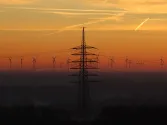
Government extends schemes made to boost ownership of cleaner-energy vehicles
The incentive schemes were due to expire on 31 December 2025.
The Land Transport Authority (LTA) and the National Environment Agency (NEA) announced the extension of the Vehicular Emissions Scheme (VES) and the Electric Vehicle (EV) Early Adoption Incentive (EEAI).
Both schemes supported Singapore’s vision of 100% cleaner-energy vehicles by 2040 and were due to expire on 31 December 2025.
VES will be extended from 1 January 2026 to 31 December 2027, with revisions to its banding, rebates and surcharges.
The EEAI will be extended until 31 December 2026 and will cease on 1 January 2027.
According to the joint statement of LTA and NEA, the adoption of cleaner-energy vehicles has seen an upward trend over the past few years. From January to August 2025, 80% of newly registered cars and taxis were cleaner energy models, with about half being electric models. This is encouraging as electric vehicles (EVs) do not generate tailpipe emissions and are the cleanest vehicle option.
Both schemes were also revised to provide lower rebates.
For the VES, it was also announced that only EVs will receive rebates. Hybrid vehicles will no longer receive rebates, while the more polluting vehicles will have higher surcharges.
For the EEAI, the LTA and NEA said that it will cease to exist by 2027 due to the increase in adoption of EVs and the narrowing cost gap between electric and internal combustion engine cars and taxis.
Considering all the revisions, the maximum combined rebate for EV buyers from both schemes will be $30,000, down from the current $40,000 by 2026. This will drop to $20,000 in 2027, after the EEAI ends.
LTA and NEA said that they expect “a short-term increase in certificate of entitlement (COE) prices.” They also encouraged potential car buyers to be prudent in bidding.























 Read Here
 Advertise
 Sign Up