Pricier mortgages loom as banks move to offset dismal lending
Some banks have been reportedly scrapping fixed deposit linked packages in favor of Sibor pegged packages.
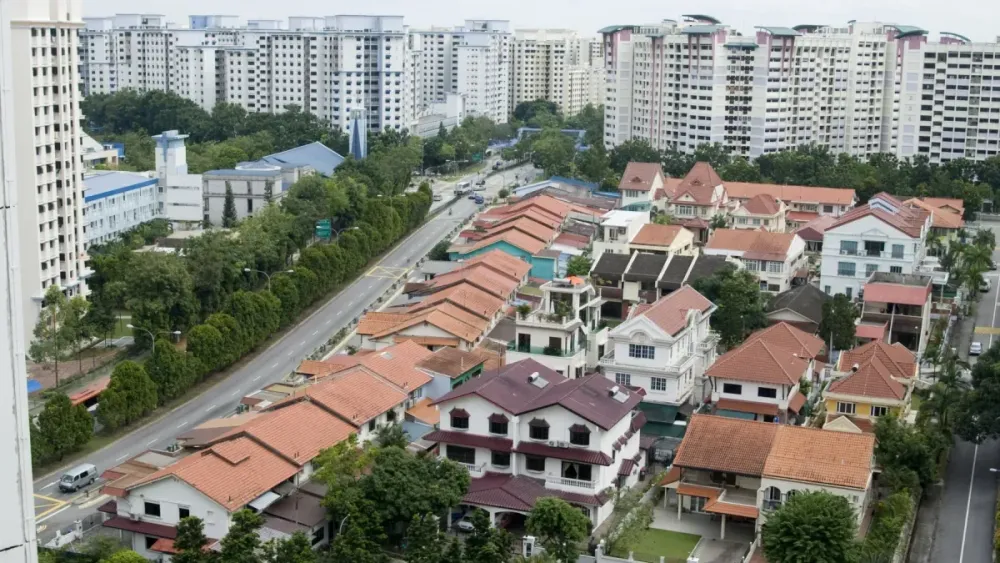
Banks may compensate for slower loan growth by pricing their mortgage packages higher following surprise policies unveiled by the government to slow down runaway residential prices in Singapore.
Also read: Should Singapore anticipate more cooling measures?
In fact, Mortgage Consultancy Pte Ltd reports that a number of banks have been withdrawing fixed deposit linked packages and replacing them with Sibor pegged and board rate packages that are more in line with market movements.
“Given the extent of the new cooling measures, we expect the home loans demand to be subdued. Our interest rates will continue to be competitive to the market,” OCBC’s head of group of corporate communications Koh Ching Ching said when asked for comment.
DBS offers FHR8 at 0.20% whilst UOB offers FDPR_14% at 0.25%. Maybank and OCBC do not offer FD rates anymore. Foreign lenders Standard Chartered Bank (Singapore) offers FDR36 at 0.72% whilst HSBC offers TDMR24 at 0.65%, Redbrick Mortgage Advisory director Eugene Huang told Singapore Business Review.
The government earlier raised the rates for the Additional Buyers’ Stamp Duty (ABSD) and tightened Loan-to-Value (LTV) limits on home purchases as a way to cool the heated property market, prompting panic buying and developer stock corrections following the surprise announcement.
This comes as the overall private residential property price index rose at the faster pace at 3.9% in Q1 following slight increases of 0.8% in Q4 of 2017 and 0.7% in Q3 of 2017, raising concerns of a possible housing bubble.
Also read: Home prices could jump 20% in 2018: Savills
With cooling measures in place, the more immediate impact on banks is expected to manifest through slower loan growth as less property developers and first-time buyers are poised to turn to banks to finance their home aspirations.
“The new property measures imposed recently would dampen demand in the short-term, but we believe long-term revenue prospects remain good owing to rising interest rates,” said Ivan Tan, analyst at S&P Global Ratings.
The property curbs would impact the banking sector's housing loans which account for around 23-28% of total loans and advances, according to Maybank Kim Eng. Working capital loans for the construction and general manufacturing sector are also likely to be affected by the cooling measures.
Out of the three largest banks, UOB is expected to bear the brunt of the fallout as it has the highest exposure to housing loans at 27.6% of its total loan portfolio whilst DBS has the least exposure at 22.1%.
However, asset quality is set to improve, reports Moody’s Investors Service, especially in newly originated housing loans as there will be less chance of defaults and slippages even though the overall banking system’s non performing loans already stands at a low level 0.4% as of Q1.
"[A]gainst a backdrop of rising interest rates, oncoming abundance of housing supply and global trade wars disrupting economical growth, the improvements in asset quality will do well to better protect banks, home owners and borrowers in the longer run," said Keff Hui, broker from Mortgage Supermart.
“Cooling measures do not necessarily help banks make more money. Instead, it helps them prevent losses,” Redbrick's Huang added.
“Again referring to MAS’ Data on Housing and Bridging Loans in Q1 2018, average LTV is at 53%, and with TDSR in place, it is very secure. This helps to assure that banks would not be at risk of high delinquency rates for mortgages.”

























 Read Here
 Advertise
 Sign Up