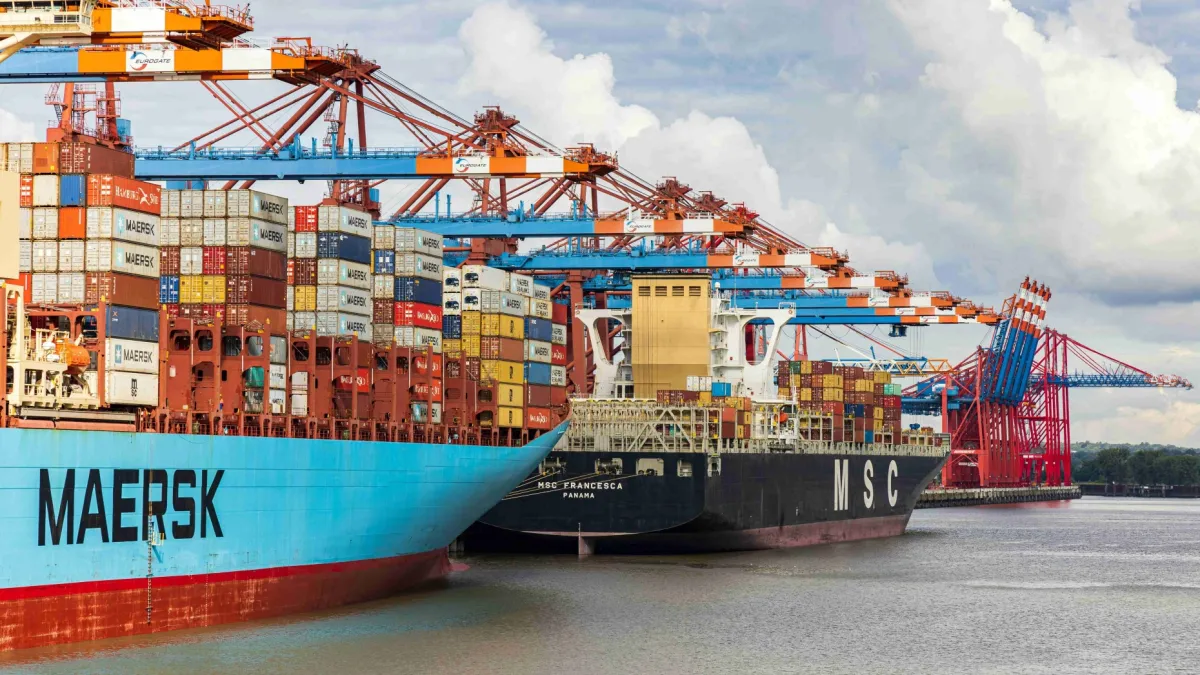
Maritime market to hit $24.47b by 2031 as automation reshapes ports
Tuas Port eyes 65 million TEUs of annual capacity by the 2040s.
Singapore's maritime sector is projected to grow to $24.47b (US$18.97b) by 2031 from $19.88b (US$15.41b) in 2026, expanding 4.25% annually, supported by automation, digitalisation, and expanding alternative fuel infrastructure, according to Mordor Intelligence.
Container throughput reached a record 41.12-million twenty-foot equivalent units (TEUs) in 2024, with about 85% of the volume comprising transhipment cargo.
The report said automation at Tuas Port, the adoption of electronic bunker-delivery notes, and the development of green shipping corridors are expected to support expansion over the forecast period.
Tuas Port, which is being developed as a fully automated facility, is targeted to handle up to 65 million TEUs annually by the 2040s, consolidating operations from four existing terminals and deploying automated guided vehicles, remote-controlled cranes, and digital twin technology.
Port and terminal operations accounted for 40.78% of sector revenue in 2025, making them the largest activity segment.
Bunkering services are forecast to record the fastest growth, with a compound annual growth rate (CAGR) of 4.62% through 2031, supported by rising demand for liquefied natural gas, methanol, and ammonia as marine fuels.
Singapore sold 54.92 million tonnes of bunker fuel in 2024, representing about 20% of global marine fuel demand, Mordor Intelligence said.
The mandatory use of electronic bunker-delivery notes from April 2025 replaced paper documentation and is expected to improve transaction efficiency and reduce fraud risks.
By vessel type, container vessels accounted for 47.92% of market revenue in 2025, whilst tankers are projected to post a CAGR of 4.36% through 2031 as ammonia and methanol logistics expand.
The electronics and semiconductors sector remained the largest end-user industry, contributing 30.86% of revenue in 2025.
Retail and e-commerce are expected to register the fastest growth at a CAGR of 4.66%, driven by demand for faster fulfilment and integrated air-sea logistics.
The report said rising carbon costs, congestion stemming from Red Sea disruptions, and intensifying competition from regional ports could weigh on growth.
(US$1 = SG$1.29)



























 Read Here
 Advertise
 Sign Up