Merchantrade Asia nabs Fintech - Financial Services Award at Malaysia Technology Excellence Awards

With its non-bank prepaid card, customers can store pre-loaded Malaysian Ringgit and digitally convert into 20 currencies.

Malaysia's leading money transfer, retail and foreign currency exchange company Merchantrade Asia recently took home the Fintech - Financial Services trophy at the recently concluded Malaysia Technology Excellence Awards.

The inaugural awards event honours enterprises that take risks and lead the charge in developing groundbreaking projects, digital services, reimagined strategies, and technological initiatives. Winners were judged on the basis of uniqueness and innovation, effectiveness and impact, and dynamism.

In January 2018, Merchantrade Money made its debut as a full-fledged digital wallet in collaboration with global payments technology partner VISA. It is the first Non-bank Multi-currency Prepaid card in Malaysia with a wallet size of MYR10,000, holding up to 20 currencies at a time.

Cindy Loo (Executive Vice President – Payments) said that Merchantrade Money offers a valuable proposition to travelers, students studying abroad, online shoppers and parents with children studying abroad.

For those traveling, the card allows customers to store pre-loaded Malaysian Ringgit and digitally convert into 20 currencies for payments.

The multi-currency feature is a secure alternative to carrying foreign currencies, and customers have the flexibility to spend overseas and utilise currencies based on locked-in rates.

“I’m able to manage my money and spending on the go. Plus access to my wallet and other services anytime, anywhere. Everything is so convenient with just a few clicks away and it’s safe and secure,” a social media influencer commented.

Cindy added that the feature also allows maximisation of value as the exchange rates to convert the Ringgit are much better than the exchange rates for conversion into physical foreign currency notes. This means customers do not feel the burden of high mark-ups charged by payment companies when spending overseas.

Effectively, customers are able to realise some savings on overseas spending using digital currencies versus using their credit card for overseas purchases, she added.

Merchantrade Money has also became popular with the professionals especially parents with children studying or living overseas. With just a single click parents are able to do an instant card-to-card transfer at zero cost – convenient and cost-efficient to their children.

Currently, Merchantrade Money is accepted at over 46 million VISA merchants worldwide. Customers can top up and withdraw via online banking, as well as manage security features via the app - block and change PIN/passcode.

Aside from being available in 6 languages and having a user-friendly interface, the company said that customers can look forward to more innovative financial products such as insurance through the app in the near future.

Since its launch in January last year, Merchantrade Money still leads the race and gained massive growth in registration and is showing signs to triple its current growth trajectory, which is more than RM700 million in top-ups.

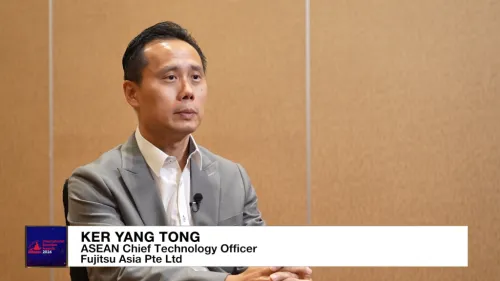
Watch the interview below to know more about their winning projects:

The Malaysia Technology Excellence Awards, presented by Singapore Business Review, was held on 3 December 2019 at Shangri-La Hotel, Kuala Lumpur.

This year's nominations were judged by a panel consisting of Alvin SH Gan, Executive Director, Partner, and Head of IT Enabled Transformation (ITeT) at KPMG Malaysia; Yoon Hoong Hoh, Partner, ASEAN Digital Assurance Leader, and Head of Diversified, Technology and Communications Group at Ernst & Young; Justin Ong, Partner and FSI Financial and Regulatory Risk Leader at Deloitte Asia Pacific; Hari Iyerm, Executive Director of Advisory at BDO Kuala Lumpur.

If you would like to join the 2020 awards and be acclaimed for your company’s exceptional technology innovations, please email [email protected]

Can Singapore cement its data centre dominance before Asian upstarts steal crown?

Heated demand for storage facilities is hit by the city's limited land supply.

With over 2.5 billion gigabytes of data generated every day, Singapore is making another case for punching above its weight as it zeroes in to capture the opportunity from data centres brought about by the world's growing connectivity. 

Facebook's decision to invest $1.4b for its first Asian data centre in the city state is the latest high-profile example adding to the growing names of tech titans like Google, Alibaba Cloud and Yahoo who have found a supportive environment in Singapore with which to build large-scale storage facilities for their servers.

Hailed as the most robust Asian market in terms of business operations for data centres by Cushman & Wakefield where it ranks ahead of South Korea, Japan and Australia, Singapore's data centre capacity towers over its regional peers at around 370 megawatts (MW) of IT power supply amongst co-location operators.

“Singapore’s location makes it an ideal site for edge networking in the SEA region, allowing lower latency and better user experiences for consumers,” Tom Duncan, executive director, data centres Asia Pacific at CBRE told Singapore Business Review.

To respond to the growing amount of data being generated and exchanged on a daily basis, the Lion City is expected to expand its data centre capacity by another 100 MW over the medium term as the government doubles down to implement its Smart Nation programme to the benefit of local data centre providers ilke Singtel, Keppel Data Centres and ST Telemedia.

Driving the heated demand for data centres is the e-commerce boom as well as the shift towards flexible working arrangements propelled by the likes of WeWork, NakedHub and Regus who are increasingly outsourcing for their growing data requirements, observed Boon Leong Tan, executive director and head of industrial services at Knight Frank Singapore.

“Companies that are used to have their own data rooms, now they will just outsource it to data centres," saidTan.

An outsourced or co-located data centre, as opposed to a captive one built for internal purposes, is a facility where businesses can rent the space and hosting services for their servers whilst the external provider answers to the security, power and cooling needs, according to market research firm Frost & Sullivan.

Corporate clients have been steadily embracing outsourced data centres due to their flexibility and lower upfront costs as the proportion of outsourced data centres in Asia-Pacific surged from 12% in 2013 to 39% in 2018 in line with the same upward trend observed in Western Europe and USA, according to a report from PwC.

In fact, Singapore's outsourced data centre market generated an estimated $1.3b (US$934m) in 2017, according to Canada-based research company Structure Research, with the market poised to grow at a 12% compound annual growth rate (CAGR) of 12% to $2b (US$1.5b) by 2021.

Although banking clients like DBS who contracted Amazon Web Services in 2016 are amongst those driving outsourcing activity, cloud operators have steadily assumed the top spot in the largest occupiers of data centres.

"Whilst the healthcare, banking and financial services sectors tend to treat data centres as a cost function, cloud operators view data centres as revenue-generating. Hence, the expansion of the cloud operators tends to be more aggressive compared to traditional data centre users, as businesses ramp up efforts to transition to cloud by 2020,” added Cushman & Wakefield.

Data drawbacks
Singapore's land shortage problem, however, poses a problem for its data centre dreams which could be the opportunity that emerging tech upstarts may need to move up the global rankings.

“One of the main operational concerns of building a data centre in Singapore has to do with availability of land. The scarcity of large land plots in Singapore means that it will be harder to build large data centres, which provide economies of scale, as seen in the US,” added Duncan.

Although Cushman & Wakefield expects data centre supply in Singapore to grow by as much as 18% by end-2018 with a strong pipeline that will go live in the next two years, cloud operators and data centre players eagerly snapping up limited land supply is poised to push up occupancy rates to 70% by the end of the year. Total data centre space has already hit 2.6 million square feet in 2017, according to data from Structure Research.

Also readData centre space in Asia Pacific to grow 38.5% in 2018

“[D]ata centre supply will have to catch up with demand as operators and cloud providers look at alternative options such as increased conversion of existing industrial buildings to data centres and redeveloping data centres which have been underutilised,” added Duncan.

High costs of building and maintaining data centres is also another factor to consider given the large capital investment needed to set up storage servers. Cushman & Wakefield notes that the construction of a new data centre can go for US$100m for a multi-tenanted facility to as much as US$1.5b for a cloud campus that can house several buildings in addition to required preventive and maintenance costs.

“Data centres require intensive capital investment from Day 1, largely due to the significant amount of M&E (mechanical and electrical)) equipment deployed. The majority of the M&E associated with data centres have a life span of 10 – 15 years so replacement costs have to be accounted for,” noted Duncan.

Along with the limited supply comes other requirements dictating locations where data centres can be legally built, added Knight Frank’s Tan. Under Singapore land laws, data centres may only be constructed under B2 zoning rules whereby business uses need to impose nuisance buffer more than 50 meters and within health and safety buffers - in addition, to the requirement of being far away from residential estates.

Other considerations in building a data centre, adds Tan, include the necessity for a reliable power supply and good connectivity. In the case of power supply failure, the industrial area must have a back-up mechanism that will enable it to resume operations almost immediately.

Despite the operational concerns of setting up and maintaining such spaces, there is no denying the booming role of data centre especially with the competitive environment fostered by startups, third-party providers, local players, cloud providers like Amazon, Microsoft and Google who are all racing to handle the wealth of data.

“Data centres are the backbone of the IT sector and remain crucial to the sector’s ongoing development. The sector is currently evolving at an unprecedented rate making any future predictions difficult, however, it is safe to say, that data centres will play a significant on-going role in an ever-changing industry,” added Duncan. 

Photo from URA

Embattled Hyflux stays afloat with $530m investment from Indonesian consortium

It is made up of Salim Group and Medco Group.

A consortium called SM Investments composed of Indonesian-based conglomerate Salim Group and energy firm Medco Group has agreed to pump $530m into troubled water treatment firm Hyflux via private placement, according to a filing with the SGX. 

The consortium was a result of a competitive bidding process where Hyflux initially entered into non-disclosure agreements with 16 potential interested parties.

Also read: What will Hyflux do during its 6-month lawsuit protection?

As part of the restructuring agreement, SM Investments will subscribe for ordinary shares representing 60% of enlarged issue share capital for $400m and extend Hyflux a shareholder’s loan of a principal amount of $130m. It will also grant a loan of a principal amount of $30m to supply the company’s initial working capital requirements.

The investment and loan will be used to settle, discharge or redeem Hyflux’s unsecured financial debt, preference shares perpetual securities, contingent debt and trade debt; and finance the working capital needs of the Group's business.

Backed by an accumulated experience in managing water and power utilities, power generation and distribution assets and oil and gas properties, the Consortium has expressed confidence that it could rescue the embattled firm and strike an agreement beneficial to both parties.

“We are confident that we have the most holistic approach to revitalise Hyflux. We are taking a long-term approach with our investment to steer the Group towards a path of sustainable growth. We see tremendous potential for synergies between Hyflux and our existing businesses as well as opportunities within our Consortium in which we can involve Hyflux,” Anthony Salim, chairman of the Salim Group said in a statement.

“Our aim is to further grow Hyflux leveraging on its strength in system integration and optimisation of water treatment and waste management as well as in power generation. With our experience and strong track record in owning and operating businesses in energy, renewables, utilities and gas across Southeast Asia, we are confident we can unlock the full potential of Hyflux,” added Arifin Panigoro, founder of Medco Group.

SM Investments will end up owning 60% of equity in Hyflux upon completion of the transaction.

Supermarkets face fight for survival amidst another store closure

Hypermarket Giant’s outlets in Junction 10 and Jalan Tenteram have already shut down whilst its operation in ViVoCity is set to cease by Q1 2019.

Some supermarket chains in the island may have been caught up in the the heat of heightened competition. For Dairy Farm, its hypermarket Giant’s outlets in Junction 10 and Jalan Tenteram have already shut down whilst its operation in ViVoCity is set to cease by Q1 2019.

The going definitely gets tougher for the players, with supermarkets and hypermarkets seeing retail sales seeing continued slowdown as it dipped 3% in July. In the case of Dairy Farm, operating profit from its supermarket segment plummeted 53.4% YoY in H1 to $45.92m from $98.61m mainly due to the weakness of its supermarkets in Southeast Asia.

“We regularly review our portfolio of stores as part of business rationalisation process,” Dairy Farm said with regards to the closure of some Giant stores. They added that the rest of the Giant stores are undergoing review due to factors like lease renewals and store performance.

From 2012 to 2017, Dairy Farm has seen declining market share as it fell from having 23.9% to just 19.5% of Singapore's supermarket scene.

Also read: Dairy Farm's H1 net profit crashed 17.7% to US$214.8m

Being a mature playing field, Singapore’s retail competition is naturally faced with high penetration of grocery modern trade paired with the tightening competition marked by the rise of e-commerce players, RHB analyst Juliana Cai told Singapore Business Review.

“I believe some of the locations have inherent problems such as low footfalls, too many supermarkets/minimarts in the vicinity and rising rentals rates,” the analyst said.

Despite the challenges in the market, Cai noted that grocery players are striving to secure their places in their highly competitive playing field.

“NTUC Fairprice for instance have FairPrice Shop which is a basic, no-frills supermarket format which sells more house brands to cater to the more senior and budget-conscious residents in the older housing estates,” Cai explained.

Throughout the years, FairPrice expanded its market share to 56% in 2017 from 50.8% in 2012, keeping its place as the largest supermarket owner in Singapore.

Also read: Sheng Siong and FairPrice are eating up the supermarket pie

To add to that, Fairprice has also been sealing tie-up subscription programmes with the likes of Grab and SCORE to let members access exclusive promotions and savings through their Fairprice.

Meanwhile, Sheng Siong’s strategy is to capture newly-wed, young families as it continued to push expansion into new housing estates, Cai explained. The player, whose foothold in the market grew from 16.9% in 2012 to 18.9% of the market share by 2017, has been well aware of its operating costs and have declared that it will not push for aggressive store bids amidst a growing pipeline of store tenders.

In H1, Sheng Siong's profit grew 6.3% YoY to $17.15m despite a 0.8% slip in supermarket sales.

“The ability to discern and cater to the needs of the demographic in the vicinity, have welcoming shopfronts, competitive prices and good product displays are important to lure and maintain footfall,” Cai said.

Only top 5% of Singapore earners can afford a landed property: study

Mortgage payments may cost up to $9,086 per month.

With the skyrocketing prices of landed properties in Singapore, an average terrace house sold in H1 can only be afforded by buyers with a monthly income of around $34,646 or those who belong to the top 5% earners in Singapore or professionals such as specialist medical practitioners, CFOs, financial directors, and lawyers, a study by ValueChampion revealed.

“If we assume that you are making a downpayment of 25%, you will need $714,590 for the downpayment and will pay about S$9,086 for your monthly mortgage payment given an interest rate of approximately 2%,” ValueChampion junior research analyst Anastassia Evlanova explained.

Also read: Cooling measures to curb demand for landed homes

Based on their research, the firm found that the most expensive properties are Good Class Bungalows (GCBs) which typically cover over 1,400 sq m and are quite rare, with only around 2,700 of them built mainly in District 10 and 11. Their costs falls to more than $10,000 per square foot.

Detached properties came in next with average prices sold for $13.1m which translates to a rate of $9,002 psf on average. Meanwhile, semi-detached properties and terrace houses were sold for $4.12m and $2.86m on average in H1.

“Furthermore, landed properties come with different types of leaseholds which can also change how much a home costs,” Evlanova explained. “Freehold properties are the most expensive, followed by 999-year leaseholds and 99-year leaseholds.”

Also read: Landed home resales jumped 12.7% in Q2

In this case, Evlanova noted that smaller 99-year lease semi-detached landed homes with around 10-30 years left may tend to be cheaper. According to her, a few cost $300,000 to $400,000, making it cheaper than the average price of a 4-room HDB resale flat.

Retail's saving grace: Singapore malls embrace activity-based tenants

Gyms, health centers and virtual reality arcades are estimated to occupy 50% of the island's retail mix.

With e-commerce sales in Singapore expected to hit $10b by 2020, embattled mall operators are fighting back by increasingly making room for service and lifestyle tenants whose shopping experiences cannot be simply replicated from within a screen. 

In recent years, malls across the island have witnessed a rapid proliferation of activity-based tenants including health and fitness hubs, culinary centers, crafts workshops and virtual reality arcades with Savills Singapore estimating that activity-based tenants could easily occupy around 50% of a mall’s floor area with less than 300,000 sqft of net lettable area.

Also readDIY or die: Singapore's brick and mortars turn to experiential shopping to survive

Malls that have prominently adopted a list of activity-based tenants in their retail mix include Velocity@Novena Square whose big-time sports tenants include Adidas and Asics as well as OUE Downtown with tenants on the block including Absolute Cycle, Boulder Movement, Haus Athletics, Still Boxing, and Sweatbox Yoga, according to Ong Choon Fah, CEO and head of research and consulting of Edmund Tie & Company.

On the other hand, United Square Shopping Mall in 101 Thomson Road is positioning itself as a kid’s learning hub through its spacious nursing rooms, colour-themed levels and detailed play features, noted Alan Cheong, senior director, research consultancy at Savills Singapore.

The trend towards activity-based retail is perhaps more prominent in prime shopping belts such as when amusement center Fat Cat Arcade recently opened in Bedok Djitsun Mall while Korean carom billiards bar Thirsty4Balls opened at The Cathay along Orchard Road, according to an earlier report by Colliers International.

“Experience-based tenants are valuable for malls,” according to Simon Ogilvie, executive chairman of Tomorrow Entertainment who brought virtual reality social gaming space Zero Latency to Suntec Singapore last November.

Banking on their premium entertainment experience, Zero Latency enables gamers to roam freely across a 2,200 sq ft space to survive in alternative worlds including one dominated by a horde of zombies. Since its launch late last year, Ogilvie claims that the store has seen over 18,000 customers and counting. 

The strong market response to activity-based tenants could be analysed in stark contrast to embattled fashion retailers who have been forced to exit the market under the weight of heating competition. Within this year alone, Singapore has seen the consecutive exits of clothing brand Gap who closed down all its stores in Suntec City and VivoCity along with Banana Republic who waved the white flag for its Paragon and MBS outlets. American Eagle Outfitters also shuttered down its Suntec City and VivoCity outlets to add to the growing list of brands brought to its knees by online retail. 

Also readChart of the Day: Online shopping to grow 13.6% over 2018 to 2022

It comes as no surprise that malls across the world have been steadily shunning the outdated model of cash in exchange for goods and deploying more engaging retail concepts in an effort to enhance the shopping experience, observed Ong. 

“[T]raditional retail malls are under pressure to attract and retain sustained foot traffic, and Location Based Entertainment (LBE) venues are filling that need,” echoed Ogilvie. 

In addition to experiential gaming, landlords are also leasing to a number of service and lifestyle shops like medical and dental clinics, nail and hair salons, beauty treatment space, events stores and pop-up shops in an effort to refresh tenant mix and lure footfall, observed Ong. 

“Over the years, malls have also transformed from a shopping area to a third place, where people hang out and socialize,” she added. “The constant change of space use in the mall also incentivises shoppers to return to the mall on a more frequent basis to check out the new offerings and experiences.”

Also readRetailers try virtual make-up screens and in-restaurant games to counter online shopping

The Orchard Road Business Association (ORBA) which represents the many business interests along the prime retail belt, also launched the Work Great on A Great Street campaign through the partnership of health and fitness partners like Amore Fitness, New Vogue Dance Group, KpopX and ABC Cooking Studio Singapore to deliver health and fitness programmes in the precinct.

“Through this initiative, Singaporeans will come to see Orchard Road, not as just a great shopping destination, but also a lifestyle hub for health and wellness,” Mark Shaw, chairman of ORBA said in a statement.

However, Cheong notes that the trend may not necessarily be limited in Orchard Road. "I would think that activity based tenants thrive in non-Orchard Road malls. The rents in prime Orchard Road malls are too high to afford any meaningful climbdown to accommodate activity based tenants. Thus, the conditions for an activity based theme to work will be that the malls should be located outside or at the fringe of Orchard road and they are either small to mid-sized, say not more than 300,000 sq ft."

Bright spots
In addition to activity-based retailing, analysts observed another growth engine of Singapore retail in the F&B segment which continues to account for a large part of tenant sales. Against the growing affluence of residents and cultural importance of food, F&B businesses will continue to be one of the sector's bright spots. 

“Singapore is known for being a food city and many landlords of shopping malls are bringing in a variety of F&B tenants to attract consumers,” Ong explained. "Landlords will attract more new-to-market brands so shopping malls will be able to differentiate themselves from others."

Also readF&B sales hit $677m in June

This is evident in recent F&B expansions including Filipino french fries stall Potato Corner which launched its first Singapore branch at 313@Somerset and Chinese fast-food company Liang Sandwich Bar who has unveiled plans to open outlets in VivoCity and Raffles City.

"Other F&B chains are expanding their business in Singapore to cater to the many food preferences of residents. This can be seen in the case of Tiong Bahru Bakery, which opened its fourth outlet at Holland Village. Additionally, other F&B chains are returning to Singapore. For instance, Miso ramen noodle chain, Bishamon, will be resuming its operations at Suntec City after a four-year break. American fast food eatery, A&W, will also be returning to Singapore," observed Ong. 

On his part, Cheong estimates that F&B segments could take up to 40% of spaces for malls competed two to three decades ago whilst relatively newer retails paces can accommodate around 35% to 38% of such tenants. Retail podiums with sizes at or below 100,000 sq ft of net lettable area that are located in Grade A CBD offices can house up to 90% for F&B purposes.

Moving forward, Singapore landlords are expected to focus on activity-based and F&B tenants in the near future to curate the entire mall experience, added Ong. 

Cheong echoed the sentiment. "It is sustainable for the foreseeable future because landlords and operators here have no practical alternative. The novelty may wear off, but the lingering fear that a normally decked out retail mall would suffer a quick death may steer landlords and operators back to the activity based concept."

Photo from Zero Latency Singapore's Facebook page

Go-Jek's Singapore debut may fall short of Grab's ‘superapp' capabilities

Lack of app interoperability could cut its impact.

Although Indonesian ride-hailing platform Go-Jek is widely expected to pose a formidable threat to Grab’s dominance in Singapore’s ride-hailing scene, a number of app design issues may dent the new player’s dreams of wrestling market share away from the incumbent as it tries to crack the Singapore market.

Go-Jek’s go-to expansion model of launching a separate ride-hailing app for its overseas operations that takes into account different market specificities may have worked well in the past but may easily turn awry in its upcoming debut in November, CIMB Research said in a note.

“We think it will launch a separate app for its Singapore operations as well, thus making it more challenging for Go-Jek to roll out new features and security fixes across its different apps. This may limit Go-Jek in posing serious private hire car (PHC) competition if the user experience is proven to be lacking,” added CIMB.

There is currently little to no interoperability for app users using Go-Jek services in Indonesia and Vietnam, the latter where it has a separate app called Go-Viet. Its ride-hailing services are also offered under the brand “Get” in Thailand.

Such model may make it more challenging for the new market entrant to deploy new features and updates as it has to grapple with different applications across its overseas footholds.

Also read: 7 in 10 Indonesian banks threatened by Go-Jek

This business model stands in contrast to Grab where a single app is used to enhance convenience of its wide array of services that go beyond ride-hailing across its operating markets like Cambodia, Indonesia, Myanmar, Philippines, Thailand and Vietnam.

Also read: Is Grab spreading iteself too thin as it guns for dominance in Southeast Asia?

Go-Jek would also have to first capture Grab’s PHC driver base as it still lacks a domestic app user base that could form demand for taxi drivers to switch over to its platform. This is because going after taxi drivers will be challenge for the new market player as taxi drivers earn more than PHC drivers after the withdrawal of cash incentives following the merger, noted CIMB.

“We believe Go-Jek would first target Grab’s PHC drivers (c.22,000 valid PDVL drivers at 1 Jul 18) to form the supply side for its potential users by offering better cash incentives/rebates.”

Against this aggressive expansion strategy by Go-Jek, CIMB expects ComfortDelGro is expected to bear the brunt of a possible earnings impact of around 4-6% decline from FY19-20 EPS in a worst case scenario. This will be brought about by the remote possibility of a taxi driver exodus in the case that PHC players move more aggressively to lure them away.

“The risk is that a revival in PHC competition could still hurt CD’s earnings in the longer term,” the firm added.

Photo from BrandChannel

No economy flyers in world's longest flight by SIA

It allows more space for its cabin that can host 161 passengers.

Bloomberg reported that Singapore Airlines (SIA) will not seat economy classes in its Singapore-New York flights which will poise SIA to reclaim the world’s longest commercial flight from Qatar Airways’ Doha-Aukland route.

With a 10,400-mile jump, SIA’s Airbus Jet can only carry 161 passengers compared to the 253 passengers in its existing A350-900 so as to allow for more space as the vessel will be home to 67 flat-bed seats for the business class and 94 premium economy places arranged at the rear.

Meanwhile, the premium-economy seats offer an eight-inch recline whilst its pitch or the distance between yours and the one in front is a standard 38 inches.

It was in September when SIA received the first of the seven Airbus A350-900 Ultra Long Range aircraft that will fly the route starting 11 October, as well as for the non-stop services to Los Angeles starting in November. Amongst its features are higher ceilings, larger windows, an extra wide body, quieter cabins and lighting designed to reduce jetlag. Its carbon composite airframe also allows for improved air quality due to a more optimised cabin altitude and humidity levels.

Here’s more from Bloomberg.
 

Hyflux in ‘advanced talks' with two potential investors

Eight financiers submitted expressions of interest for the embattled firm.

Embattled Hyflux may soon see redemption dawn as it has reached ‘advanced talks’ with two potential strategic investors. Moreover, eight financiers have posted expressions of interest for the firm.

In a court hearing, it was revealed that Hyflux aims to finalise the discussions with the two investors as the challenged firm eyes to enter a final agreement by November, depending on approval to be granted by the court.

Also read: What will Hyflux do during its 6-month lawsuit protection?

On an affidavit submitted to the court, Hyflux CEO and executive chairman Lum Ooi Lin laid down the firm’s reorganisation plan for the 6-month moratorium to overcome its cash crunch.

Amongst them is the completion of the TuasOne WTE project which will see its completion delayed by four months due to insufficient funds to keep up the usual level of construction activity as was supposed in the original schedule. Lum also mentioned the divestment of its Tuaspring plant.

“In the last 3 months, the Hyflux Group has pursued these efforts concurrently,” the CEO said. “In doing so, the Hyflux Group has taken care to ensure that the interests of its stakeholders arc not compromised.”
 

Check out the largest co-working spaces in Singapore

One operator offers rates as low as $255 per month.

Despite having one of the more mature co-working landscapes in Asia Pacific, flexible workspace operators are not letting up in Singapore’s office market with expectations that they could snap as much as 1.4 million sqft by the end of 2018, according to Edmund Tie & Company.

There are an estimated 110-120 operating flexible workspace centres islandwide, with around three quarters situated in the central business district. Although startups used to be the main growth engine of such flexible work set-ups in the Lion City, multinational corporations are also jumping in on the co-working trend, boosting take-up rates that are some of the highest in Southeast Asia.

Also read: Startups embracing co-working spaces could save as much as $4,000

Moreover, the city's surging office rents is stoking already heated demand for coworking models especially after Grade A office space prices extended its steep climb at 1.3% QoQ in Q1 which translates to a monthly rate of $9.06 per sq ft.

It therefore should come as no surprise that co-working spaces have steadily become an important growth engine of Singapore’s office sector, enabling it to power ahead of its embattled retail counterpart in commercial property activity.

“The office sector is building on strength after the much feared new supply had been substantially taken up in 2017 and 2018. Secondary market stock left vacant by tenants moving to these new supply were quickly filled up by co-working space which was the catalytic saviour of the market in 2017,” said Alan Cheong, senior director at Savills Singapore.

As the tech, business service and financial sectors continue to do well, demand for co-working spaces are not expected to let up anytime soon with another 11 spaces expected to be completed by 2019.

Also read: Singapore's co-working boom has no end in sight

To help tenants with their office needs, Singapore Business Review with the assistance of GorillaSpace, Coworking Singapore and ValuePenguin gathered some of the largest co-working spaces in the Lion City along with key information including address, key amenities and monthly rates. 

JustCo Marina Square
Location: 6 Raffles Boulevard, #03-308, Marina Square
Amenities: wifi; phone; phone booth; print, scan copy; wired internet; drinks for sale; pantry; reception; waiting area; locker
Number of hot desks: ~100
Price range: $398 monthly

Distrii
Location: 9 Raffles Place, Republic Plaza  
Amenities: wifi; IT support; phone; phone booth; print, scan copy, phone answering; cafe; bathroom; drinks for sale; pantry; reception; waiting area; locker
Number of hot desks: ~80
Price range: $500 for 40 hour minimum 6 lease per month

JustCo UIC
Location: 5 Shenton Way, UIC Building #10-01
Amenities: wifi; phone booth; print, scan copy; phone answering; drinks for sale
Number of hot desks: ~70
Price range: $398 monthly

The Great Room Offices Centennial
Location: 3 Temasek Avenue, Level 17 & 18
Amenities: wifi; phone booth; print, scan copy; bars; cafe; drinks for sale; showers; nap room; pantry; reception; waiting area; locker
Number of hot desks: ~70 
Price range: Hot Office "Home" with $100 meeting room credits per month $750

The Great Room Offices Ngee Ann City
Location: 391B Orchard Rd, Level 22, Ngee Ann City Tower
Amenities: wifi; phone booth; print, scan, copy; server; cafe; pantry; waiting area; locker
Number of hot desks: ~70
Price range: Hot Office “Home” with $100 meeting room credits per month $750

JustCo Robinson
Location: 120 Robinson Road
Amenities: wifi; print, scan or copy; phone answering; cafe; drinks for sale; arcade games; foosball; reception
Number of hot desks: ~60
Price range: $398 monthly

JustCo Marina One East
Location: 7 Straits View, Marina One East Tower
Amenities: wifi; phone; phone booth; print, scan, copy; wired internet
Number of hot desks: ~60
Price range: $398 monthly

JustCo Marina One West
Location: 9 Straits View, Marina One West Tower
Amenities: wifi; phone; phone booth; print, scan, copy; wired internet; drinks for sale; pantry; reception; waiting area; locker
Number of hot desks: ~60
Price range: $398 monthly

The Hive Lavender
Location: Level 6, Vanguard Building, 1 Kallang Junction
Amenities: wifi; IT support; phone booth; print, scan or copy; phone answering; cafe; 24/7 aircon; reception; waiting area
Number of hot desks: ~60
Price range: $500 monthly

The Working Capitol
Location: 1 Keong Saik Road
Amenities: wifi; IT support; phone; print, scan or copy; phone answering; cafe; showers; pantry; reception; waiting area; locker; gym
Number of hot desks: ~50
Price range: $255 monthly

UCommune Suntec
Location: 9 Temasek Boulevard, #07-01 Suntec Tower 2
Amenities: wifi; IT support; phone; phone booth; print, scan or copy; phone answering; cafe; 24/7 aircon; pantry; reception; pool; waiting area; locker; gym
Number of hot desks: ~50
Price range: $398 monthly

UCommune Ayer Rajah
Location: 67 Ayer Rajah Crescent 
Amenities: wifi; IT support; phone; print, scan or copy; phone answering; cafe; 24/7 aircon; pantry; ping pong; reception
Number of hot desks: ~50
Price range: $250 monthly

thebridge
Location: 2 Science Park Drive
Amenities: wifi; IT support; phone booth; print, scan or copy; phone answering; cafe; drinks for sale; showers; sit stand desks; nap room; pantry; ping pong; reception; locker
Number of hot desks: ~50
Price range: $440 monthly

Collision 8
Location: 1 North Bridge Road
Amenities: wifi; phone; phone booth; print, scan or copy; phone answering; wired internet; bar; cafe; drinks for sale; 24/7 aircon; pantry; reception; waiting area;
Number of hot desks: ~40-50
Price range: $450 monthly

CoQoons
Location: 3 HarbourFront Place HarbourFront Tower 2, Level 11
Amenities: wifi; IT support; phone; phone booth; print, scan or copy; server; wired internet; showers; sit-stand desks; pantry; reception; pool; waiting area; locker
Number of hot desks: ~40
Price range: $480 monthly

WeWork Beach Centre
Location: 15 Beach Rd
Amenities: wifi; phone; phone booth; print, scan or copy; bar; cafe; drinks for sale; sit-stand desks; pantry;
reception; waiting area; locker
Number of hot desks: ~30-60
Price range: $550 monthly

WeWork Anson Road
Location: 60 Anson Road
Amenities: wifi; IT support; phone booth; print, scan or copy; phone answering; cafe; showers; sit-stand desks; pantry; reception; waiting area; locker
Number of hot desks: ~30-60
Price range: $620 monthly

WeWork 22 Cross Street
Location: 22 Cross St
Amenities: wifi; IT support; phone booth; print, scan or copy; phone answering; cafe; showers; sit-stand desks; pantry; reception; waiting area; locker
Number of hot desks: ~30-60
Price range: $520 monthly

WeWork 71 Robinson Road
Location: 71 Robinson Rd
Amenities: wifi; IT support; phone booth; print, scan or copy; phone answering; cafe; showers; sit-stand desks; pantry; reception; waiting area; locker
Number of hot desks: ~30-60
Price range: $620 monthly

WeWork Spacemob Ascent
Location: 2 Science Park Drive
Amenities: wifi; parking; bike storage; coffee; printing services; onsite showers
Number of hot desks: ~30-60
Price range: $450 monthly

Has Singapore's insolvency bill come a little too late for Hyflux?

It gives cash-strapped companies greater opportunity to restructure.

An alarming number of high-profile corporate insolvencies has rocked Singapore over the past few months. First came a spate of beleaguered offshore and marine players hurt by a prolonged industry downturn; then came homegrown water treatment firm Hyflux, which filed for court-supervised debt restructuring in May. Soon after, the widely popular ride-sharing firm Obike revealed that it has gone bust and is undergoing liquidation.

Had these embattled companies been able to hold on for a little longer, they could have benefitted from the Insolvency, Restructuring and Dissolution Bill, which has only recently passed into law. 

The bill, which aims to modernise and reform Singapore’s insolvency and debt restructuring regime, will give cash-strapped companies greater opportunity for rehabilitation and restructuring.

“One key change that is being introduced in the Bill is the restriction of ipso facto clauses upon the commencement of restructuring proceedings,” explained Nish Shetty, Partner and head of litigation and dispute resolution for Asia Pacific at Clifford Chance.

Under the old laws, many commercial contracts and financing documents contained clauses which state that the commencement of restructuring proceedings is considered as an event of default. This entitles creditors to either terminate the agreement, accelerate the repayment of the loan, and enforce security rights. 

“The Bill now restricts these counterparties from terminating, amending, or claiming an accelerated payment under any agreement (including a security agreement) with the distressed company, by reason only of the commencement of restructuring proceedings,” Shetty said.

Also read: Noble forms Asset Co and Trading Hold Co  

Meanwhile, a report by Rajah & Tann noted that this may allow the distressed company to continue with key contracts and provide a measure of relief in restructuring efforts. "In other words, it may no longer be possible to rely on such ipso facto clauses to terminate a contract with an insolvent company. However, certain types of contracts, including the commercial charter of a ship and eligible financial contracts as may be prescribed, are intended to be excluded,” the report stated.

Apart from this restriction, the bill also affords extended moratorium protection to a company who applies to undergo either judicial management or a scheme of arrangement process. These changes will then help give debt-riddled companies a new lease on life.

“For a company in distress, these changes represent highly effective tools that it can tap on to facilitate a successful rescue and/or restructuring of the company. As the requirements for the Singapore Court to found jurisdiction over foreign companies are relatively easy to meet, this makes Singapore an attractive jurisdiction for such foreign companies to conduct their restructuring,” he noted.

These changes will have to be factored in by financial institutions and other creditors as part of their overall assessment of the legal, operational, and financial considerations of doing business. 

On the other hand, businesses should also educate themselves of the broad aspects of the changes, as there may be a need to review existing arrangements to see if amendments are necessary. “This is definitely a step in the positive direction. A strong restructuring and corporate rescue regime will minimise the costs of business failure and help preserve enterprise value, as financial or operational distress will not necessarily and inevitably lead to liquidation,” he said.

Singapore as a debt restructuring hub
The law is geared towards making Singapore as a location of choice for foreign debtors to restructure; and create new opportunities for insolvency professionals including lawyers and accountants, as well as distressed debt funds and financial institutions. 

“This news has been eagerly awaited by the market. There have been significant efforts made by the Singapore government to make Singapore a restructuring and insolvency hub for the region. These moves have attracted global attention and have been very positively received. This is yet another step in respect of those efforts. As a legal practitioner, I would say that these steps to adopt the latest in international best practices are to be warmly welcomed,” Shetty noted.

The Rajah & Tann report highlighted that the bill marks "a major development" in the updating and enhanceent of Singapore's restructuring and insolvency framework.
"Companies and insolvency practitioners should be aware of the key amendments that are to be expected so as to ensure that they are prepared to enact the necessary changes and to ensure compliance with the regulations," the report stated.

Other changes introduced by the bill include the establishment of a new regulatory and licensing regime for insolvency practitioners acting as office holders in restructurings and corporate rescues. This is aimed at assuring that all insolvency practitioners meet certain minimum standards and quality. A disciplinary framework has also been put in place to punish errant office holders. 

The bill also consolidates provisions relating to the personal and corporate insolvency regimes, which were previously embodied in two laws--the Bankruptcy Act and the Companies Act.

“Having all the provisions in a consolidated piece of legislation will benefit advisors and parties considerably as historically the relevant provisions are spread across more than one Act of Parliament. This will mean greater ease in navigating the written law, improve transparency and streamline the legislative framework,” Shetty noted.

He added that the bill is the second major step in Singapore’s drive to be a debt restructuring hub. The first step was the significant reforms to the debt restructuring and corporate rescue framework implemented by way of amendments to the Companies Act in May last year.

“All of these changes are consistent with the roadmap laid out in the Report of the Committee to Strengthen Singapore as an International Centre for Debt Restructuring, and show that the plan to establish Singapore as an international debt restructuring centre is continuing apace. As a legal practitioner, I would say that these steps to adopt the latest in international best practices are to be warmly welcomed,” he said.  

Electronic arrival card for tourists to trial by 4 October

It will save up to 48 million paper-based cards in a year.

Electronic arrival cards for foreign visitors will be rolled out by 4 October, the Immigration & Checkpoints Authority (ICA). The agency noted that paper-based disembarkation and embarkation cards will be ditched eventually.

Travellers bound for Singapore may fill up the electronic arrival cards and submit them through the ICA website or a mobile app prior to their trip to Singapore. Upon arrival, they will only be required to show their passports for immigration clearance.

ICA will trial the new scheme for the next three months which will be conducted in Woodlands and Tuas checkpoints, Changi Airport, and the four ferry terminals including Singapore Cruise Centre, Tanah Merah Ferry Terminal, Changi Point Ferry Terminal, and Changi Ferry Terminal.

The new scheme will not be applicable to Singaporeans, permanent residents and long-term pass holders such as students and workers who are returning to Singapore, as they are not required to submit disembarkation or embarkation cards.

Visitors who have yet to complete the paper-based cards may access the trial by approaching ICA officers. ICA will then use gathered feedback to finetune the system.

“The electronic arrival card will enhance operational efficiency and is a significant step towards ICA’s vision of paperless immigration clearance, and save up to 48 million paper-based disembarkation/embarkation cards a year,” the agency said.
 

Will en bloc fever grind to a halt in H2 as Horizon Tower takes hit?

The first major en bloc exercise after the cooling measures ended without a single bid.

Singapore’s property market roared to life in the first half of the year with en bloc sales emerging as the prominent growth driver of real estate activity. 

The en bloc fever which can be traced to late 2016 has seen previous record prices being shattered with the five biggest en bloc sales involving the Pacific Mansion for $980m, Tulip Garden for about $907m, Park West for about $841m, Pearl Bank Apartments for $728m, and Goodluck Garden for $610m.

Whilst the Pacific Mansions’ price tag fell below the historical record of $1.34b set by Farrer Court, the former so far holds the title as the largest collective sale for a freehold site.

The residential market boomed in the first half of 2018, as the en bloc market surpassed $9.9b in transaction value during that six-month period from $8.2b in 2017.

“In the private residential market, it was the collective and en bloc sales of existing residential developments to developers that captured headlines” with $10.5b deals being done in the first half of 2018,” said Alan Cheong, senior director at Savills Singapore.

Collective sales have dominated the Singapore market in 2018, with six of the top 10 deals by transactional size being collective sales, the largest of which was the Pacific Mansions deal, according to data from Real Capital Analytics. Additional preliminary data in the first half of 2018 also showed that the volume of collective sales has nearly hit $7b on track to meet and even breach the full-year record of $8b in 2017.

However in the midst of the strong uptrend, the government’s surprise cooling measures in July dealt a huge blow to bullish en bloc activity with analysts unanimously expecting fewer transactions in the latter half of the year.

Also readMarket barely had time to think after cooling measures announcement

The move was most evident after the tender for Horizon Towers, the first major en bloc exercise to close after the property curbs, ended without a single bid despite the extension of the tender period from August 7 to September 12.

Located in Leonie Hill, the property is composed of 211 units in two towers that has a reflected unit land rate is $1,786 psf ppr.

Following the dismal market response, the property’s sole marketing agent JLL is considering putting the property up for another public tender by early 2019 but is testing the waters first. “We are focusing to see whether new projects will be moving well in the next few weeks,” JLL told Singapore Business Review

The weak take-up flags concern for upcoming en bloc candidates as prospective buyers hold back purchases to wait out the full effects of the government’s cooling measures whilst some have turned to the leasing market in the meantime. 

Also readWere the government's cooling measures premature?

This comes after government raised the Additional Buyers Stamp Duty (ABSD) rates by 5ppt for individuals and 10ppt for entities whilst tightening Loan-to-Value (LTV) limits by 5pt in its ninth round of property cooling initiatives since 2009. The trigger came after private home prices rose 9.1% over the past year and transaction volumes ballooned on the back of heated demand. 

However, housing demand may recover in the near-term as buyers direct their money elsewhere. 

“Underlying demand for homes will continue to be relatively healthy, emanating from homeowners of developments that have been sold collectively, although some of this demand may shift to the Housing Development Board market,” added Ong Choon Fah, CEO of Edmund Tie & Company. 

The death of an accelerator: Why programmes are going bust in Singapore

muru-D’s untimely exit raises concern about corporate reliance of accelerator models.

Accelerator programmes have steadily become a mainstay in Singapore’s thriving startup ecosystem. But just like the firms they nurture, accelerators also struggle to find their niche and ensure their own sustainability as they grapple with the same risk of going bust just like the most promising startups.

The discontinuation of the Singapore operations of Telstra-backed accelerator programme muru-D in July 2018 illustrates this point quite well. Backed by Australian telco giant Telstra, the accelerator programme was abruptly shut down mere months after completing its third cohort.

Although Telstra did not disclose specific reasons for the shutdown, muru-D Entrepreneur-In-Residence Craig Dixon said in an earlier blog post that the programme’s untimely end was brought about by the “complete reliance on its corporate sponsor.”

“I think relying on one sponsor is inherently risky, the epitome of the adage "Don't put all your eggs in one basket". A corporate-backed accelerator is unlikely to be core to the C-level strategy and shifting winds from quarter to quarter can mean the end of even the most successful corporate accelerator,” Dixon told Singapore Business Review when reached for further comment.

Most of the accelerator programmes in the city state are supported by one corporate sponsor, he added, which may pose a problem as these programmes need to strike the balance between nurturing startups and ensuring that the sponsors are receiving sufficient value for their investment.

The role of corporate entities in accelerator programmes have grown in recent years with the share of accelerators in Asia and Oceania planning on generating earnings through corporate partnerships or sponsorships rising from 57% in 2015 to 66% in 2016, according to the Global Accelerator Report 2016.

The report added that corporate funding has outpaced non-corporate financing into accelerator programmes after accounting for 52.1% of global capital injections in 2016.


Although corporations have proven time and time again that they can add significant value to startups, corporate and time-bound priorities may sometimes clash against startups whose disruptive ideas may take some time to gain traction, suggested Hugh Mason of JFDI.Asia.

“Firstly, most power and money in a corporation is held by business units who must hit their KPIs next quarter,” said Mason. “So they need off-the-shelf, tried-and-tested solutions, not startups that 'fail fast' and can only ever show real impact in a few years.”

The nature of the corporate world which rewards playing it safe and by the book could also hamper startups seeking to introduce new ways of doing things.

“[C]orporations are brilliant at scaling up things that are already working but generally very poor at searching in an agile way for truly transformational opportunities. They have the resources and mindset for 'execution' in a way that minimises risk but lack the resources and mindset to 'search' in uncharted waters for the truly new solutions,” added Mason.

Future-proofing the accelerator
The accelerator programme traces its roots to US-based Y Combinator who introduced the cash-for-equity model in 2005 which involves investing seed money in exchange for equity. Over ten years later, the world has seen a proliferation of such programmes to match the number of startups with nearly 600 accelerators in operation around the world that have invested in US$206.74b in startups, according to the Global Accelerator Report 2016.

“The growth of accelerator programs has certainly outpaced the supply of startups in Singapore in recent years with both the public and private sectors funding multiple initiatives,” observed Jupe Tan, managing partner, Asia Pacific at Plug and Play Tech Center.

Accelerators programmes focus on providing startup founders with learning opportunities and funding support in addition to giving them an invaluable space to connect with various stakeholders like corporates, government, angel and VC investors, clients and mentors.

Also read: JLL and Lendlease launch proptech accelerator

“Startups at different stages have different challenges, from funding to product development to human capital,” added Tan. “There will always be a role for accelerators to play in terms of helping startups to grow and to identify and plug knowledge gaps.”

In fact, a survey by NUS Entrepreneurship Centre notes that nearly half (47.9%) of Singapore-based startups have tapped on support schemes like mentoring, incubation and accelerator programmes for their growth requirements in 2017.

“It is critical for Singapore to nurture home-grown accelerators and collaborate with established international accelerators to enable our local startups to access global resources, networks and markets,” said Michelle Kung, executive director of Business Angel Network of Southeast Asia (BANSEA).

Also readSingapore trumps Silicon Valley as top place for startup talent

Despite their growing importance and patronage in Singapore’s startup ecosystem, accelerators grapple with operational costs of maintaining their programme as they cannot simply wait for exits to fund their operations given the rare and drawn-out nature of exits in generating ROI. An earlier report by Ministry of Trade and Industry (MTI) economists Chia Keat Loong and Reuben Foong confirms this as out of the 460,000 startups formed during 1998 to 2017, only a mere 984 were able to publicly list on the stock exchange a few years after formation or exit through acquisitions.

“I believe that in an ideal world a startup accelerator would live off of startup exits. However, since exits from startup investment typically take 3-8+ years (assuming a successful exit) there needs to be a short to medium-term funding strategy,” said Dixon.

Such model never quite worked for Mason’s JFDI.Asia whose accelerator programme was widely considered as a pioneer in what was then Asia’s nascent startup ecosystem but eventually shut down in 2016. The company has since remodelled into a corporate venture partner but not before raising $3m and investing in 70 startups.

“Like many of our peers outside the USA, we never found a way to recirculate risk capital fast enough to make JFDI a self-sustaining business. In the US, some Techstars accelerators have been able to virtually guarantee that one startup from each of their batches will realize value within 18 months or so after the program finishes. So the accelerator’s investors get 2-3X back on their money and everyone is happy to roll the dice again. In Asia, the time to exit is more like 6-8 years and the valuation at exit is perhaps 30% of that it would be in the US. So any accelerator trying to sustain itself independently will find it very tough going in this part of the world,” the firm said in a 2016 blog post.

To ensure their sustainability, accelerator programmes across the world have been taking a leaf out of JFDI.Asia’s book and shunning startup exits as their main income-generating method. In fact, the percentage of accelerators in Asia & Oceania relying on such model fell from 63% in 2015 to 42% in 2016 in line with a downward trend observed in USA & Canada, Europe, Latin America and Middle East.

Alternative business models have therefore emerged to dilute reliance on rare exits with accelerators instead charging for mentorship, subletting spaces, hosting events and working with corporations.


Despite the invaluable role corporations must play to oil the gears of accelerator programmes turning away from exits, Dixon suggests that this function could be watered down through the presence of multiple stakeholders in order to avoid corporate overreliance that hastened muru-D’s exit.

He brings the accumulated experience and lessons from running muru-D as he sets up accelerator programme, Accelerating Asia with fellow co-founder Amra Naidoo - one that aims to fill the gap left by muru-D and go beyond its shortcomings as it leverages on a partnership independent of one particular corporate partner.

“[W]e partner with corporates and other organisations to provide innovation consulting services specific to areas that engage with startups. The advantage to this model is that we can diversify our revenue streams and maintain our independence. If one of our partners pulls out, our program will continue, and we can focus on founders as our top priority, always,” he said.

The majority of Plug and Play’s 50 programmes around the world also operate on the same multiple corporate partner model in addition to being stage-agnostic. “This lets us aggregate more tech focus areas and problem statement, making it more attractive to startups and more cost efficient for corporate sponsors,” he adds.

For JFDI’s Mason, there is no ideal model as one size won’t fit all when it comes to accelerator programmes and the varied startups they nurture. “So a successful accelerator must balance all the interests faced by stakeholders locally and provide value to all: to startup founders, to mentors, to sponsors, to investors and the community from which it draws talent.”  

Hefty paychecks await web developers in Singapore, but where are the jobs?

The Lion City lags behind in terms of demand for developers compared to Indonesia.

Web developers in Singapore are much better off than their counterparts in Thailand and Vietnam as they are the highest paid in Southeast Asia, earning $99,600 a year on average, according to a report by VC firm Monk’s Hill and tech startup Slush Singapore.

Singapore’s status as a leading regional headquarters for multinational corporations including Netflix, Facebook, Twitter, Paypal and Apple is steadily beefing the compensation packages to lure top IT talent, the report added.

The emergence of a greater number startups have also fueled a rise for more developers in the Lion City in the recent years, according to Robert Half Singapore managing director Matthieu Imbert-Bouchard.

Also read: Two in 5 startup builders in SEA prefer to launch in Singapore

In particular, full-stack developers with expertise in Node JS, Java, Ruby and front-end experience in ReactJS and JavaScript are boosting the upward trend for developers’ hiring in Singapore, according to Randstad Technologies Singapore Daljit Sall, adding that demand for solution architects across mobility, software, and infrastructure is also on the rise.

Despite the more than generous paycheck, the Lion City actually lags behind in terms of demand for developers compared to Indonesia as the country has more job openings in LinkedIn for professional software developers at 1,845 than Singapore’s 1,119.

In Indonesia, developers can earn about $40,291.68 (US$29,286), which is lower, compared to Singapore’s rates. Those who work for low-end outfits get about $23,700 (US$17,227) per annum on average whilst those working for high-end firms could get about $56,881 (US$41,344) on average a year.

“Many strong entrepreneurs have emerged out of Indonesia’s vast talent pool,” Imbert-Bouchard added. “Numerous tech companies in the country are taking the markets by storm and hiring aplenty, and the lower cost of hiring talent helps as well.”

With the tech industry steadily building on this positive growth momentum, hiring for developers in the Lion City could continue to heat up. “The government’s push to position Singapore as the regional startup hub and goal to be a Smart City have encouraged many companies to set up their headquarters or regional operations in Singapore,” Sall explained.

Also read: 2018's top paying job could come from these 5 industries

Despite the deliberate industry push, online lending platform MoneyMatch cofounder Nayasan Munusamy thinks that SEA salaries including that of Singapore remain low to attract world-class talents for the field compared to US rates.

According to online hiring platform Indeed, back-end developers in Silicon Valley earn around $142,797 (US$103,762) as the US increasingly roll out attractive compensation packages for front-end and full-stack developers to maintain its lead as an innovation hub.

Firms in Singapore should step up their initiatives and offer something more for their employees to catch up with the market trend, noted Sall.

“Job rotation between offices and markets is also a good and informative way to train your staff,” he noted. “Not only do the developers get to expand their network, they also have the opportunity to gain new knowledge and share best practices.”

For EY Solutions people advisory services Samir Bedi, pay and compensation is amongst the many attributes that could lure and retain talent. “Firms should also leverage the fact that Singapore has a developed ecosystem that allows candidates to continually upgrade themselves through initiatives such as SkillsFuture and Lifelong Learning.”

Singtel gets Discovery after Starhub fallout

HGTV, AFC, and Food Network will have free previews on Singtel TV until 30 November.

Singtel bagged rights to launch Discover’s Singapore channel three months after the latter parted ways with Starhub. HGTV, Asian Food Channel (AFC), and Food Network will return to Singapore television through Singtel TV.

With the inclusion of the three new channels, Singtel TV will be carrying the whole suite of Discovery channels in Singapore, including the flagship Discovery Channel and Animal Planet. Discovery captures more than 75% of the viewers of genres it offers.

“Singtel TV is constantly working to deliver premium content to our viewers, many of whom are avid fans of educational and lifestyle content,” Singtel managing director for home and consumer Singapore Goh Seow Eng said. “We are pleased to work with Discovery to continue expanding Singtel TV’s content line-up of quality shows.”

The three channels will be immediately available on Singtel TV. It will be broacast as free preview through home TVs or on the Singtel TV GO app until 30 November.

“Each of these much-loved brands has its own unique content offering and fan base,” Discovery Networks Asia general manager for Southeast Asia Anna Pak Burdin said.

Whilst AFP will be available as part of the Family Starter Pack with no additional charges, HGTV and Food Network will be available as part of a separate pack to be announced at a later date.
 

2.8 million Singaporeans to get SG Bonus in December

Eligible citizens will receive up to $3,002, depending on their assessable income in 2017.

About 2.8 million Singaporeans will receive their SG Bonus by December 2018, the Ministry of Finance (MOF) revealed. They will receive letters from 2 October 2018 onwards informing them of their SG Bonus benefit.

As announced at Budget 2018, the government will be giving a one-off SG Bonus to all adult Singaporeans this year. Eligible citizens will receive up to $3,002, depending on their assessable income (AI) for the Year of Assessment (YA) 2017.

Most citizens will automatically receive their SG Bonus if they had signed up for any other government payout scheme in the past (e.g. Growth Dividends, GST Voucher).

For the small number of citizens who have not signed up, their letter will inform them to do so, MOF added. They will have until 31 March 2019 to sign up online, or through a hard copy form.

“We will be using PayNow as the payment mode for citizens who have registered their NRIC on PayNow as at 7 November 2018,” MOF said.