Not fast, not furious: Why government regulations can't keep up with transport innovation
Politicans are not reacting quickly enough to come up with right policies for automated vehicles.
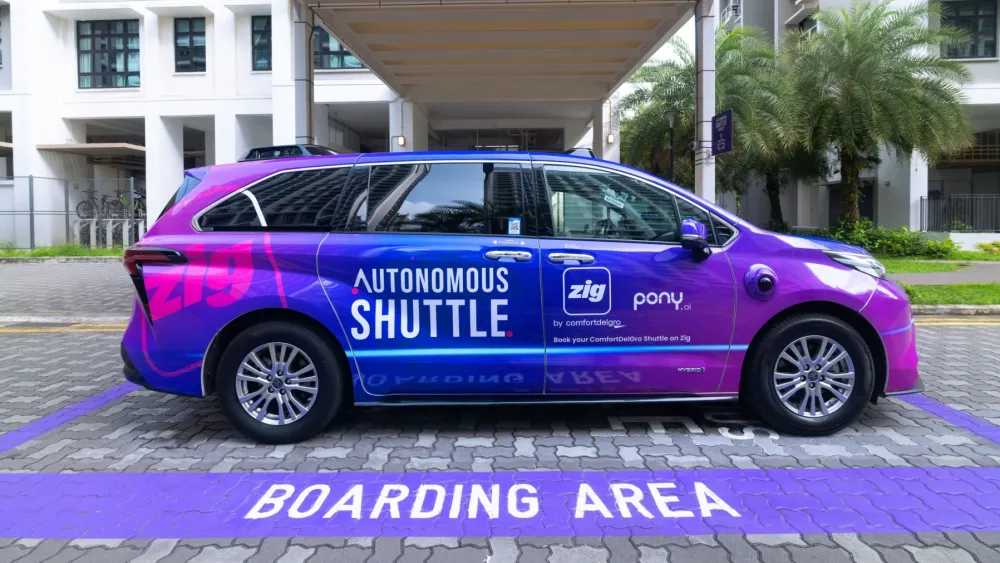
If you think that driverless cars and cabs, and trucks with joysticks in place of steering wheels will be filling the roads in the near future, think again. Highly automated vehicles are currently avoiding and operating away from public roads, and are being safely run in controlled environments like ports and mines. In the next few years, yes, there may be a small scale deployment on limited public roads of vehicles moving at low speed with substantial supervision, but experts at the International Transport Forum 2017 in Leipzig expect a long transition.
“In the next couple of years it’ll be done at a small scale,” said Sarah Hunter, Head of Public Policy, X (formerly Google X).
“We will have a very long transition period and there are very many advantages to this transition period, but it’s important that we are allowed to run large-scale pilots,” added Anders Kellström, Senior Product Planning Manager and Automation Spokesperson, Volvo Group.
As a result, some governments are playing it safe and they keep avoiding being an obstacle to innovation, setting the framework for autonomous vehicles to operate safely and cleanly, but not to regulate prematurely in anticipation of impacts that may not eventuate.
The experts also acknowledged that regulation is unable to keep pace with innovation. “We shouldn’t allow the political system to hold things back. We can’t keep up but we can be fast followers.” Tim Macindoe, Associate Minister of Transport, New Zealand, said.
“Technological changes move society more than politicians do... I make the legal framework, and it should enable development that is good for society even though I can’t foresee exactly what that development will be," said Ole Birk Oleson, Minister for Transport, Building and Housing, Denmark.
“Are politicians reacting quickly enough? No, but they never do.” Bryant Walker-Smith, Associate Professor of Law, University of South Carolina, said.
A long, gradual transition also provides opportunities to use evidence, rather than speculation, to develop responses to questions about the expected social and economic impacts of highly automated vehicles.
While many issues are very uncertain at this stage, there are already steps that government and developers should take towards ensuring society obtain a net positive benefit from automated vehicles. “I think it’s important to manage the transition period and to manage it pro-actively… For the industry, it's most important to have the same framework for at least a continent as our trucks don’t stop at the borders.” Christian Labrot, President, International Road Transport Union (IRU).
“For developers my challenge is to engage in a public compact and say ‘This is what reasonable safety means to us and how we monitor and maintain it over the life of the system,’” Professor Walker-Smith said.
Macindoe of New Zealand added, “We have to set the right incentives for safety. It is not our job to protect drivers from change, but to prepare them for it."
“When it comes to deployment, mayors are going to be incredibly powerful. We need to have the conversation at the local level," said Hunter.
Karen Mesina of the Singapore Business Review is at the International Transport Forum 2017 in Leipzig, Germany. The forum runs from May 31 to June 2, 2017.

























 Read Here
 Advertise
 Sign Up