
Unmanaged AI raises patient risks in Singapore hospitals
Providers need governed tools and hybrid infrastructure as clinical demand outpaces IT controls.
Singapore healthcare providers face growing patient-safety and data risks as employees adopt artificial intelligence faster than hospitals can govern its use.
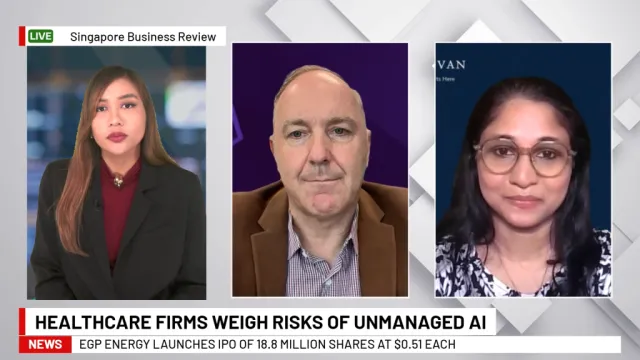
Nutanix found that 79% of healthcare organisations face unmanaged AI, with 83% recognising the resulting business risk. Rathanesh Ramasundram, Director, Frost & Sullivan, described the threat as “serious but predictable,” driven by clinical pressure and slow access to approved tools.
Staff using public AI models may expose patient information, receive inaccurate outputs and leave hospitals without an audit trail. Jay Tuseth, Vice President & General Manager, APJ, Nutanix, said providers must make approved systems easier to access.
“The answer for the organisation is actually to create the governed model that is easier to use and deploy than the ungoverned model,” he said.
Hospitals also cannot depend solely on cloud-based AI for bedside decisions. A typical intensive-care bed connects to 15 to 20 devices producing continuous data, requiring some processing to remain on-site.
“I think the world is hybrid,” Tuseth said. Time-sensitive clinical applications should run on-premise or at the edge, whilst model training and population-health analytics can use cloud infrastructure.
Ramasundram said providers should avoid trying to modernise infrastructure, governance and workflows simultaneously. Small governed pilots can build clinical evidence before wider investment.
Tuseth said the three areas remain linked: frontline workflows deliver value, but only when supported by modern infrastructure and controls covering security, cost and data sovereignty.
The immediate test is whether hospitals can give clinicians faster approved tools without weakening accountability or care quality.























 Read Here
 Advertise
 Sign Up








Commentary
Can controlled sandboxes prepare Singapore organisations for production AI?
What the latest sanctions regimes mean for Singapore businesses
Singapore’s tourism economy depends on security infrastructure most never see
Where does value creation really happen?
Managing the cost of diverging standards: Why Singapore matters
Singapore’s AI ambition has an intelligence problem
Singapore is deploying AI at speed – and security risks are catching up
Precious metal boom is a stress test for Singapore’s gold ambitions
Singapore’s global dispute fault lines
‘Tokenmaxxing’ – The wrong AI race to run in Singapore