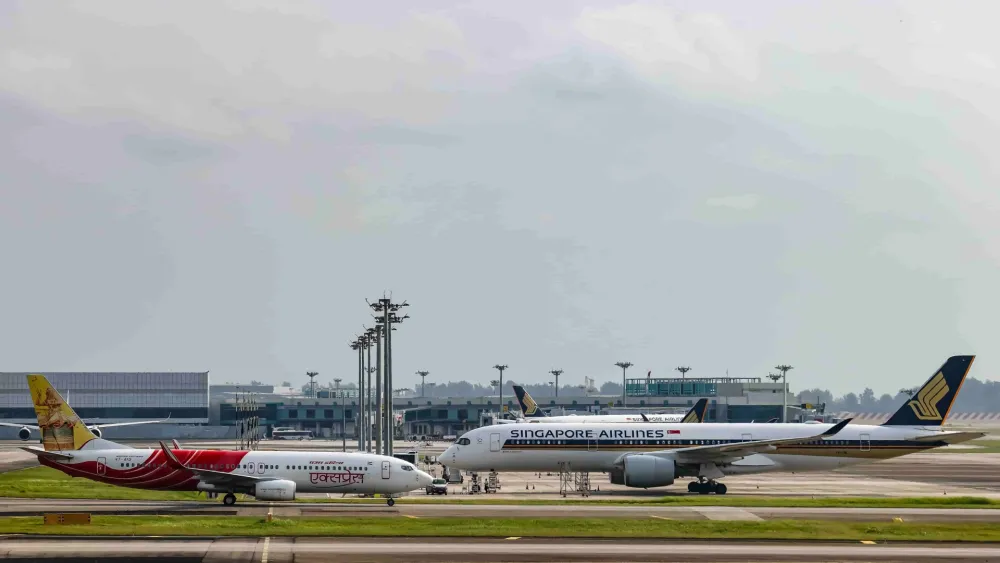
SIA’s net profit crashes 53% to $135m in 3Q11
Rising jet fuel prices had adversely affected the group’s performance for the quarter.
According to a financial statement, Singapore Airines turned in a net profit of $135 million in the third quarter of the 2011-12 financial year, a drop of $153 million or 53% over the same quarter in the preceding year.
Group revenue improved $34 million (+1%) to $3,875 million on the back of marginal growth in passenger carriage, while Group expenditure rose at a faster pace, increasing $386 million (+12%) to $3,718 million, led by higher fuel costs.
Expenditure on fuel grew by $375 million (+33%), as jet fuel prices increased 30% over the same period last year. Fuel accounted for 40% of Group expenditure, up 7 percentage points year-on-year.
Consequently, Group operating profit declined to $157 million, $352 million lower (-69%) than the year before. The operating results of the main companies in the Group for the third quarter of the financial year are as follows:
- Parent Airline Company Operating profit of $137 million ($378 million profit in 2010)
- SIA Engineering Operating profit of $28 million ($34 million profit in 2010)
- SilkAir Operating profit of $32 million ($45 million profit in 2010)
- SIA Cargo Operating loss of $40 million ($48 million profit in 2010)
-
The operating profit of the Parent Airline Company fell $241 million (-64%) as higher fuel expenditure (+$316 million or 34%) weighed on its performance.
Ongoing initiatives in cost management and efficiency helped to keep other cost items in check, with passenger unit cost excluding fuel down by 9%.
April to December 2011
For the nine months to December 2011, the Group posted a net profit of $374 million, a decline of $547 million (-59%) from the $921 million for the corresponding period in the previous year.
Group revenue was up $215 million (+2%) to $11,152 million, while Group expenditure increased $1,029 million (+10%) to $10,861 million, principally on account of higher jet fuel prices.
Consequently, operating profit for the Group fell $814 million (-74%) to $291 million.
THIRD QUARTER 2011-12 OPERATING PERFORMANCE
The number of passengers carried by the Parent Airline Company in the third quarter of the financial year was 4.4 million, a year-on-year decrease of 0.3%.
Passenger carriage (in revenue passenger kilometres) was flat while capacity (in available seat-kilometres) grew 3.3%. Consequently, passenger load factor declined 2.5 percentage points to 77.2%. On the other hand, passenger breakeven load factor climbed 4.9 percentage points to 76.0%, as unit cost increased 7.0% while yields remained flat.
SilkAir’s passenger carriage increased 8.0% against 10.7% growth in capacity, resulting in a 2.0 percentage-point drop in passenger load factor to 78.8%.
Overall breakeven load factor was up 3.8 percentage points as unit cost increased at a faster pace (+11.7%) than the improvement in yields (+4.4%).
SIA Cargo’s freight carriage (in load tonne-kilometres) was up 0.1%, while cargo capacity (in capacity tonne-kilometres) rose 0.6%. As a result, cargo load factor dipped slightly by 0.3 percentage points to 64.7%. Cargo breakeven load factor however rose sharply by 8.0 percentage points to 69.2%, from a combination of higher unit cost (+10.1%) and weaker yields (-2.5%).

























 Read Here
 Advertise
 Sign Up