‘In hyperbaric, there are two worlds: One medical, one created by the market’ – Alex Harbuzaru of HPO.TECH
Harbuzaru weighs in on the regulatory split in hyperbaric medicine and why the wellness wave has been good for it.
Hyperbaric oxygen therapy (HBOT) sits inside one of the fastest-moving health categories of the past five years. Once confined to dive medicine departments and a small list of clinical indications, it now appears across premium wellness operations, longevity-focused clinics, and elite sports recovery programmes.
It is also, in Alex Harbuzaru’s view, one of the most misunderstood industries in healthcare.
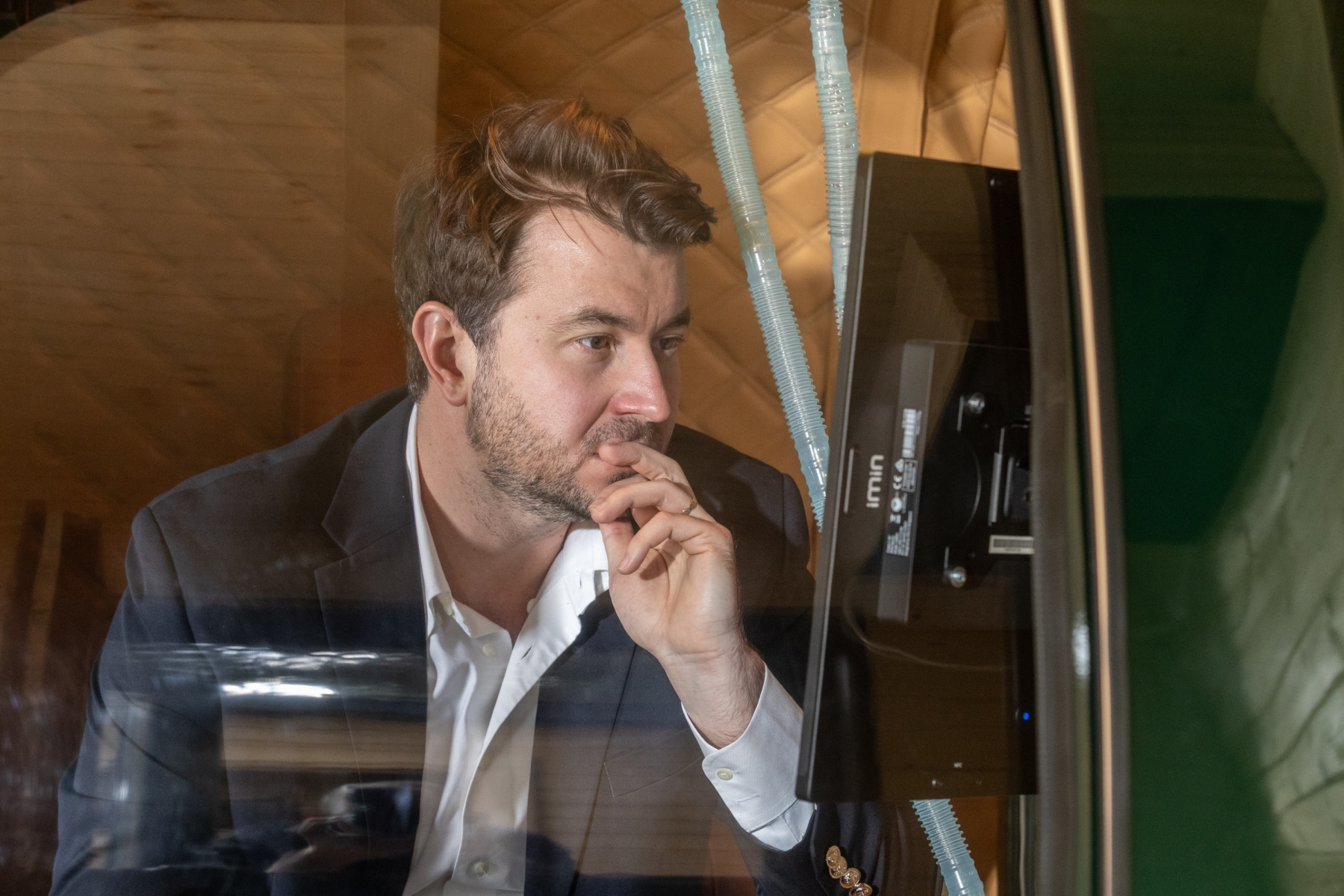
Harbuzaru is Chief Business Development Officer at HPO.TECH, the Istanbul-based manufacturer of hyperbaric, hypobaric, and multibaric pressure systems. The company carries one of the broader certification stacks in the category, including 93/42/EEC (MDD), EU MDR, UKCA and ASME PVHO, alongside a long list of regional clearances. Its chambers ship to operators across the US, Asia, Oceania and Europe, and the company is currently providing the multibaric platform behind Arizona State University’s entry in the $101m XPRIZE Healthspan competition, one of 100 semifinalist teams selected from 765 worldwide.
Harbuzaru spoke about the regulatory split running through the middle of the category, where the industry is in its development cycle, and what the next phase of growth requires of manufacturers and operators alike.
How did you end up running commercial for a hyperbaric manufacturer?
My background is not what people expect. I studied Fine Arts, did an EMBA at the University of Buckingham, and before hyperbaric, I was running a digital advertising agency. The whole thing started from a simple moment. A friend bought a hyperbaric chamber, and I became immediately obsessed with the concept.
I started studying the industry and quickly realised there was a major gap between how advanced the technology actually is and how it is presented online. At the same time, I could see the size of the opportunity in a category that was still isolated at that point. I shut my agency to commit fully to the field.
After working across several companies in the industry, I joined HPO.TECH and met Mustafa, Tolga and Osman, the three founder brothers, and Şemsettin, the fourth partner. I came in as the fifth. The company was still in its second year. The technology was already solid, but the commercial model at the time was, frankly, engineered for failure. The decisive factor for me was culture. I found a team whose mentality was very close to mine, with a natural alignment in how to think and how to build. Things moved quickly from there.
What is your role today?
I sit on the decision-making board, and my job is to make as many decisions as possible, and as good as possible.
Alongside that, I run global business development: opening new markets, certifications, partnerships, and strategic positioning. I am the company’s external eye, the connective tissue between the factory, the management team in Istanbul, and what is happening across international markets. It is a combination of deep familiarity with the product and the ability to translate that complexity clearly to the people on the other side of the table.
How has the industry evolved in the years you’ve been in it?
When I entered the field eight years ago, it was a very narrow space, almost exclusively medical. Today, it is expanding rapidly.
A pivotal moment came in 2020, when the team at Aviv Clinic published a study on telomere lengthening using a specific hyperbaric protocol. That was one of the first times this technology stepped meaningfully into the longevity conversation.
This is also an extremely fragile industry. Because it is so niche, any study, any validation, any moment of public exposure can move the market disproportionately.
A clear example was Bryan Johnson starting to document his use of hyperbaric therapy publicly. In his protocols, he uses the Zeugma model from HPO.TECH, a medical system based on controlled oxygen delivery via BIBS and strict protocols. For the first time, dozens of biomarkers were being tracked simultaneously in that kind of setting, and the effect on the market was immediate. Global interest rose across the whole category.
The same fragility cuts the other way. Negative events have an equally strong impact in the opposite direction.
You’ve described the industry as having two worlds. What does that mean in practice?
There are two worlds. One is medical and extremely regulated. The other is a wellness world that emerged from the dynamics of the open market.
Hyperbaric, in its essence, is medicine. And not just any kind of medicine. It is one of the most strictly regulated industries anywhere. We are talking about equipment that is technically a pressure vessel intended for human occupancy. The same engineering principles apply in aviation, in submarines, and in the aerospace sector.
The difference between the two worlds shows up in the standards and in how the systems actually operate. In medical hyperbaric, oxygen is delivered exclusively through dedicated systems, BIBS or oxygen hoods, the only solutions designed for this environment. Standard nasal cannulas or generic masks do not function under these conditions and cannot deliver high oxygen concentrations, nowhere near 70%, especially in a pressurised environment. There is no relevant clinical study based on those methods.
Dedicated systems allow controlled oxygen delivery, automated air breaks, and a validated, repeatable protocol. And, importantly, there is independent third-party testing. The relevant standards include PED (Pressure Equipment Directive) and ASME PVHO-1. These are not optional. They are foundational.
Yet, the wellness side has expanded the industry. How do you see that?
It is a paradox, but a positive one. That side has accelerated adoption and made the technology accessible to a much wider audience. In parallel, medicine is moving from an interventional model towards a proactive one. In that context, hyperbaric therapy becomes very relevant. It is one of the few interventions that acts on biological mechanisms from the inside rather than only on symptoms.
Where do you see the biggest problems in the market today?
In the lack of clarity.
For the end user, the real differences between technologies are not visible. Different solutions are presented as if they were equivalent, even when they are not. That is where most of the confusion sits.
I often compare the current industry to the early days of the car industry. We are in a formative moment. In the early days of the car industry, there were no traffic rules, no standards, no infrastructure. Everything appeared over time, often in response to incidents, until the system stabilised and became safe and predictable.
The same thing is happening now in hyperbaric. The category is growing fast, but it is not yet uniformly regulated. Standards exist, but they are not applied everywhere in the same way. The difference between what is genuinely safe and what is only marketing is still not clear enough for everyone. Over time, these things will settle.
How important is safety in this conversation?
Essential. In the same way, you get into a car without asking yourself whether the brakes work because you trust the regulatory system around it; the same logic should apply here. But in hyperbaric, that level is not yet uniform. We are talking about pressure and oxygen. This is not a category where compromises are acceptable.
What does the next phase of HPO.TECH’s growth look like, including across Asia?
Global expansion and standardisation.
We are not satisfied with only the most important certifications, like MDR or FDA. We want every relevant clearance worldwide. Health Canada, TGA, the major Asian markets, and African markets. It is a complex effort, but a necessary one if you want to build a real global company in this category.
Looking further out, ideally, we should reach a point where the operation of a hyperbaric chamber is standardised at a global level. Just as you need a licence to drive a car, I think there will eventually be a system of education and certification for operating this equipment.
Alongside that, we will see an expansion of medical indications. Today, a limited number of conditions are formally accepted, but in practice, the applications are much wider, particularly in chronic and autoimmune diseases. The bottleneck is the lack of research.
How do you intend to address that research bottleneck?
We are not big pharma. We are, in a way, tiny pharma. That means we have to play differently.
We build infrastructure. The platform we are developing allows real-time data collection, processing and conversion into statistical evidence. The aim is to democratise science. To allow clinics and users to contribute to data production and to open the system to universities and research programmes.
If we manage to grow the volume of research in hyperbaric medicine and expand the number of approved indications, the market will grow. And once the market grows, a chain effect kicks in. Today, production is 95% manual. The main cost is labour. As the market expands, we can automate production, reduce costs, and make the technology far more accessible.
How would you describe hyperbaric therapy in essence?
It is one of the most underused advanced therapies in medicine. It acts directly on fundamental biological mechanisms: tissue oxygenation, inflammation, and angiogenesis. It not only treats symptoms. It influences the processes that generate them.


























 Read Here
 Advertise
 Sign Up