Leading by influence: How Trane Technologies is leading a sustainable future for Asia
To attain a carbon-free future, Trane Technologies focuses on guiding the industry rather than competing.
Industries have been stepping up their climate commitments, which has made decarbonisation a defining test of corporate purpose. At the same time, innovation has gone beyond invention and is now determined by the ability to influence shifts in mindsets, standards, and industries toward a more sustainable way of doing business.
In the Asia Pacific region, for instance, growing cities and surging energy demand have made it a proving ground for how global companies can drive sustainability at scale.
In an interview with Singapore Business Review, Allen Weiqi Ge, Group President of Trane Technologies Asia Pacific, highlighted how the company sees both a challenge and an opportunity to steer an entire sector toward a more responsible future.
To influence and not just to compete
Trane Technologies perceives itself not only as a market leader in HVAC (heating, ventilation, and air conditioning) and climate solutions but as a catalyst for transforming the industry’s approach. “We boldly challenge what’s possible for a sustainable world,” Ge said.
For Ge, leading should not be about setting boundaries but inviting people to be more open-minded about future possibilities. “I want to engage everybody so they feel able to boldly challenge what’s possible for a better future.”
This focus on influence over competition is central to Trane Technologies’ philosophy of “sustained, not episodic” innovation. It emphasises the importance of developing technologies, business models, and partnerships with more energy-efficient systems rather than chasing short-term wins.
Central to this approach is a profound customer centric focus that goes beyond technological innovation to encompass business models, products, and market creation. It demands not only a deep understanding of what customers currently need, but also the foresight to work with them and guide them toward future possibilities they may not yet envision.
“We are looking into how we can contribute to the reduction of energy consumption whilst maintaining the better output. For us in our industry, particularly in the HVAC industry, this means we will still be able to produce the better quality of air—the comfort, the clean air—whilst using less energy,” Ge added.
Beyond engineering breakthroughs, the company aims to take a leading position in determining what needs to be done. This is reflected in the integration of artificial intelligence (AI) and advanced refrigerant into its product lineup.
As a key part of the product innovation, the company has transitioned the majority of its products from HFC refrigerants with relatively low global warming potential (GWP) to even more environmentally friendly HFOs with near-zero GWP, leading the industry toward more sustainable solutions.
Ge noted that air conditioning contributes to about 40% of buildings’ energy consumption, yet there are opportunities for reduction with the use of AI, benefiting not just the company but the whole society as well.
For instance, Trane's AI-powered optimization platform unlocks an additional 10-30% in energy savings for high-efficiency chiller plants, transcending traditional systems to deliver precise and intelligent energy control.
With the acquisition of BrainBox AI, Trane Technologies has begun embedding self-learning systems into building management operations. These AI-driven systems analyse everything from sunlight exposure and air conditioning usage to building occupancy, allowing facilities to automatically adjust cooling, lighting, and ventilation through automatically calculated data.
“By leading this process, the whole industry can follow. There’s a tremendous benefit for everyone,” Ge said.
The Gigaton Challenge
Perhaps the company’s most ambitious undertaking is its Gigaton Challenge, a global commitment to help customers reduce one billion metric tons of carbon emissions by 2030.
Since 2019, Trane Technologies has already achieved 237 million metric tons of customer carbon reductions and a 44% cut in its own operational emissions. In the Asia Pacific, the company recorded 75.46 million tons of customer carbon reductions, or nearly one-third of Trane Technologies’ total global progress.
Within its own operations, Trane Technologies’ Asia Pacific plants also incorporate solar panels, automation, and high-efficiency systems to cut emissions and waste. By the end of 2024, solar installations across four regional plants had reduced CO₂ emissions by nearly 20,000 metric tons. At the same time, automation and data-driven efficiency have allowed production to rise whilst operational emissions fell by nearly half over five years.
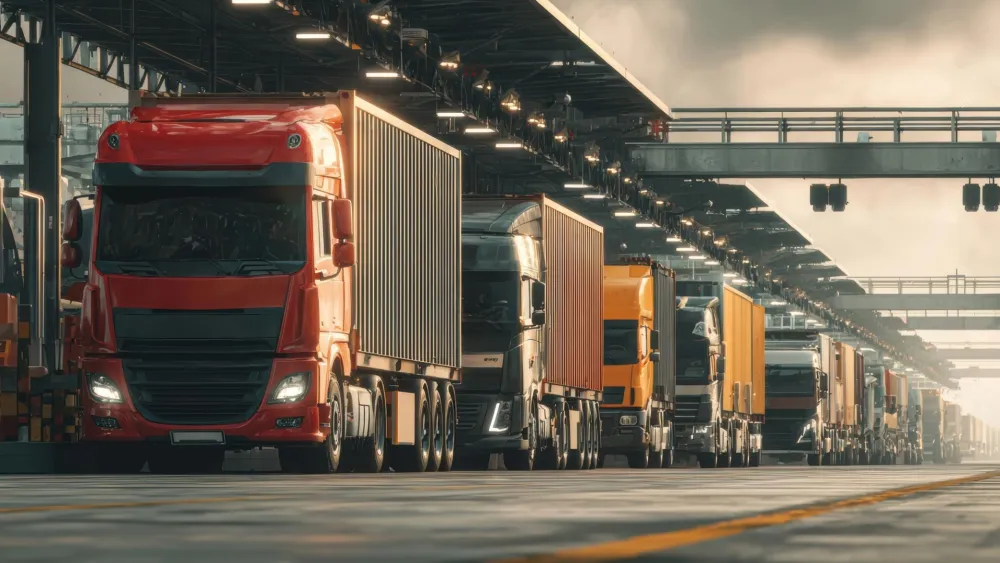
That same spirit of influence extends to the company’s Thermo King business, which focuses on utilising electrification and improved energy efficiency in its refrigerated transport solutions. At Thermo King, producing efficient solutions is not just about reducing energy consumption but also about addressing food waste and access to medicines.
“To make vegetables, vaccines, and medicines available in other places, you really need this new technology to help transport these temperature sensitive goods in good condition,” Ge said.
A hub for global innovation
With engineering technology centres in China and India developing hundreds of patents, the Asia Pacific region is not just a key market for Trane Technologies but has become a proving ground for the company’s “in Asia for Asia, for the world” strategy.
Ge underscored that despite its status as a global company, Trane Technologies operates with an “in Asia, for Asia” thinking first and foremost. This means serving clients who are within the region and ensuring the company’s solutions meet the needs of Asia.
“Strategically, because we are a global company, we want to make sure we are ‘for Asia, for global' as well. We leverage global resources, technology, and we bring them to Asia,” Ge added.
The company’s Asia Pacific Engineering Center has contributed nearly half of its total patents, developing innovations driven by local market needs. These breakthroughs, including advanced chillers and heat pump technologies, are now being deployed around the world.
Ultimately, what makes Trane Technologies stand out is its belief that sustainability should be contagious and treats progress as an influence.
“We don’t want a monopoly,” Ge said. “We just want to make the first move and make efforts to have the second and third companies follow as well.”
“That's how we move the whole industry to a new era of more energy efficiency, not only in products,” he added.






















 Read Here
 Advertise
 Sign Up