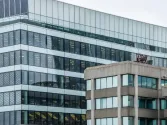
No new Grade A supply through 2027 pushes firms to look beyond CBD
Alexandra and Paya Lebar gain demand as Core CBD space tightens.
Expanding companies may have to secure office space earlier or look beyond the central business district (CBD), as no major new completions are expected through 2027 and Grade A vacancy remains at a record low.
A CBRE report showed that the supply gap follows the delivery of Shaw Tower, the only major office project added to the market in 2026.
“For occupiers with requirements in the next two to three years, the window to secure quality space on favourable terms is narrowing,” said David McKellar, CBRE head of leasing for Singapore.
Some occupiers are already looking beyond the Core CBD, with Alexandra and Paya Lebar seeing active take-up from the public, consumer goods, professional services, and education sectors.
Islandwide vacancy fell to 3.6% in Q2 from 5.6% in the first quarter (Q1), as leasing outside the CBD and the withdrawal of Harbourfront Centre from active stock further tightened supply.
Meanwhile, vacancy in Core CBD Grade A offices stayed at a record low of 3.3% in Q2, down from 7.8% in Q4 2024, when IOI Central Boulevard Towers was delivered.
Rents in the area rose 0.8% quarter-on-quarter to $12.50 per square foot per month during the period, marking the sixth consecutive quarter of rental growth. Cumulatively, rents increased 1.6% in the first half of the year.
CBRE maintained its forecast for about 5% year-on-year growth by end-2026, with possible upside in the second half if global conditions improve.
The tighter market adds to earlier signs of space constraints in the office sector. A separate Turner & Townsend report said Chinese companies and technology groups have continued to expand their footprint in the CBD.
Some occupiers are also taking more space than they currently require to prepare for future expansion, with some firms holding on to excess space even during a downturn.
“This naturally leads to inefficiency, and money goes into acquiring and maintaining space more than fitting it out,” Turner & Townsend said.
The tight supply is already shaping leasing decisions. CBRE said enquiries from hedge funds, quantitative trading firms, and AI companies remain elevated even with limited options. Pre-commitment activity has increased for developments due for completion only in 2028 or 2029.
“We are advising occupiers with requirements in the next two to three years to engage the market now, as conditions are not likely to ease,” McKellar said.
‘AI firms settle’
Within the CBD, financial services firms, including banks, wealth managers, insurers, and asset managers, remain active. Meanwhile, AI firms are moving from coworking spaces to traditional offices.
McKellar said AI occupiers had been incubating in Singapore for the past two to three years, mostly in coworking spaces. Their move into dedicated offices signals a stronger medium- to long-term commitment to the market, he added.
Tricia Song, CBRE head of research for Singapore and Southeast Asia, said the lack of new completions through 2027 means the current supply shortage is not temporary.
“The structural undersupply underpinning this rental cycle is not a short-term phenomenon,” Song said.
CBRE said geopolitical uncertainty and the oil supply situation remain risks to monitor. However, it has not seen material signs of occupiers cutting back on office space.
Song said even a moderate easing of external pressures, such as oil market volatility, could lift leasing confidence in the second half of 2026.





















 Read Here
 Advertise
 Sign Up