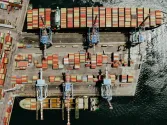
How Singapore banks could suffer from lower trade finance flows
Substantial revenues milked from trade fees.
According to CIMB, it believes that one of the data points to emerge from the Singapore banks’ 2H13 earnings season is the slowdown in trade finance flows.
Here's more from CIMB:
Generally, intra-Asian trade flows have grown rapidly since 2009, albeit in spurts rather than steadily. 2010 and 2011 were great years for intra-Asian trade, fuelled by the liberalisation of the renminbi and the retreat of the European banks in the Asian trade finance space.
Trade flows slowed in early-2012 but picked up in late-2012 to 1H13. While the outlook for trade flows was rosy earlier this year, our correlation studies suggest that the trade flows are going to head through a slow patch again.
A study of the trends in emerging Asian trade and the three Singapore banks’ US$ loans suggest that the latter tends to lag the former by two quarters and that there is a high degree of correlation between Singapore banks’ quarterly US$ loan growth and Asian trade flows.
Worryingly, the recent data from CPB World Trade Monitor suggest that emerging Asian trade has contracted ~5% YTD since end-2012.
The Singapore banks have benefited from the trend of growing trade finance activity since 2009, as evidenced by the rising proportion of US$ loans in their loan books. Other than US$ loan growth, the complimentary revenue drivers are trade fees and treasury income.
The three banks have benefited to varying extents, with DBS gaining the most and UOB the least. Logically, the slowing Asian trade flows will have the biggest drag on DBS and the least on UOB.


























 Read Here
 Advertise
 Sign Up