New healthcare laws to regulate online providers
Change from premise based to digital based laws will increase patient accountability.
The Ministry of Health is planning to update the Private Hospitals and Medical Clinics Act (PHMCA) to ensure continued relevance of Singapore's regulatory system for healthcare services.
Enacted in 1980, PHMCA is a key piece of legislation for all healthcare services in Singapore utilised by public and private patients. It was last amended in 1999.
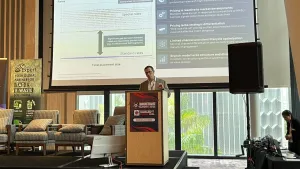
Speaking at the Scientific Conference of the Centre of Regulatory Excellence yesterday, Minister of State for Health Lam Pin Min said that much has changed in Singapore’s healthcare landscape since the last amendment of the law and hence, there are many areas to be reviewed.
"For example, the current licensing framework under the PHMCA is premise-based. It works on the assumption that all healthcare services are provided from a physical, brick and mortar location. This needs to change given the increasing prevalence of mobile, online and co-located services," he said.
The Minister also pointed out that the current PHMCA also does not differentiate appropriately between certain types of healthcare institutions. This, he said, has resulted in the force-fitting of some institutions to fit our regulations.
"For example, community hospitals have historically been subjected to the same requirements as acute hospitals. What would be more appropriate is to tier the PHMCA’s regulatory requirements according to the type and nature of service," he explained.
According to Minister Lam, MOH will also take the opportunity to strengthen governance systems and improve regulatory clarity. "By doing so, providers will be more aware as to their responsibilities, and hence be more accountable to patients," he said.
MOH will involve all stakeholders in assessing the changes needed. In the coming months.
MOH will consult widely on where and how the Act should be revised. It will hold focus group discussions with representatives from both large and small healthcare players, such as clinics, hospitals, clinical labs, nursing homes and many others. Subsequently, it will reach out to patient groups and members of the public.



























 Read Here
 Advertise
 Sign Up