Indexed life plans rise as Singapore heirs shun family firms
They offer stability and in-depth estate planning solutions.
Wealthy families in Singapore are turning to flexible life insurance plans that also earn interest to manage wealth transfer, as fewer children opt to take over the family business.
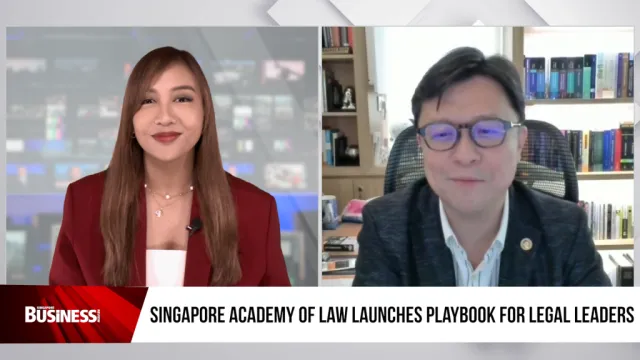
“In terms of wealth transfer, that’s another big issue that some of our clients are facing,” Katherine Ho, managing director at Lioner International Group Ltd., told Singapore Business Review, noting that many of their clients have family members who live overseas and have chosen different career paths.
As a result, estate planning is shifting away from handing down businesses to managing inheritance and family finances, she said via Zoom.
More families are looking for tools with more flexibility and stability, such as indexed universal life (IUL) policies, which are linked to stock market performance but protect against losses, she added.
“They offer a pretty good alternative in terms of their portfolio, because you’re looking at long-term asset allocation,” Ho said. “They provide capital stability and give clients exposure to in-depth planning solutions.”
With indexed life plans, your money can grow when markets do well, but you won’t lose anything if the market drops, she pointed out. Settling an estate can also take a long time—sometimes up to two years, in contrast to indexed universal life plans, where beneficiaries can access funds more quickly.
Leonard Chu, CEO at Lioner, said newer insurance products are better suited for families spread across different countries.
“We now see expanded insurance solutions that provide liquidity during estate settlements, cover beneficiaries across different jurisdictions, and at the same time incorporate tax optimisation, asset preservation, and privacy protection,” he said in the same Zoom call.
Louise Thean, chief proposition officer at Grandtag Financial Consultancy, said universal life policies are used as a smart wealth planning tool—not just for life insurance, but also to preserve assets, handle tax issues, and plan legacies.
Rena Lim, head of high net worth and financial advisory at Manulife Singapore, said rising life expectancy means people must plan for longer retirements.
“Indexed universal life plans are uniquely suited to address this challenge, providing market-linked growth to sustain wealth over decades whilst offering downside protection,” she said in an emailed reply to questions.
In April, Manulife launched an indexed life plan that’s linked to five global stock indices, including the S&P 500 and Hang Seng, and has a built-in safety net that protects clients from losses. It also spreads investment over a year to reduce timing risks.
Global demand is also growing.
A 2025 report by Capgemini showed that high-net-worth people in Asia saw a 4.8% rise in wealth last year, with Singapore emerging as a top hub. Hong Kong is also gaining ground after easing the rules for indexed life policies.
“We see insurance carriers from Singapore going to Hong Kong, and Hong Kong insurers coming to Singapore, trying to understand each other,” Thean told Singapore Business Review in a separate Zoom call. “Hong Kong’s liberalisation of IUL rules is likely to divert some flows, especially amongst Greater China high net-worth individuals.”
Still, analysts think both could grow together. “Both jurisdictions can work together and complement one another to serve these high-net-worth families because there’s simply a lot of demand for diversification of risk—and in that regard, diversification of assets between different jurisdictions,” Chu said.
The market is also evolving with technology and customisation.
“Some insurers are already rewarding clients who quit smoking,” Ho said. “If someone’s health improves, maybe underwriters might consider giving them a slightly reduced premium or an incentive cashback on their policies.”




















 Read Here
 Advertise
 Sign Up