
Singapore
HDB resale prices up 1% in February

HDB resale prices up 1% in February
Five-room inched up by 1.2% and executive rooms rose by 0.9% YoY.
PUB to invest $190 in flood mitigation projects

This includes the construction of a detention tank in Little India.
SIA expands list of flight suspensions

Affected flights include South Korea, Japan, Taiwan and more parts of Southeast Asia.
Tokio Marine, Horangi partner for cybersecurity services
A cybersecurity insurance policy will be granted, with possible rebates.
Big three banks' wealth income expanded 18% in FY2019
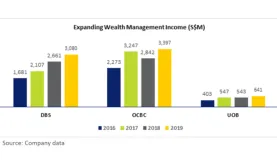
Wealth made up 31% of OCBC and UOB’s total income.
Buy Singapore stocks to weather the COVID-19 storm: Morgan Stanley
Its defensive market should still be able to provide earnings despite some bad quarters.
Daily Markets Briefing: STI up 0.18%

YZJ Shipbuilding saw the sharpest decline amongst top active stocks with a 2.72% contraction.
Chart of the Day: Singaporean investors favoured office properties in 2019
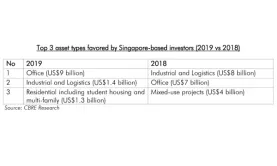
It outsped industrial and logistics assets in investment value.
Daily Briefing: About 14,000 hawkers to get rental fees waived; NEA introduces Deposit Refund Scheme for beverage containers
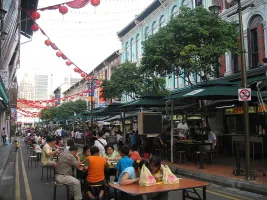
And logistics startup Moovaz raised an undisclosed series A funding from SC Angels.
Hyflux to reallocate advisor fees after WongPartnership exit
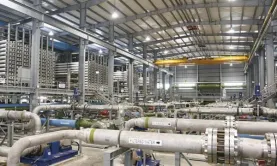
It initially planned to satisfy at least 75% of SIAS’ advisor fees.
Kaspersky's Stephan Neumeier named Executive of the Year at SBR Management Excellence Awards

The Managing Director for APAC is bringing a new philosophy to digital security. Recent data from Kaspersky Security Network showed 11 million attacks caused by servers hosted in Singapore, making the city the 10th hottest source of a cyberattack. The cybersecurity company detected close to 5 million web threats and more than 7 million local incidents in the city-state, including attacks caused by malware spread via removable devices and other ‘offline’ methods. As the world becomes more digitised and globalised, Kaspersky’s Managing Director for APAC, Stephan Neumeier, said that focus has shifted to protecting the various upcoming technologies, which would entail a collaboration between the public sector as well as large private companies, startups, and small and medium-sized businesses. Neumeier said that Kaspersky is investing heavily on its research and development (R&D) team to uncover threats, cyber-espionage, malware, and other cybercriminal trends across the world. In an interview with Singapore Business Review, Stephan talks about the company’s rebranding for which he won the Executive of the Year, as well as Kaspersky’s recent innovations, including an anti-drone technology software that allows you to detect, classify and neutralise a drone. What does it mean for you to win the Executive of the Year for IT Services? I’m thankful for the recognition of excellence in the cybersecurity field. It definitely wasn’t without challenges, but this will not be possible without good products and trust from our partners and users. Winning this award means that I am doing something right, and I am committed to continue what I’m doing, to constantly innovate in the way we think about our products, our approach to business and our vision for the future with our new mission of “building a safer world” as well as bringing a new philosophy of digital security. You said in a press release that changes are not without any resistance within the company. Can you tell us more about the rebranding in 2019 and how you successfully communicated this to staff and stakeholders? We had a number of initiatives to communicate the rebranding, such as inviting our Chief Marketing Officer to share about the company’s journey throughout the past two decades, how the company has evolved and grown along the way, leading to the need for a new brand. We also had a rebranding launch party among staff and partners, as well as fun quizzes to instil the new branding messaging in a fun way. What are the future plans for the Asia Pacific Transparency Centre in Malaysia? Upon the completion of our Asia Pacific Transparency Centre in Malaysia, we will be inviting customers and experts across the region to review the company’s source code of any publicly released products, software update and threat detection rules. We will definitely keep you updated upon the completion of the Transparency Centre. What would be the company’s value proposition to existing and would-be clients? We invest heavily on research and development (R&D), and believe that it is the core of our company. One-third of our employees are in the R&D team. We have a team of experts, known as the Global Research & Analysis Team (GReAT) operating at the very heart of Kaspersky, uncovering advanced persistent threats (APTs), cyber-espionage campaigns, major malware, ransomware, and underground cybercriminal trends across the world. In addition, our solutions are engineered in house, which is very much aligned with our vision of creating cyber-immunity—developing an ecosystem where everything connected is protected and all the systems are secure by design. Amongst the myriad of tasks as CEO, what would be your primary focus at this point? The primary focus would be to protect the various upcoming new technologies, by working with multiple parties including the public sector, large companies, small and medium-sized businesses as well as startups. We are also focused on protecting new technologies as the world has become more digitised and globalised. Some notable examples of our innovative solutions in 2019 include anti-drone technology—a software that allows you to detect, classify and neutralise a drone, creating interference in its communication with the control panel, allowing the drone to return to its operator or make a soft landing; as well as Kaspresso framework, an open-source framework for UI testing of mobile applications for Android. Even as the connectivity increases, the company will enable everyone to embrace, trust and use new innovations that are protected by its technologies.
S-REITs' income hit by virus crisis
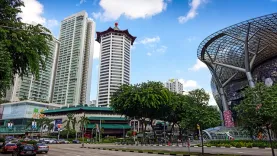
Commercial properties suffer as consumers hold back from shopping and eating outside.
Manufacturing output hits five-year low in February
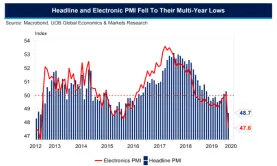
The electronic sector PMI also dipped to its lowest level in eight years.
e-commerce aggregator iPrice raises $13.87m in Series B round
The round was led by ACA investments.
Singapore banks amongst most vulnerable in SEA to COVID-19 impact

Their exposure to Chinese banks poses a threat.
United Hampshire US REIT eyes raising $547.3m from IPO

The REIT offers a price of $1.12 per unit.
Singapore's cybersecurity performance weakened in 2019
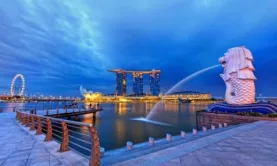
Nearly one in 10 mobile phones were infected with malware.










 Read Here
 Advertise
 Sign Up









Commentary
Is Singapore's emphasis on long-term security and stability hindering purpose-driven employees?
When Singapore's agentic AI ‘chefs’ arrive, will the kitchen be ready for them?
What Singapore’s app store rules reveal about the future of online trust
Faster hiring alone will not fix construction’s productivity problem
Beyond policy: How Singapore's service sector can win at the frontline
Solving the production problem behind Singapore’s ‘pilot purgatory’
Transformation without disruption: Your Existing ERP is an accelerant to business innovation
From Singapore to Southeast Asia: Thriving in innovation by knowing when to pause
Section 13O, MAS, and the digital footprint of Singapore Family Offices