Retail growth masks consumer budget squeeze
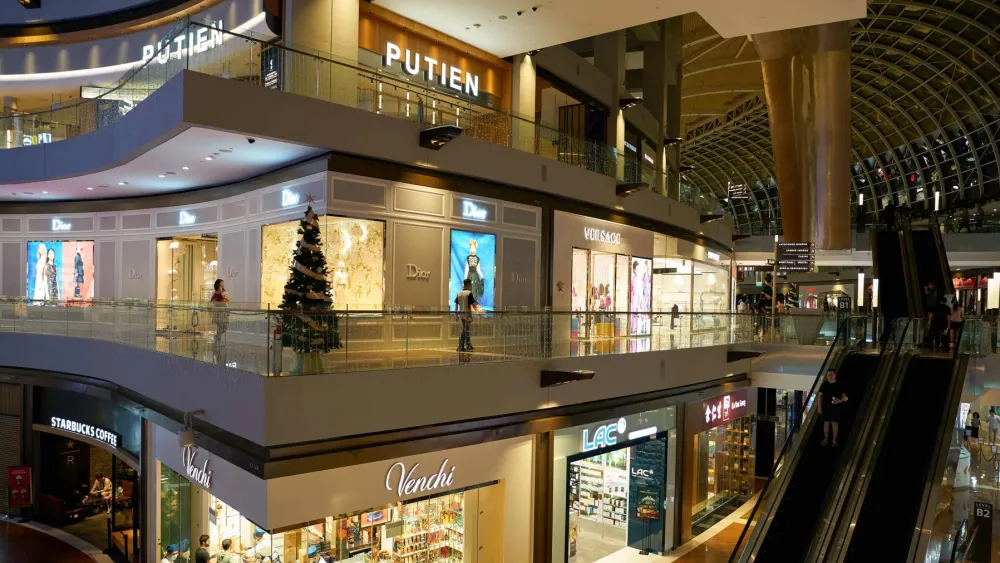
High-end watches, jewellery, and expensive household furniture face an intense winter slump.
Singapore's retail sales are set to grow this year, but experts said the pace could slow as higher energy costs squeeze spending and regional tourism softens.
The latest government data showed that retail sales rose 5.4% in April, extending the 4.6% growth recorded the previous month. Excluding motor vehicles, parts and accessories, sales still rose 4.5% from a year earlier.
Whilst the latest figures may look encouraging at first glance, eToro market analyst Zavier Wong noted that petrol service stations accounted for a significant share of the increase. Sales at these stations rose 14.4% from last year on the back of higher pump prices, which surged in April amid Middle East tensions.
Following the release of the April data, RHB revised its full-year retail sales growth forecast to 3.0%, although it expects momentum to moderate over the remainder of 2026.
"Our model suggests a deceleration in both year-on-year and sequential growth, as households face a gradual erosion of real disposable income from higher energy costs, alongside softer tourism demand across the ASEAN region," it said in a new analysis.
"Concurrently, emerging signs of easing labour demand—including layoffs and the relocation of selected operations—point to a potential softening in income growth, which could further weigh on retail spending dynamics over the medium term," RHB said.
The bank said it is cautious on discretionary demand, particularly in department stores, recreational goods, watches & jewellery, and furniture and household equipment, as these sectors are likely to bear the brunt of weakening domestic and tourism demand heading into year-end.
Compared to the same period last year, department store sales declined 1.1%, whilst recreational goods, watches & jewellery, and furniture and household equipment all rose. Month-on-month, only recreational goods recorded an increase, up 1.8%, whilst the other three declined.
RHB added that essential spending on food and other staples should provide some cushion.
"In contrast, essential spending—typically more inelastic—should provide some support, with supermarkets, F&B, and medical goods remaining relatively resilient, whilst elevated fuel prices are expected to boost petrol station receipts in nominal terms," it added.
In the short term, Wong said the second quarter will also depend on energy costs and whether tariff-related uncertainty starts to affect employment and wages.
"For now, things look to be holding up. But the composition of this print suggests consumers are in a more fragile place than the headline implies," Wong said.
























 Read Here
 Advertise
 Sign Up