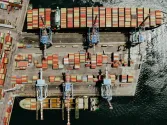
Building a Southern Malaysia supply chain ecosystem for Singapore’s advanced manufacturing
By Dinghe HuSingapore is the undisputed regional core. Johor is its irreplaceable natural hinterland.
For Singapore to sustain its leadership in advanced manufacturing and global logistics amidst intensifying regional competition, it must move beyond incremental upgrades and embrace a paradigm-shifting integration with its natural hinterland: Johor, Southern Malaysia.
The core of this strategy lies in the Tuas Second Link – transforming it from a mere border crossing into a fully integrated bonded logistics hub with direct rail-air connectivity to Changi Airport. By replicating and adapting the proven successes of China’s Chongqing bonded zones and the Greater Bay Area’s “core-hinterland” model, Singapore can build a resilient, high-efficiency supply chain ecosystem that strengthens its advanced manufacturing base for decades to come.
Lessons from Chongqing: Bonded zones and relocated customs as catalysts
Chongqing’s rise as an inland manufacturing and logistics hub offers powerful, actionable lessons for Singapore. A defining driver of its success has been the strategic relocation of customs offices and the expansion of integrated bonded zones, which turned a remote inland region into a globally competitive international trade gateway.
When Chongqing consolidated its port customs operations into a newly built integrated bonded zone at Guoyuan Port, it unlocked a cascade of transformative benefits: Centralised and streamlined customs clearance cut processing times by over 30%; colocated bonded logistics and manufacturing allowed enterprises to operate within a unified regulatory and logistical framework; and the zone became a magnet for upstream and downstream suppliers, fostering a complete, self-sustaining industrial cluster.
Equally groundbreaking was Chongqing’s Xiyong Comprehensive Bonded Zone, which pioneered the pre-clearance air cargo model and in-zone airport terminal functionality. By completing all customs procedures, security screenings, and cargo handling inside the bonded zone before direct transfer to Jiangbei Airport, the city reduced airport dwell time by 80% and tripled overall logistics efficiency.
This model proves a critical truth: Physical distance can be entirely overcome by regulatory integration and seamless logistical design.
Chongqing’s Xipeng rail-water bonded hub further demonstrates the unmatched power of multi-modal rail connectivity paired with bonded supervision. By linking a dedicated rail hub, river port, and bonded zone into a single system, it attracted heavy industry and logistics providers from across southwest China, turning a peripheral area into a critical regional logistics node.
The takeaway is unequivocal: Targeted infrastructure, smart bonded regulation, and direct rail links create irresistible supply chain gravity.
The Greater Bay Area: Core-hinterland symbiosis as a global blueprint
The Guangdong-Hong Kong-Macao Greater Bay Area reinforces this winning formula with world-class results. Hong Kong provides unrivalled global financial, air, and shipping connectivity; Shenzhen drives cutting-edge high-end technology and R&D; and Guangdong delivers massive, cost-effective manufacturing and logistics scale.
This clear, complementary division of labour forged an unbeatable integrated ecosystem, where the core urban centres rely entirely on their surrounding hinterland for sustainable, scalable production support.
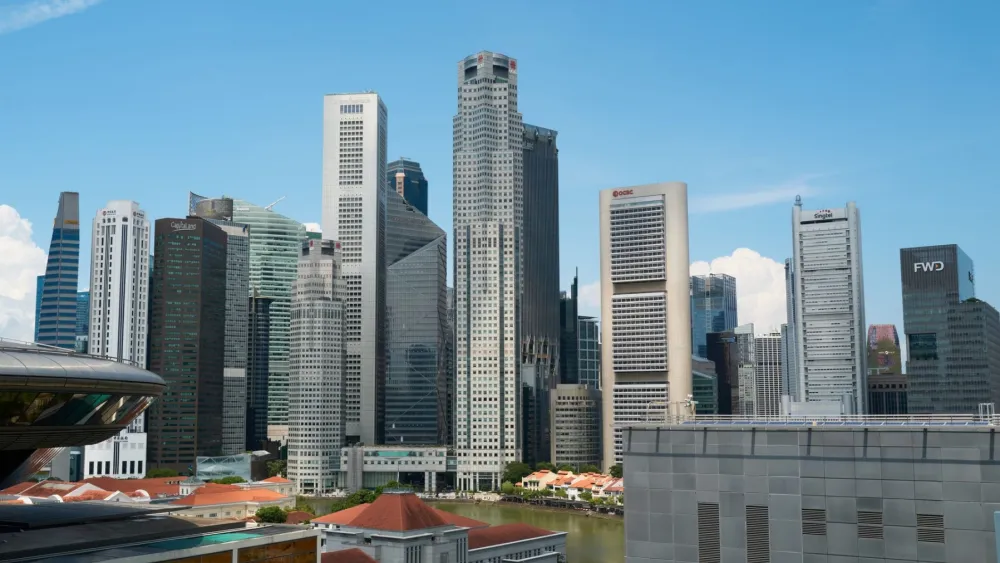
For Singapore, the parallel is not just comparable – it is identical. Singapore is the undisputed regional core: The hub of global finance, advanced technology, top-tier airports, and ports. Johor is its irreplaceable natural hinterland: Abundant land, competitive labour, and vast industrial development space.
The only missing piece is seamless, bonded, multi-modal cross-border integration – a gap that the Tuas Second Link is uniquely positioned to fill.
The Tuas Second Link Strategy: Bonded hub + direct rail connection to Changi air cargo
Singapore’s next transformative economic leap hinges on developing a large-scale, dedicated bonded logistics and advanced manufacturing support hub at the Tuas Second Link, equipped with full pre-clearance customs facilities and a dedicated freight rail spur directly connecting the hub to Changi Airport’s cargo terminal.
This paradigm-shifting hub operates on three non-negotiable core principles.
Single-stage full clearance
Goods entering from Johor complete all customs declaration, security inspection, and documentation procedures inside the Tuas bonded zone, with zero redundant checks at Changi Airport.
Rail-air direct interconnection
A dedicated freight rail line bypasses all road congestion, linking the Tuas hub to Changi’s cargo facilities in under 30 minutes, eliminating delays and transit risks.
Southern Malaysia supply chain orientation
The hub is purpose-built to attract component suppliers, precision manufacturers, and logistics firms from southern Malaysia, granting them seamless access to Singapore’s advanced manufacturing clusters and global air cargo network.
This is not just a logistics upgrade – it is a strategic restructuring of Singapore’s regional supply chain architecture.
Mutual strategic value: A win-win for Singapore and Johor
For Johor, the Tuas bonded hub is a game-changing economic catalyst: It eliminates crippling border delays and duplicate customs checks for goods destined for Singapore or global export; enables local manufacturers to access Singapore’s high-value advanced manufacturing supply chains without relocating; and positions Iskandar Malaysia as a core regional supply chain base, driving targeted investment and high-quality job creation.
For Singapore, the benefits are transformative and long-lasting: It permanently resolves the land and labour cost bottlenecks constraining advanced manufacturing, leveraging Johor as a stable, nearby nearshore hinterland; It drastically enhances supply chain resilience, shortening logistical lines and reducing reliance on distant, volatile overseas suppliers.
It solidifies Changi Airport’s dominance as Southeast Asia’s premier air cargo hub, securing a steady flow of high-value, time-sensitive manufacturing cargo; It builds an unassailable regional competitive barrier, forging an integrated Singapore-Johor supply chain bloc that no single regional city can replicate.
A resilient, integrated hinterland is not a luxury for Singapore – it is a strategic necessity for long-term economic survival.
Implementation: Pragmatic, phased, and fully within Singapore’s control
Crucially, this strategy is highly pragmatic and achievable. It leverages existing Tuas border infrastructure and available land, requires no complex diplomatic negotiations or sovereignty compromises (operating fully under Singapore’s customs jurisdiction), and can be rolled out in phases: Starting with customs pre-clearance, followed by rail connectivity construction, and concluding with full advanced manufacturing supply chain integration.
Conclusion
Singapore’s future as a global leader in advanced manufacturing and logistics will not be defined by what it builds within its borders, but by how it strategically integrates beyond them. By transforming the Tuas Second Link into a bonded logistics hub with direct rail-air connectivity to Changi Airport, Singapore can turn Johor from a neighbouring region into a deeply integrated, fully supportive supply chain hinterland.
This is a disruptive, forward-thinking strategy that carries profound guiding significance for policymakers, Changi Airport’s long-term development and Singapore’s industrial policymakers. It is not merely an infrastructure project – it is a blueprint for securing Singapore’s economic competitiveness, resilience, and regional leadership in the decades to come.
In an era of global supply chain realignment, Singapore’s greatest competitive advantage lies not in isolation, but in strategic, seamless regional integration.






















 Read Here
 Advertise
 Sign Up