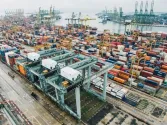
Postponed HSR project could hurt property development in Malaysia
It could likely hit the residential and commercial property segments.
Malaysia’s postponement of the Singapore-Kuala Lumpur High-Speed Railway (HSR) could take its toll on the growth of residential and commercial development in the country, Fitch Ratings said.
Moreover, the suspension of the East Coast Rail Link and the downsizing of the LRT3 project in Kuala Lumpur could also hit the real estate outlook for Malaysia, the research agency added.
“Planned and ongoing large-scale real estate developments, particularly those sponsored by the 1MDB investment fund or ones involving Chinese investors, are likely to come under scrutiny,” they commented.
Also read: Singapore to buoy investment woes from dropped HSR project
Other suspended projects included the work on the US$1.9b Tun Razak Exchange in Kuala Lumpur, which was being built by a 1MDB subsidiary.
“However, the government has since said it would bail out the largely completed project,” Fitch Ratings explained.
The research firm also thinks that earlier-stage projects similar to 1MDB such as the Bandar Malaysia complex may be significantly altered or cancelled.
In addition, those that are backed by Chinese companies or investors could also come under scrutiny, as Mahathir criticized the Forest City complex in Johor during the campaign period and pledged to look into all China-backed projects in the country.
Despite this, Fitch Ratings said that Malaysia’s stable economic will continue to back baseline support for investment in residential, commercial and industrial projects.
























 Read Here
 Advertise
 Sign Up