Asia gets incredibly expensive for expats
So where does Singapore stand in the rankings?
According to a release by ECA International, in Asia as a whole, the price of goods and services commonly purchased by expatriates has risen by just over 6 per cent on average – slightly higher than the 4 per cent increases witnessed a year ago. While Japan has seen the smallest price increases in the region, Tokyo is still the most expensive location in Asia - and the world - for international assignees.
Globally, the rapid rise of Beijing and Shanghai have seen both cities overtake a number of locations in Australia, Brazil, Europe and the United States, including Rio de Janeiro (31st), Paris (34th) and Manhattan (40th).
Locations across mainland China have also climbed up the ranking and second-tier cities Shenzhen and Guangzhou now sit just behind Hong Kong at 10th and 11th place respectively in the Asian rankings and 55th and 56th in the global ranking. For the first time, both cities are now more expensive than Central London (at 62nd place), along with Beijing, Shanghai and Hong Kong.
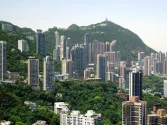
Like Singapore, Hong Kong is now below Beijing and Shanghai in the ranking and has dropped from 7th to 9th position within Asia. However, the city has climbed back up the global ranking, following last year's falls. Hong Kong is the 36th most costly location globally up from last year's 47th position and almost back to the 34th place it held two years ago.
The most expensive of the Indian cities for international assignees is New Delhi, ranked 209th globally. It is followed by Mumbai (212) and Bangalore (231).
Karachi, ranked 256th, is the least costly location in Asia, and in the survey..

























 Read Here
 Advertise
 Sign Up