Telcos pushed towards deterministic networks as latency kills revenue
"Best-effort" broadband is no longer enough for AI workloads.
Telecom operators are urged to adopt deterministic networks that guarantee performance as artificial intelligence (AI ) workloads expand, according to Dion Teo, Partner at Analysys Mason.
“Today, many broadband networks operate on a best-effort basis,” Teo said during the 2026 Asian Telecom Summit in Singapore.
In the AI era, however, businesses will need networks that guarantee no data loss and stable, predictable speeds. “Deterministic networks ensure data packets are delivered reliably from source to destination.”
The change is linked to the growing use of AI in business operations, where even small delays can affect user experience and revenue. Teo said hyperscalers have long treated latency as critical, as slower load times can translate directly into lost income.
Bandwidth requirements are also rising. Inside data centres, AI clusters are already running at port speeds of around 800 gigabits per second (Gbps) to 1.6 terabits per second (Tbps). “With advances in photonics, the target is around 3.2 Tbps.”
“Between data centres, for east-west traffic, Dense Wavelength Division Multiplexing-type bandwidths of 100 Gbps to 400 Gbps are typically used, and in some cases, they can reach up to 800 Gbps,” Teo added.
However, power may become a bigger constraint. By 2030, electricity demand from data centres is expected to double, with some projections even higher.
“The primary input for AI workloads is power,” Teo noted, pointing to heavy traffic between AI and GPU clusters as a key driver of rising consumption.
With grid congestion already emerging in some markets, operators and data centre providers are looking at load balancing and on-site power generation to maintain stability.
“Additionally, behind-the-meter power solutions are becoming more common,” he said. “This involves installing natural gas generators directly at data centre sites, enabling them to draw power independently from the grid. “
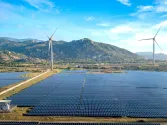
Teo added that the industry is moving towards an intelligent power grid that balances loads better and uses on-site power generation alongside the main grid. More of this is being done using renewable energy.






















 Read Here
 Advertise
 Sign Up