$800m pledged for Decarbonisation Grand Challenge under Singapore's RIE2030
The fund targets hydrogen, carbon capture, and solar.
Singapore will invest $800m over five years in the Decarbonisation Research, Innovation and Enterprise Grand Challenge (DGC), which forms part of the Research, Innovation and Enterprise 2030 (RIE2030) plan.
The programme was announced during the Committee of Supply debate on 2 March 2026.
The DGC will fund research and development of low‑carbon technologies for the power and industrial sectors.
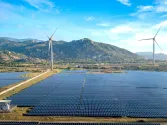
Areas covered include solar power, hydrogen and its derivatives, energy efficiency, energy storage, carbon capture and utilisation, and grid modernisation.
The programme includes Singapore Pilots for Energy and Enterprise Decarbonisation (SPEED), which will involve pilot projects and trial deployments of technologies.
Participants include facility owners, investors, solution providers, and government agencies.
The DGC is one of two grand challenge programmes under RIE2030.
In the same debate, ministers also discussed energy transition measures, including carbon tax, solar deployment, biomethane, low‑carbon hydrogen, and studies on small modular reactors (SMRs).
International cooperation on energy and decarbonisation was also mentioned, including partnerships on technology studies and energy projects.






















 Read Here
 Advertise
 Sign Up