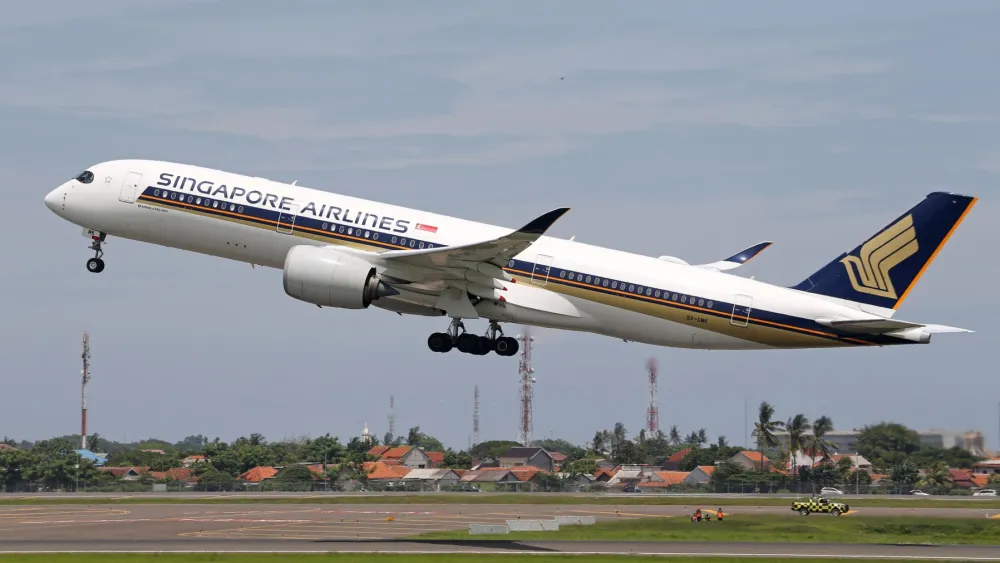
Singapore targets next-gen workforce for growing aviation sector
It aims to broaden views of aviation jobs beyond pilots and cabin crew.
Singapore’s aviation authorities are stepping up efforts to attract and retain local talent as the industry prepares for a major expansion, including the opening of Changi Airport’s Terminal 5 by 2030.
The Civil Aviation Authority of Singapore (CAAS) and Workforce Singapore (WSG) are developing programs to make aviation careers more appealing to younger and mid-career workers as part of a broader plan to sustain growth in the sector.
Angela Ng, director for aviation industry at CAAS, said the strategy involves reshaping perceptions about aviation jobs, which many still associate narrowly with pilots and cabin crew.
“There really is a very wide and diverse variety of aviation careers,” Ng told Singapore Business Review via Zoom. “We see it as important to share with Singaporeans that there is a wide variety of opportunities available to them.”
Ng cited the One Aviation Careers Fair held in July, which showcased roles ranging from air traffic management to aviation engineering and digital operations.
The industry employs more than 60,000 workers across airlines, airport operations, air traffic control, maintenance, and security services, according to a joint report by CAAS and WSG. The agencies identified 31 operational job functions essential to
Singapore’s air hub, including aircraft engineers, baggage handlers, and in-flight catering professionals.
Beyond hiring, retaining talent amidst rapid technological change is a growing concern. Anderson Ee, director for manufacturing and connectivity at WSG, said the sector would see major shifts as artificial intelligence, automation, and robotics transform operations.
“The priority will be for existing professionals to harness AI tools to augment their jobs and automate manual and repetitive tasks,” Ee said in the same Zoom call. Over the next five years, jobs that are heavily manual would see the greatest change, he added.
The shift will require extensive job redesign, reskilling, and closer coordination among employers, unions, and workers. Ee said collaboration is crucial to ease anxieties and ensure workers can adapt.
“Employers are encouraged to collaborate with unions and workers to co-create solutions instead of trying to take a top-down approach,” he said. “There is no one-size-fits-all approach.”
Ng added that automation would also help older workers stay productive longer by reducing the physical demands of labor-intensive work. Both officials cited the Singapore Aviation Sector Tripartite Committee—composed of industry, labor, and government leaders—as key to coordinating workforce transformation.
To attract younger workers, CAAS and WSG are pushing “skills-first” hiring approaches that recognise transferable skills and potential for reskilling. Ng said clear career progression frameworks and targeted training would help sustain long-term interest.
Partnerships with educational institutions are also central to the strategy.
Ee said WSG works with polytechnics and technical universities to strengthen aviation-related courses and training programs.
Structured internships and early engagement with students are meant to give prospective recruits first-hand industry exposure before they enter the workforce.
For mid-career professionals, WSG offers career advisory services through its centres to help jobseekers understand how their existing skills can be applied in aviation. Individuals often underestimate how their experience can be valuable within the sector, Ee said.
Ng said Singapore’s ongoing investments—including Terminal 5 and the transition to three-runway operations—would create thousands of jobs across aviation sub-sectors.
“We have made substantial investments into our future,” she said. “With this, it's evident that more jobs will be created across all key employment subsectors.”



















 Read Here
 Advertise
 Sign Up