Deel and the talent shift: How specialised talent is reshaping global hiring
Global hiring is evolving fast, and Singapore is at the centre of it, driving the demand for specialised talent.
Singapore’s ambition to be a global artificial intelligence hub is actively reshaping how companies hire, pay, and compete for talent. Businesses are clearly looking beyond cost optimisation to use global hiring as a funnel for specialised talent.
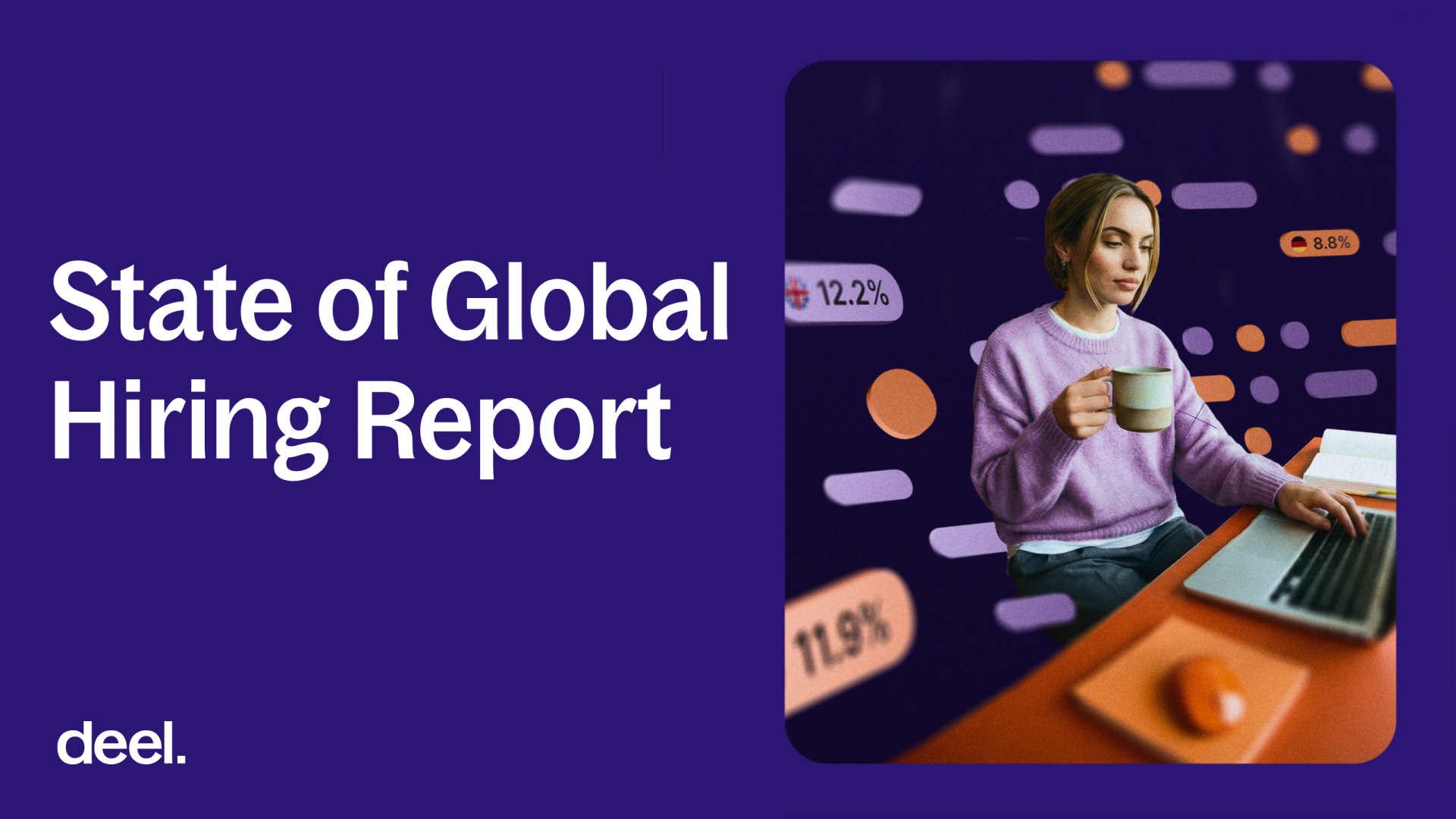
Insights from Deel’s 2026 State of Global Hiring Report back this up, showing the global nature of the future of work. Singapore is playing the dual role of both a magnet for expertise and a launchpad for cross-border talent strategies in ASEAN.
From cost arbitrage to skills-first global hiring
“Companies are going beyond ‘outsourcing for cost’ to ‘hiring for specialised talent,’ especially with cross-border hiring becoming the future of work,” said Lauren Thomas, Economist at Deel, in an interview with Singapore Business Review.
This shift reflects how organisations are aligning hiring decisions with strategic priorities.
Amongst top startups, software developers account for a significant share of cross-border hires, followed by roles in tech sales, business development, and AI engineering. These are positions tied directly to revenue, product innovation, and customer growth.
Overall global hiring demand reflects a lot of these hiring patterns: seven of the top ten cross-border roles now come from sales, marketing, and client relations functions.
“Cross-border hiring is less about cost and more about capability,” Thomas stated, noting that companies are now targeting specific skills gaps that cannot be easily filled locally.
In Singapore, domestic talent pools are limited. Hence, this evolution is particularly significant. For many high-growth firms, cross-border hiring is no longer optional; it has become a core lever for sustaining product roadmaps, market expansion, and revenue growth.
AI talent
AI training, which was once a niche function, has quickly become central to how organisations deploy and scale artificial intelligence.

“One significant trend we are seeing is the arrival of AI trainers as a new role, with 70,000 workers now training AI systems across more than 600 organisations,” Thomas said, adding how general AI trainer roles hired across borders grew 283% in 2025—“making it the single fastest-growing cross-border role on Deel’s platform.”
Singapore has emerged as the top employer of AI trainers in APAC, outpacing larger economies. Compensation levels reflect this demand, with AI trainers in Singapore commanding some of the highest median hourly rates in the region.
AI systems require continuous human input to function effectively. “AI trainers are the group providing that linguistic and domain expertise,” Thomas explained.
Aligning with this is the formation of Singapore’s National AI Council, alongside AI initiatives in key sectors. At the same time, rising work permit levies are nudging businesses to invest more in automation and digital capabilities.
AI adoption requires building the human layer that makes AI usable, reliable, and commercially viable. This includes not only hiring specialised roles like AI trainers but also upskilling existing employees. This is a dual workforce strategy that combines global hiring for niche expertise with internal capability-building to maximise the value of AI.
The future of cross-border workforce strategy
Whilst global trends show strong pay growth in executive and project management roles, Singapore’s pattern is more tied to functions that directly influence business performance.
Senior product managers, sales account managers, and customer service roles are seeing some of the fastest compensation growth in the market. Product managers in Singapore marked a 70%-compensation growth between 2024 and 2025, whilst customer service representatives and sales account managers recorded 31.6% and 28.4% growth respectively.
At the same time, companies are targeting specific markets and talent pools based on strategic needs. With this more intentional approach, distributed teams are increasingly organised around a hub-and-spoke structure, where talent remains globally dispersed but clusters around key innovation hubs and customer markets. This allows organisations to balance the benefits of remote work with the need for collaboration, regulatory familiarity, and market proximity.
Infrastructure for the next wave of global hiring
For business leaders in Singapore and across ASEAN, the question is no longer whether to hire across borders, but how to do it in a way that is scalable, compliant, and connected.
First, hiring must be explicitly aligned with business outcomes. This is by identifying the roles that truly drive roadmap, revenue, and customer experience, and then deciding where those skills are best found, whether locally or abroad.
Second, organisations need robust infrastructure for a global workforce: a unified platform that aligns hiring decisions with the ideal employment model (EOR, contractors, or owned entities) whilst integrating HR, payroll, compliance, and mobility into one system. Without this, cross-border hiring lapses into manual workarounds, redundant data, and inconsistent worker experiences across markets.
Lastly, companies must rethink how they compete for talent. In a skills-first market, providing flexibility in work location, engagement types, and multi-currency pay is now a core part of the talent value proposition rather than just a back-office task.
Singapore’s experience offers a preview of what this future looks like. As AI becomes central to economic strategy and cross-border hiring matures, the rules of how and where companies build their teams are being rewritten. Platforms that can connect those decisions end-to-end will increasingly define who moves fastest.
To learn more about Deel and the global hiring landscape, visit Deel’s official website or download the full report here.

























 Read Here
 Advertise
 Sign Up