Business vs. Household: PM Wong weighs 4.8% growth against relief in Budget 2026
RHB expects a strategic balance between short-term relief and economic competitiveness.
As the Singapore government is set to lay out its priorities for its 2026 budget, here’s what analysts and stakeholders hope to see in this year’s spending plan.
Prime Minister Lawrence Wong is set to deliver the Budget speech in Parliament on 12 February. The Ministry of Finance opened its public consultation for Budget 2026 in December, as it seeks views across several themes, such as strengthening the economy through entrepreneurship, competitiveness, and AI adoption.
According to RHB’s Global Economics and Market Strategy Report, the budget for this year is expected to centre on four key priorities, namely safeguarding job security and strengthening workforce resilience, reinforcing Singapore’s economic relevance and strategic positioning, deepening the social compact through enhanced cost-of-living support, and advancing the green transition and climate resilience.
“We believe this budget will balance short-term household support with long-term economic competitiveness, whilst maintaining fiscal discipline – consistent with the government’s multi-year approach to stability and transformation,” the report read.
Whilst the domestic economy looks stable in the near term, expanding 4.8% in 2025, RHB noted that risks from growing uncertainties and a more fragmented global economy could weigh on growth over the next few years.
“Against this backdrop, a key question for Budget FY2026 is how fiscal policy will be deployed not only to cushion cyclical risks, but also to strategically reposition Singapore’s economy for the next phase of growth,” it said.
Meanwhile, Deloitte is calling for targeted tax, innovation, and workforce measures in Budget 2026 to help businesses and households navigate global uncertainty and tightening international tax rules.
There is a need for clearer and more consistent guidance on foreign-sourced income rules and Section 10L to reduce uncertainty for multinational enterprises, it added.
The Singapore National Employers Federation also urged the government to provide targeted support to help businesses manage manpower and cost pressures whilst accelerating workforce and enterprise transformation, citing heightened uncertainty among employers despite a stronger growth backdrop.
For PwC and the Singapore Business Federation, they are pushing for a centralised digital intellectual property collateral registry to improve transparency and enable better risk assessment.
They also suggested that Enterprise Singapore’s risk-sharing schemes could be expanded to cover IP-backed financing, with enhanced ratios of 70% to 80% for qualifying transactions.
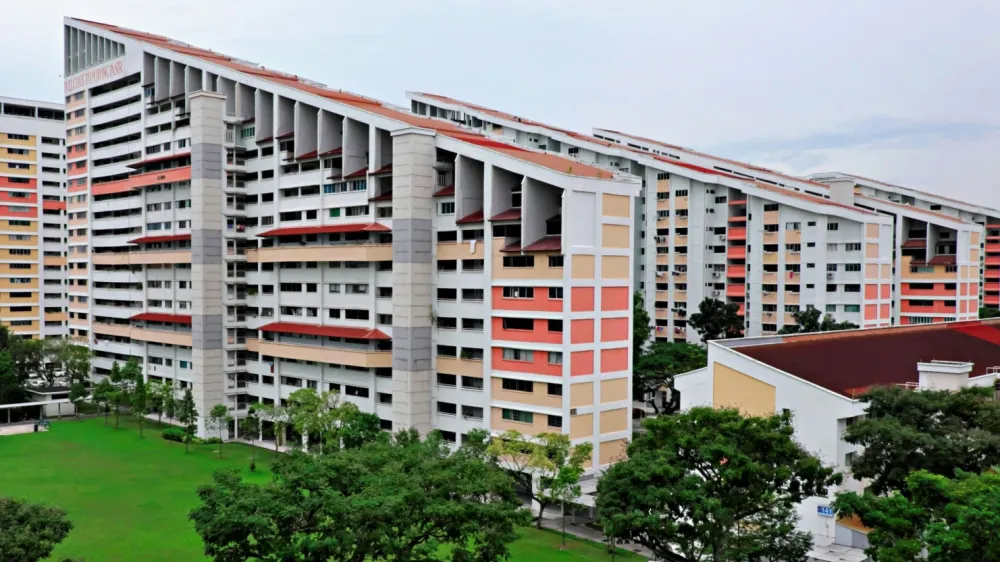
When it comes to housing, PropNex proposed a set of policies to maintain property market stability, improve housing affordability, and encourage urban renewal.
Some of its policy recommendations are easing the additional buyer’s stamp duty rate for foreigners buying high-value non-landed private homes in the Core Central Region, and raising the monthly household income ceiling and mortgage servicing ratio for the purchase of new executive condominiums.
























 Read Here
 Advertise
 Sign Up