Singapore trails on property rights despite strong stability scores
Political stability topped the assessment as safety and stability reached an 80.2 rating.
Singapore scored 68 for property rights for non-citizens, the lowest amongst the five indicators that make up its 80.2 safety and stability score in the 2026 Rumavi Global Relocation Index.
Singapore scored 93 for political stability, 88 for conflict risk, and 78 each for street safety and rule of law with property rights trailing the rest of the criteria, according to Rumavi.
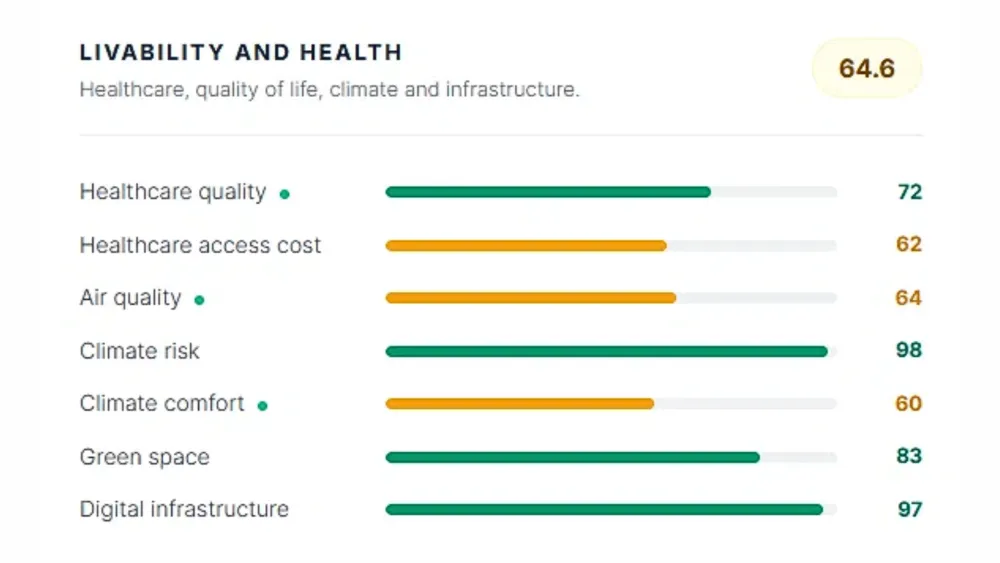
Singapore's safety and stability score of 80.2 matched its settling and opportunity score and exceeded its financial and tax score of 71.6 and livability and health score of 64.6.
Overall, Singapore ranked second globally in the 2026 Rumavi Global Relocation Index with a score of 72.6, behind Estonia's 72.8. Malaysia ranked third with 72.0, followed by Portugal, and Taiwan.
Rumavi evaluates 192 countries and territories across 24 indicators grouped into four pillars which are financial and tax, livability and health, safety and stability, and settling and opportunity.
The index, published on 1 July, noted the safety and stability pillar measures street safety, rule of law, political stability, conflict risk, and property rights for non-citizens.


























 Read Here
 Advertise
 Sign Up