Why Singapore’s intellectual property regime gives clean-tech startups a regional advantage
By Dr Seemantani SharmaClean-tech founders often face the “valley of death” between invention and commercialisation.
Singapore’s intellectual property (IP) regime is widely recognised as one of the most sophisticated in the world. It is consistently ranking amongst the top 10 globally in the World Intellectual Property Organization’s Global Innovation Index for IP protection and enforcement.
Government initiatives such as CleanTech Park, the Singapore Green Plan 2030, and EDB’s push to make Singapore a testbed for green solutions underscoring its potential to become South East Asia’s clean-tech hub. Some of the key IP features that give Singapore an edge as a regional spring board for clean-tech ventures are:
Strong patent protection
Singapore has a robust regime for patent protection which is aligned with global standards under WIPO’s Patent Cooperation Treaty (PCT).
The Intellectual Property Office of Singapore (IPOS) now offers the SG Patents Fast programme, which enables applicants to receive their first office action in as little as four months. This is crucial for clean-tech startups to attract venture funding.
Most importantly, IPOS participates in ASEAN Patent Examination Co-operation (ASPEC), the Patent Prosecution Highway (PPH), and the Collaborative Search & Examination (CS&E) programme with Indonesia.
These schemes and initiatives allow clean-tech innovators to leverage search results from Singapore to speed up patent grants across the region. For clean-tech founders eyeing multiple Southeast Asian markets, this dramatically shortens time-to-protection and reduces legal costs.
Active technology transfer and commercialisation pathways
Singapore’s innovation ecosystem is designed to convert intellectual assets into market-ready solutions. Research institutes such as ASTAR work closely with industry through licensing and spin-out programmes.
Further, GoBusiness IP Grow helps startups assess, protect, and commercialise their IP. Moreover, IPOS’ Intangibles Disclosure Framework standardises how firms report IP and other intangible assets, making it easier for investors to value clean-tech portfolios.
Lastly, schemes such as IPOS’ IP Start Programme and NRF’s Research Innovation Enterprise (RIE) strategy provide guidance to startups on IP strategy and access to funding for proof-of-concept projects. As a result, clean-tech startups can focus on scaling impact solutions rather than being bogged down by legal complexity.
Efficient dispute resolution and legal certainty
Singapore is a global leader in IP dispute resolution as it offers arbitration, mediation, and litigation under a neutral and business-friendly framework. The presence of the WIPO Arbitration and Mediation Center (Singapore Office) further strengthens Singapore’s position by providing international parties with cost-effective, confidential, and enforceable dispute resolution options.
Further, Singapore IP Strategy 2030 (SIPS 2030) has cemented Singapore’s position as the “go-to” venue for IP dispute resolution giving startups and investors’ confidence that contractual rights will be enforceable without protracted litigation and efficiently.
Coordinated national strategy
What makes Singapore’s model unique is how these elements are coordinated. SIPS 2030 ties together patent acceleration, commercialisation support, IP valuation, and dispute resolution under a single national vision.
For example, MinLaw and IPOS have collaborated with sectoral agencies like the Maritime and Port Authority (MPA) to embed IP and innovation strategy into clean-energy transitions (especially decarbonising shipping). Tax incentives further sweeten the equation, offering enhanced deductions for R&D, IP registration, and licensing expenses.
Case studies: From testbeds to regional leaders
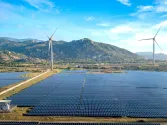
Singapore’s clean-tech ecosystem already shows practical examples of these advantages. For example, EDP Renewables APAC leveraged Singapore’s regulatory clarity and public solar testbeds to refine its floating photovoltaic technology before expanding across Asia.
Similarly, water-treatment innovators such as Meiden Singapore and Aquaporin A/S have partnered with PUB (Singapore’s National Water Agency) on technology demonstration projects that also clarified IP ownership and licensing terms.
Resync Technologies, a homegrown energy efficiency startup, built its proprietary artificial intelligence-driven energy platform in Singapore’s strong IP and innovation ecosystem, giving it the credibility to break into regional markets.
The bottom line: What it means for clean-tech founders
Clean-tech founders often face the “valley of death” between invention and commercialisation. Singapore’s IP regime (which is akin to an economic infrastructure and not merely a legal instrument) helps shorten that valley by protecting ideas, lowering transaction costs, and attracting capital.
Add to that government funding (such as the SG Eco Fund) and living-lab initiatives (like the Yuhua Agritech Solar project which provides test beds for running pilots), the result is a uniquely complete launch platform for clean-tech startups.
It is important to note that Singapore will not substitute for market access or manufacturing capacity in every country in South East Asia. Nonetheless, its IP landscape makes it a low-friction place to design, protect, and launch clean-tech solutions for the region.
In a decade when ASEAN’s demand for clean energy, water security, and circular-economy solutions is set to explode, Singapore stands out as the region’s most secure and dynamic launchpad for building tomorrow’s clean-tech giants.


























 Read Here
 Advertise
 Sign Up