How structural shifts drive AI returns
As AI takes over technical roles, human leadership presence and self-awareness are the new executive moats.
The new challenge for executives is shifting from experimenting with new technology to restructuring the company itself, as success now depends on how a business is built and organised rather than just the skills of its people.
Amidst a fast-paced business environment where new tools are being developed, INSEAD held the Learning@INSEAD Summit at its Asia Campus in Singapore from 20 to 21 April. During the 1.5-day event, senior leaders, peers, and INSEAD faculty engaged in insightful discussions on the future of leadership and learning in a rapidly changing world.
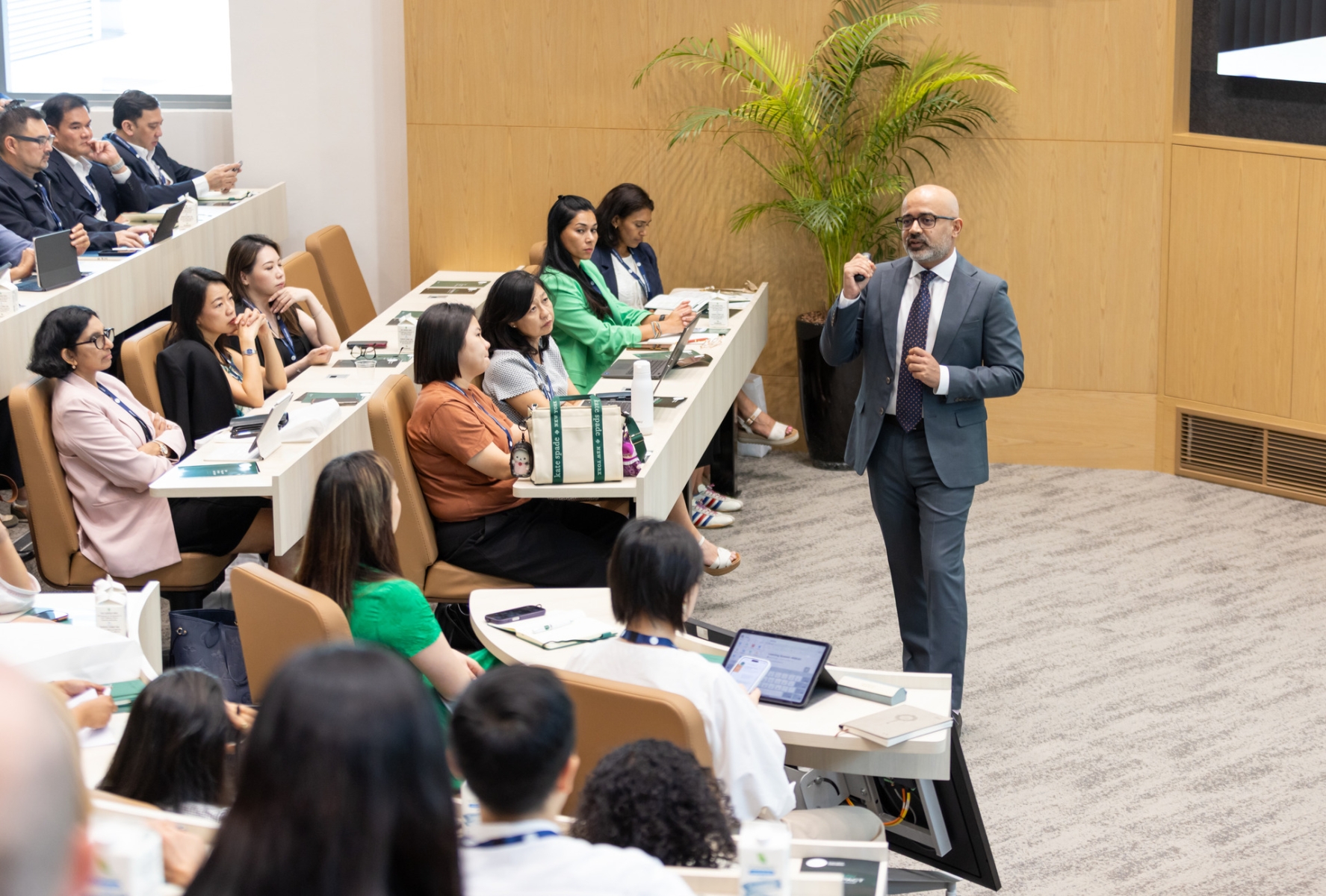
Following INSEAD Asia Campus dean Sameer Hasija’s opening remarks, Pushan Dutt, professor of Economics and Political Science, opened the summit by highlighting the O-ring model, which means that different tasks are complementary. He noted that if one small part fails, the entire system fails.
“It's not sufficient for you to just hire the best people… all your jobs have tasks which are actually complementary. When tasks are complements, what you really have to worry about is your weakest and critical component, and what you worry about are your bottlenecks in the system,” he said.
Hyunjin Kim, a professor in the strategy area at INSEAD, meanwhile, identified a "gap" where companies that only integrate artificial intelligence (AI) into "peripheral tasks" see only marginal gains. In contrast, firms that integrate AI fully into their products and organisational design see significantly larger returns.
For instance, in the use of electricity, “the real transformative gains from electricity didn't come from just adopting electricity into the factory,” Kim said.
Phanish Puranam, professor of Strategy, the Roland Berger Chaired Professor of Strategy and Organisation Design at INSEAD, argued that because future tasks are unpredictable, organisations must focus on meta-skills, which allow their employee base to be "redeployable" as technology shifts
“Meta skills are an adaptation strategy for the individual, but also for the organisation. It's in both areas, and that's why the technology deployment question is important. If you deploy these tools in a way that leaks away the metas, then you have a problem on your hands,” he explained.
“But if you deploy it in a way that meta skills are preserved, then you would be able to redeploy it in the future as new tasks come,” he added.
Philip Parker, professor of Marketing at INSEAD, also said that executives must decide whether to "build muscle" in AI as a core strategic variable. This "building of muscle" is an organisational choice, not just a matter of hiring skilled individuals.
“There's no choice. It's not that painful, frankly, but you have to make that choice because if you decide not to build muscle, I can forecast right now who you're going to be. You're going to be a vendor manager,” he stressed.
Meanwhile, Andy Yap, associate professor of Organisational Behaviour at INSEAD, focused on mastering leadership presence and body language, highlighting common psychological gaps in power hierarchies. He noted that “the higher you rise, the more self-awareness becomes really important.”
To bridge this gap, Yap utilises VR simulation to help executives build self-awareness and practice controlling their non-verbal signals in realistic business scenarios.
Meanwhile, Ithai Stern, a professor of strategy at INSEAD, discussed shifting from single bets to strong options. He noted that a critical missing capability in modern organisations is not execution, but the systematic discipline to look through different strategic lenses to build the next move.
“Most organisations use only one... but the ones that succeed over time... manage [to] generate and deploy a set of these strategic moves,” he said.
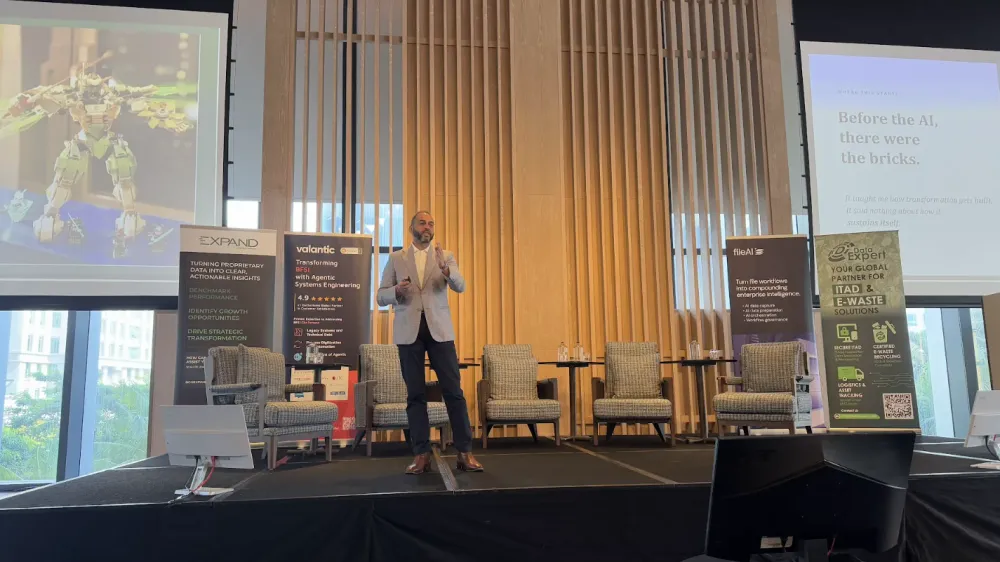
Leaders from the Public Service Division, Singapore Academy of Law, and Tata Consultancy Services also discussed human-centric strategies in a world driven by AI.



















 Read Here
 Advertise
 Sign Up