Singapore's third desalination plant starts operations
It will increase the current desalination capacity from 100 mgd to 130 mgd.
The Tuas Desalination Plant (TDP) was launched as the third facility that targets to answer the country’s water demand. Operated by the Public Utilities Board (PUB), the plant will increase the country’s current desalination capacity from the 100 mgd to 130 mgd, an announcement revealed.
"Seawater desalination has a starring role in Singapore's water future. And the opening of this TDP is another milestone in our quest for enduring water security," PUB chief executive Ng Joo Hee said.
The first government-owned and operated compact plan is a 3.5 ha facility that can produce up to 30 million gallons (mgd) of drinking water which can supply about 200,000 households. It is the first desalination plant in Singapore to adopt a pre-treatment process that combines dissolved air floatation and ultrafiltration to help reduce membrane fouling when treating seawater of varying water quality.
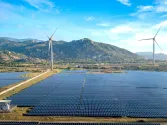
With a 1.2MWp solar photovoltaics (PV) system slated for instalment on more than half of TDP's roof surface by the end of 2018, the TDP is targetting to utilise clean energy. The solar PV system with its 7000 sqm of roof surface can generate some 1.4 million kWh a year, which can supply the energy needs of more than 300 four-room flats a year.
According to PUB, the use of such facilities will help to power the energy needs of part of the plant and reduce the plant's carbon footprint. TDP has received the Green Mark Gold Award for its use of solar photovoltaics and energy-efficient LED lightings in 2018.
Singapore has two other desalination plants including SingSpring (30 mgd) and Tuaspring (70 mgd) in operation whilst two more in Marina East (30 mgd) and Jurong Island (30 mgd) are set for completion by 2020. The country’s water demand is expected to double by 2060 from 430 million gallons per day due to growth in population and economy.
“Singapore's future water security lies with desalination and reuse. These rainfall-independent sources of water will also help to reduce our vulnerability to weather uncertainties,” PUB noted.
























 Read Here
 Advertise
 Sign Up