
Rising costs push investors toward hotel repositioning strategies
Higher construction costs and limited supply shift capital to asset upgrades and conversions
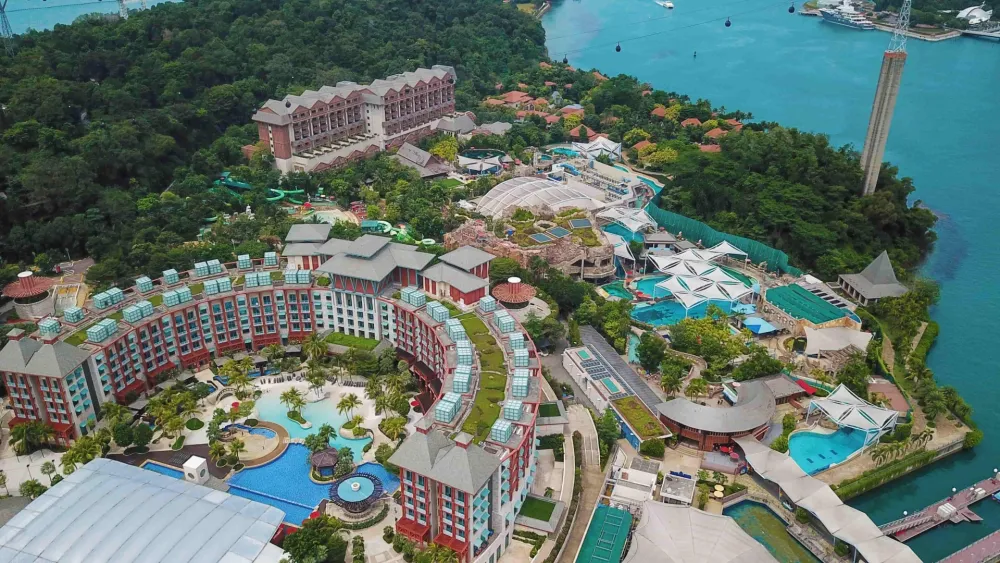
Singapore’s hotel market is drawing sustained investor interest as supply growth remains capped at 1.3% annually, tightening availability and supporting returns.
Wong Xian Yang, Head of Research for Singapore & Southeast Asia at Cushman & Wakefield, said “limited supply continues to underpin investment prospects in the sector,” with rising energy prices and construction costs discouraging new developments and narrowing the future pipeline.
Higher build costs are shifting investor focus towards existing assets. Wong said interest is centred on “asset enhancement and… repositioning strategies,” including upgrades and conversions such as co-living, where value can be unlocked without new construction.
Returns remain attractive. Hotel yields of 4% to 5% compare favourably with office assets at 2% to 3%, widening the spread and supporting capital allocation into hospitality. Strong operating performance reinforces this, with occupancy, RevPAR, and ADR still above pre-pandemic levels.
Ervin Seow, Vice President of Advisory & Asset Management at JLL’s Hotels & Hospitality Group, said investor activity reflects “conviction” rather than aggressive buying, with disciplined underwriting focused on asset quality, location, and operator strength.
Pricing flexibility is also supporting margins. Seow said the sector has “natural inflation hedging characteristics where, every day the rate can change,” allowing operators to adjust room rates quickly to offset rising costs.
Demand remains stable, supported by a broad events calendar. Whilst events such as Formula 1 last “3-4 nights out of 365 nights” and “don’t move the needle materially,” Seow said a steady mix of concerts, meetings, and cultural activities sustains year-round occupancy. Wong added that peak events still lift RevPAR “about 17 to 18% higher” than average, providing short-term boosts.
However, risks persist. Higher airfares and a more cautious travel environment could soften occupancy and limit further rate increases, whilst global economic uncertainty may weigh on demand.
Even so, Singapore remains one of the region’s strongest-performing hospitality markets, supported by high occupancy, premium pricing, and a large share of international visitors.
With new supply constrained and development costs rising, investors are expected to prioritise repositioning strategies and operational improvements. The market is increasingly defined by pricing power and yield advantages, keeping capital focused on existing assets rather than new builds.






















 Read Here
 Advertise
 Sign Up








Commentary
Singapore’s global dispute fault lines
‘Tokenmaxxing’ – The wrong AI race to run in Singapore
To outsmart modern fraud, we must first know the enemy
Why Singapore SMEs cannot wait for quantum cyber risk to arrive before securing data
Is Singapore's emphasis on long-term security and stability hindering purpose-driven employees?
When Singapore's agentic AI ‘chefs’ arrive, will the kitchen be ready for them?