Large operators to dominate flexible office market
Workthere said smaller brands will likely be acquired by large operators as competition in the market intensifies.
High demand is considered positive news for most players in any market; however, for small operators of flexible office spaces, that is not the case.
When demand rises, so do rents, and according to real estate service provider, Workthere, small operators cannot cope well with such a situation.
"Smaller operators have been reducing their real estate footprint in response to rising rents," Ashley Swan, executive director of
Commercial Leasing at Savills Singapore, told Singapore Business Review.
Swan added that, unlike larger operators, small brands are unable to sacrifice some probability to offer incentives such as rent-free months to spur sales.
With competition in the market expected to further tighten in 2023, Swan said smaller operators will likely be acquired, and the market will be dominated by larger brands.
"As competition intensifies, we will see greater consolidation," he said.
"Flexible working spaces have lost their novelty compared to when WeWork first made inroads into Singapore. There are now many large coworking operators in Singapore, and we foresee stronger competition between them," he added.
Creating an attractive space
For operators to keep their spaces attractive, Swan said they can study what their users and clients prefer.
Observing Workthere's clientele, Swan said there is a general preference amongst users for window units, but not necessarily on the specific numbers of tables available since they generally can customise table arrangements in their units.
Swan said a lot of freelancers who are financial consultants or insurance agents who travel frequently use flexible spaces.
"Seniority-wise, they run the full gamut, from freelancers and entry-level employees to managers and directors," he said.
In terms of age, those using coworking spaces are mainly in their 20s to 40s.
Meanwhile, large companies and small and medium-sized enterprises (SMEs) renting out flexible spaces also look for bonus inclusions with their units, such as built-in manager cabins and sound-proof meeting rooms.
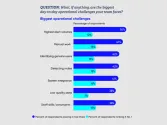
Based on Workthere's Flexmark 3.0 research report, there are five most-demand features of flexible spaces: phone booths (26%), internal meeting rooms (18%), extra passes for office space (17%), collaboration space (13%), and standing desks (10%).
Swan, however, underscored that the perfect flexible workspace still boils down to the "specific needs of the clients."
"Some prefer 'no frills' units to keep costs low while others favour 'best bang for the buck' deals while looking to maximise the number of rental inclusion," he said.
"Successful operators will also be the ones that can differentiate themselves by offering more creative rental inclusions and developing a unique style that is tied to their brand, whether in terms of the fittings and vibe of the space, customer service or backend support, etcetera," he added.
























 Read Here
 Advertise
 Sign Up