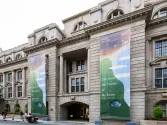
Singapore holds ground as Asia’s wealth shifts, report finds
About 73% of HNWIs increased diversification over the past 12 months.
Singapore remains part of affluent investors' cross-border wealth allocation as high-net-worth individuals (HNWIs) across Asia-Pacific diversify their portfolios amidst geopolitical and macroeconomic uncertainty, according to the 2026 Global Wealth and Lifestyle Report from Julius Baer.
The report from the private bank found that more than 73% of HNWIs in Asia-Pacific increased portfolio diversification over the past 12 months.
More than half at 53% added precious metals as a hedge, whilst 46% expanded the geographic spread of their investments.
Yee Kim Tan, Singapore branch manager at Julius Baer, said clients are increasingly focused on where assets should be held.
"What we are seeing in Singapore today is a shift in how clients think about diversification. Increasingly, the question is not just which assets to hold, but where those assets should sit," Tan said.
"In that context, Singapore continues to stand out as a natural choice. It is valued for its stability, strong rule of law and the sense of security it offers when planning for the long term. For many families, it forms part of a broader, deliberate allocation across regions, alongside Europe and the Americas,” he added.
The report also showed Singapore retained its position as the world's most expensive city for high-net-worth individuals for the fourth consecutive year.
Julius Baer said the ranking reflected the high cost of residential property and cars, which carry the largest weightings in its Lifestyle Index, together with the strength of the Singapore dollar.
Singapore remained the world's most expensive city for cars, ranked amongst the costliest places to obtain a Master of Business Administration (MBA), and placed third for residential property whilst healthcare ranking fell to 23rd this year from third in 2025.
Across the region, five Asia-Pacific cities ranked in the global top 10 of the Lifestyle Index: Singapore, Hong Kong, Shanghai, Sydney and Bangkok.
Average prices in the region rose 7.4% in US dollar terms, below the global average of 10.2%.
The report also said Hong Kong and Singapore have emerged as the two centres of a growing Asian wealth network as high-net-worth individuals diversify assets across a broader geographical spread.
Meanwhile, Asia-Pacific investors remained the most active globally in adjusting their portfolios.
Around 38% increased their investment risk over the past year, whilst 49% increased both investment and spending. Equities remained the preferred asset class, followed by cash and real estate.
Separately, 90% of respondents in Asia-Pacific reported an increase in wealth over the past 12 months.
Hotel suites, fine dining, healthcare, business-class flights, and smartphones were the categories where respondents increased spending the most, whilst 53% said they planned to increase healthcare spending over the next year.
























 Read Here
 Advertise
 Sign Up