Singapore nominal GDP projected to double to up to $1.8t by 2040
Singapore’s economy will continue to be services-led, with services accounting for roughly 74% of gross value added (GVA).
Singapore’s nominal GDP is projected to more than double to between $1.6t (US$1.2t) and $1.8t (US$1.4t) by 2040, according to the latest DBS Asian Insights report.
Real GDP is expected to grow at an average rate of 2.3% annually from 2025 to 2040.
The report attributed the bulk of this growth to capital accumulation and gains in human capital, contributing approximately 1.2 and 1.4 percentage points, respectively. Labour is expected to weigh slightly on growth, whilst total factor productivity (TFP) is projected to remain flat.
Singapore’s economy will continue to be services-led, with services accounting for roughly 74% of gross value added (GVA). Manufacturing is expected to comprise about 16%, and construction around 5%.
Key sectors within services include wholesale trade and transport, financial services, information and communications technology (ICT), and a growing care economy.
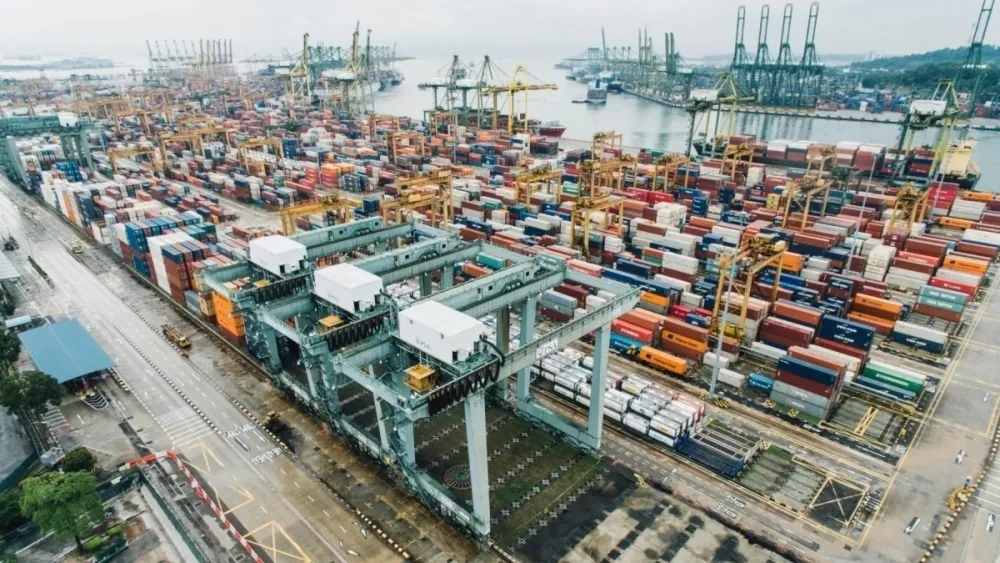
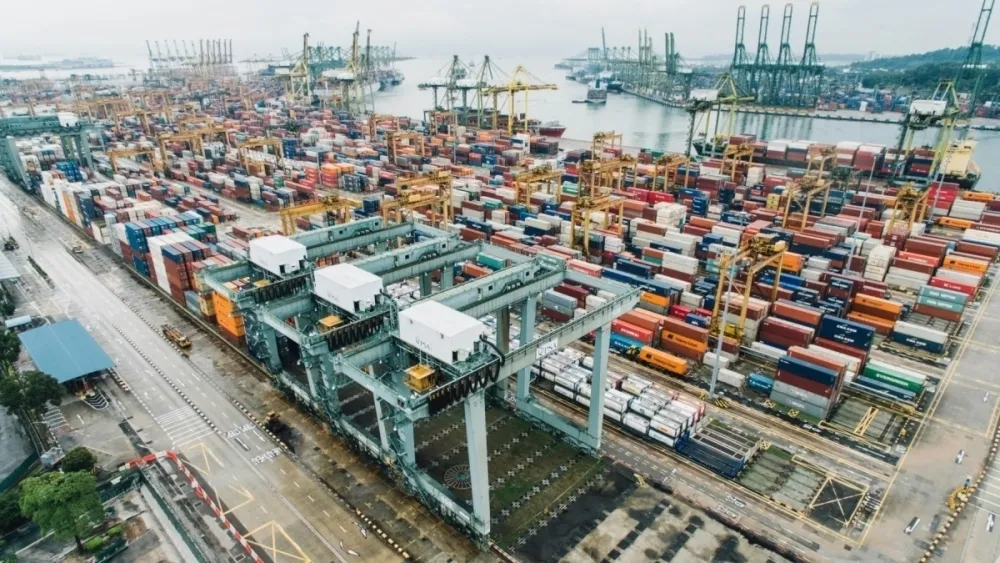
On the infrastructure front, Tuas Port is set to consolidate operations and expand capacity to 65 million TEUs by the 2040s. Changi Airport Terminal 5 is projected to raise passenger capacity to approximately 140 million and air cargo throughput to 5.4 million tonnes by the mid-2030s.
Digital platforms such as digitalPORT@SG and the Networked Trade Platform are expected to deepen integration in trade and logistics.
Singapore’s position as a global financial centre remains strong. As of 2024, assets under management (AUM) exceed $6t, with about 80% coming from foreign inflows. Efforts to deepen equity markets include the $5b Equity Market Development Fund (EQDP), and the city-state ranks as the third-largest foreign exchange centre globally.
The report outlined Singapore’s climate and energy transition plans, including achieving net-zero emissions by 2050.
This includes importing about 6 GW of low-carbon electricity by 2035, scaling up solar capacity, and developing technologies like hydrogen and carbon capture, utilisation and storage (CCUS).
Healthcare spending is set to rise as Singapore’s population ages. By 2040, one in three residents is expected to be aged 65 or older.
Government healthcare expenditure is forecast to reach $30b by 2030, representing a compound annual growth rate of 7.5% to 2030, tapering to about 5% thereafter. Around 13,600 additional healthcare beds are planned by 2030.
In terms of sector growth, digital infrastructure—including cloud, AI, and data centres—advanced manufacturing, semiconductors, cybersecurity, and biotechnology are identified as leading drivers through 2030.
Green energy, autonomous vehicles, and digital healthcare are expected to gain momentum into the late 2020s.
Key risks flagged include global economic volatility, rising protectionism, increased competition from regional hubs, property overvaluation, and climate-related challenges.

























 Read Here
 Advertise
 Sign Up