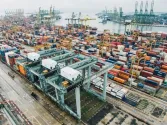
Singapore exposed as Asian refining margins surge past $25.6
Bunker fuel prices exceeded $1,280 per tonne in early 2026.
Singapore is highly exposed to global energy price swings due to its role as a major energy and trading hub, with over 1.3 million barrels per day of refining capacity, extensive storage, and the world’s largest bunkering operations.
Price movements affect domestic costs, trading volumes, shipping, and commodity-linked financial activity, according to Ayman Falak Medina in an ASEAN Briefing insight.
Volatility can boost profits for traders and storage operators, with refining margins in Asia rising from $6.4 (US$5) to $12.8 (US$10) per barrel to over $25.6 (US$20) during market dislocations.
At the same time, Singapore imports over 95% of its energy, with natural gas supplying 93% of electricity.
Rising global prices can increase operating costs in energy-intensive sectors by 2% to 6% and feed into inflation, whilst the Monetary Authority of Singapore uses the exchange rate to manage price pressures.
Shipping costs are also affected, with bunker fuel prices exceeding $1,280 (US$1,000) per tonne in early 2026.
Logistics costs and working capital needs rise, even as Singapore’s port benefits from higher transhipment demand.
Sectors are affected differently: aviation and manufacturing face immediate cost pressures, whilst trading and storage firms can gain from higher transaction volumes.
Singapore mitigates these risks through diversified energy sources, centralised procurement, and expanding infrastructure, allowing predictable costs and operational continuity.
Despite global price swings, the economy is expected to grow 2% to 4% in 2026, making the city-state a stable base for long-term investment.

























 Read Here
 Advertise
 Sign Up