How much does an average Singaporean spend on monthly groceries?
An average Singaporean spends $211 monthly on groceries.
Amidst the rise in prices, a study found out that an average Singaporean shell out $211 per month in groceries.
Picodi’s research also showed that Singapore was second place out of 105 markets in spending on food. Food and non-alcoholic drinks make up 8.4% of Singaporean's spending on goods and services.
“Less than a tenth of spending on food and non-alcoholic beverages consumed at home can be found in countries such as the USA – 6.7%, Singapore – 8.4%, the UK – 8.7%, Ireland – 9.2% and Switzerland – 9.9%,” read the data.
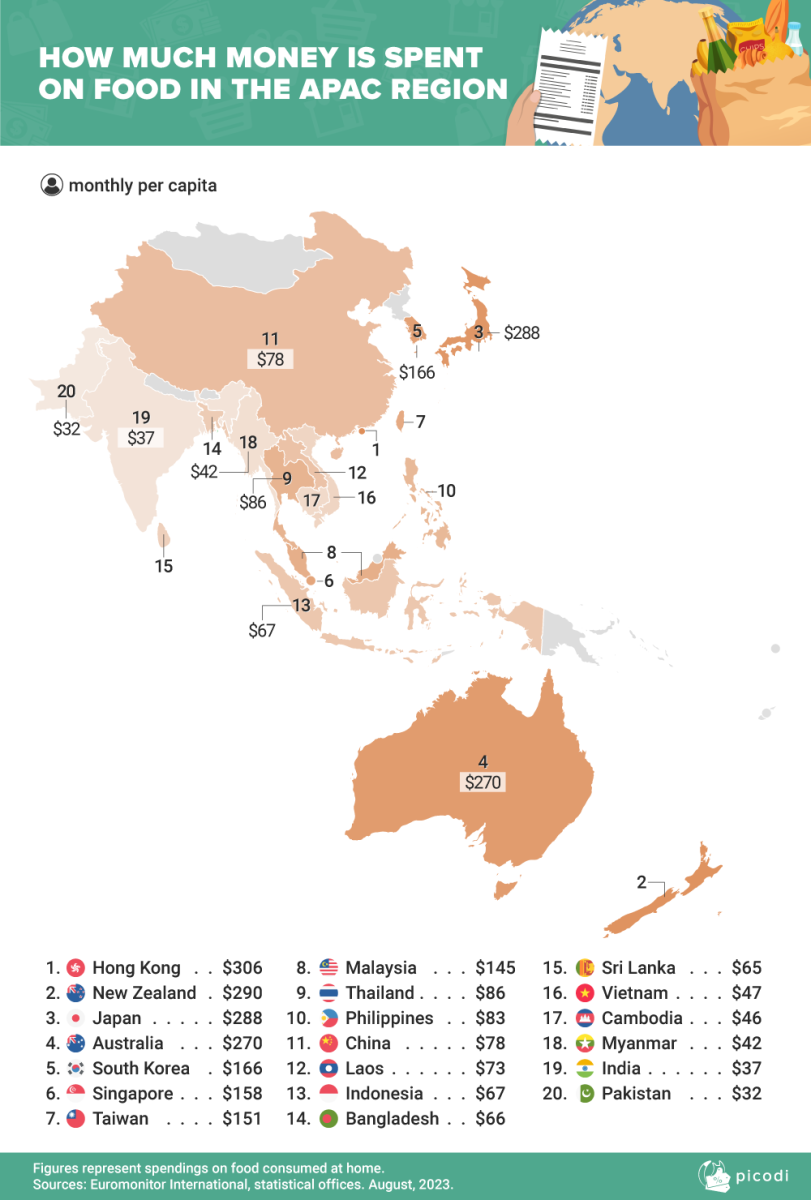
Infograph from Picodi
For grocery spending in APAC, the highest is in Hong Kong ($306/month), followed by New Zealand ($290/month) and Japan ($288/month), which can be explained by the overall high prices in those countries.
The report used the latest household food and non-alcoholic beverages consumption statistics from Euromonitor and official government websites.
In recent inflation figures, core inflation in Singapore eased due to a smaller increase in food prices and a decline in electricity costs.























 Read Here
 Advertise
 Sign Up