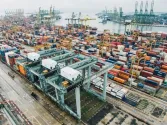
ASEAN PMI hits 50.8 in November
Korea hit a four-year high after posting 51.2 PMI last month.
ASEAN Purchasing Managers’ Index (PMI) hits 50.8 in November, a marginal increase from last month’s 50.4, according to HSBC Research.
PMI is an indicator of the manufacturing sector’s economic health and business conditions.
Japan, Taiwan and Korea’s manufacturing sectors are on a roll after posting 53.6, 56.3, 51.2 respectively with Korea hitting a four-year high.
The Philippines and Thailand registered similar marginal increases at 54.8 and 50 respectively.
However, HSBC Co-Head of Asian Economic Research Frederic Neumann notes that the level of regional growth does not fully reflect the global industrial uptick witnessed in the more developed economies like Germany as certain countries in emerging Asia are not fully benefiting from the global growth.
In November 17, for instance, he pointed out a divergence as emerging Asia posted new export orders at an average of 52 PMI whilst developed markets are on an upward trajectory with an average of 55.
“Still, growth here seems to be holding up well enough: new orders expanded everywhere except for Thailand last month and the ratio of new orders to inventory for EM Asia suggests still solid output growth in the coming months,” he said.
























 Read Here
 Advertise
 Sign Up