Singapore’s equity revival gains pace with more IPOs expected
Family offices and institutional investors are showing “renewed” interest.
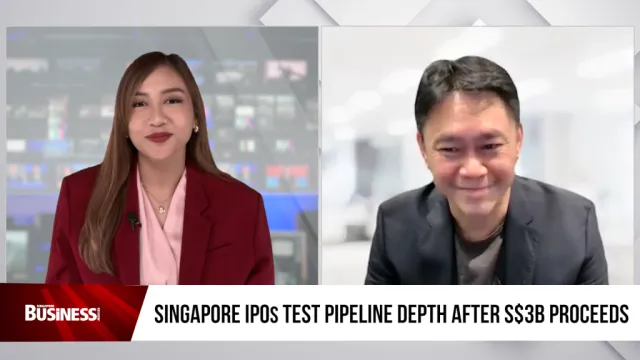
Singapore’s multibillion-dollar push to revive its stock market is starting to show results, with higher trading activity, investors snapping up undervalued shares and a pickup in higher-quality listings this year, market participants said.
The city-state committed $5b to its equity market development programme, with $1.1b and S$2.5b already allocated in two tranches to selected asset managers. Even before the funds were fully deployed, investors had begun paying closer attention to local stocks, said Jason Saw, group head of investment banking at CGS International Holdings Ltd.
Investors have been working “a lot harder” to buy undervalued stocks, Saw told Singapore Business Review. “Liquidity on a year-on-year basis is up around 20%. There’s been a shift in liquidity for sure.”
Singapore’s equity market has long struggled with thin trading and limited investor attention, in part because domestic capital has traditionally flowed into overseas assets.
Saw said the equity programme had helped reverse some of that trend by drawing funds back into local shares and improving market depth. He added that the Singapore Exchange (SGX) has seen an improvement in the quality of companies choosing to list this year.
Initial public offering (IPO) activity rebounded strongly in 2025. Singapore recorded its busiest year for IPOs since 2019, raising more than $2b from nine deals, according to Stephen Bates, a partner and head of deal advisory at KPMG Services Pte. Ltd.
Market sentiment has improved, and companies are more willing to consider SGX again, he said in an emailed reply to questions. He noted that policy changes, including tax incentives and simpler listing rules, have lowered the hurdles for companies weighing a Singapore listing.
Investor interest has also been supported by tweaks to the Global Investor Programme, which grants permanent residency to eligible foreign investors.
Earlier this year, authorities tightened the programme by restricting qualifying investments to equities listed on approved Singapore exchanges. The move narrowed investment choices but encouraged family offices to place capital directly into the local market.
Saw cited the range of companies that have gone public as a sign of renewed confidence. Recent listings include Ultragreen.ai, a healthcare-focused company with high margins that raised about $241m; co-living operator Coliwoo; and Centurion Accommodation REIT, which focuses on student and worker housing.
These listings help build confidence, he said, adding that broader investor and research coverage would be key to sustaining momentum.
Singapore’s equity market has faced structural challenges in recent years. Roughly two-thirds of listed firms have traded below net tangible value, Bates said, discouraging issuers seeking fair valuations.
The market has also been dominated by banks and real estate investment trusts, with fewer technology or biotechnology names compared with regional peers.
“The less diverse mix may also reduce the appeal for global investors and innovative firms,” Bates said. “Thin trading volumes and an ageing retail investor base continue to limit liquidity as well.”
He noted that other Asian exchanges with larger investor bases have often proved more attractive to growth companies.
Despite these constraints, both Saw and Bates said the outlook is improving.
Saw said authorities could build on recent gains by backing Singapore-based companies with global operations and strong governance, helping create the next generation of multinational firms anchored in the city. “That’s the next stage.”
The pickup in IPOs is likely to extend into 2026. Saw said more listings are expected, whilst Bates said the pipeline should widen, liquidity should deepen and sector diversity should improve in the next two years.



















 Read Here
 Advertise
 Sign Up