Singapore and Hong Kong are partners in Chinese firms’ ASEAN push
Chinese companies use Hong Kong to raise capital and manage risk before expanding through Singapore into ASEAN.
Hong Kong believes that it will not lose out its position as the first stop of mainland Chinese companies looking to raise capital and manage risks before they expand into ASEAN, the city's chief of investment promotion said.
Whilst Singapore is considered the gateway city for Chinese companies looking to expand operations in Southeast Asia, Hong Kong will still be where they will raise money and assess risks, said Alpha Lau, director general of InvestHK, the government’s investment promotion agency.
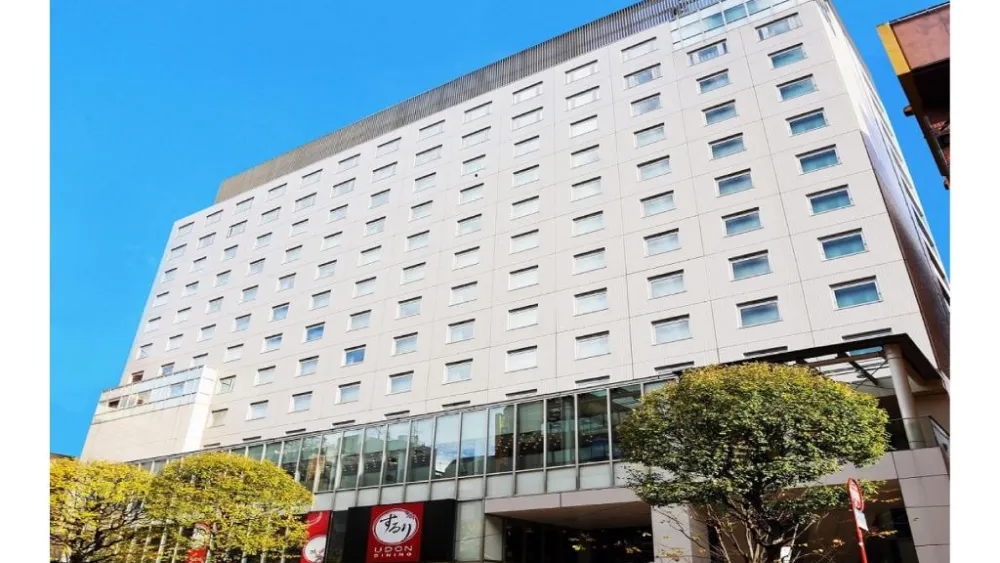
“What we have seen is that companies from China that invest overseas and into ASEAN use Singapore as a platform. Then in the other direction, of course, Singaporean companies and ASEAN companies [looking] to access the Greater Bay Area use Hong Kong as a gateway,” Lau told Singapore Business Review at the sidelines of the South China Morning Post’s GBA ASEAN Summit 2026 held at Fullerton Ocean Park Hotel Hong Kong, 30 June.
Chinese companies have ramped up expansion in markets like Malaysia, Vietnam, Thailand, and Indonesia, Lau said. There, companies not just sell goods but also set up manufacturing operations for technology products and electric vehicles, she said.
Lau cited Hong Kong’s common law system as why Chinese companies go to the city to manage risk and build their management before going to ASEAN. The city also offers access to family offices, wealth companies, and multinational banks for funding, she said.
Hong Kong’s Closer Economic Partnership Arrangement allows companies registered in Hong Kong to import into China or access certain industries in China with less paperwork needed, she added.
Lau said that Hong Kong’s position as Chinese companies’ international springboard is not in question even as other Chinese provinces scale their technology or metallurgy industries, for example.
“I myself just came back from a trip from Shanghai, where they see themselves as the domestic springboard and use Hong Kong as a [connection] to the rest of the world,” she said.
Companies from Chinese provinces are expected to still come to Hong Kong to access foreign capital and use the city as the site of their international headquarters, Lau said.
Further expansion within Hong Kong is centred on the Northern Metropolis, a 30,000 hectare campus located at the northernmost point of Hong Kong, Lau said. The area is just a ten-minute walk from Shenzhen, and plans to house a research and development area, a data centre, advanced logistics, and a university.
“There are also investors looking at building their own technology parks or new residential areas,” Lau said.
Lau likened the Northern Metropolis to Malaysia’s Johor region near Singapore, with Chinese talent from Shenzhen able to cross into Hong Kong easily.
Once built, the Northern Metropolis is expected to house 2.5 million people, according to the Hong Kong-Shenzhen Innovation and Technology Park website in 2026.























 Read Here
 Advertise
 Sign Up