Co-living investment hits $1.4b as market share stalls at 3%
Investors chase 15% returns in a market capped by three-month stay rules.
Singapore's co-living sector recorded $1.4b in investment transactions between 2022 and August 2025, yet the segment still accounts for only around 3% of the city-state's overall living market, according to Knight Frank's From Niche to Core report.
"Co-living today accounts for only around 6% of Singapore's rental stock – and, on my broader estimate, roughly 3% of the overall living market – against a total base of close to 1.5 million public and private residential units," said Kelvin Lim, executive chairman of LHN Limited, and executive chairman and CEO of Coliwoo Holdings Limited.
The report noted that demand capacity for the sector stands at 33,000 beds and keys.
Investor appetite has shifted despite the sector's limited footprint, with 65% of investors now targeting internal rates of return below 15% for Singapore co-living, up from 27% in 2023.
The Serviced Apartments II framework, introduced by the Urban Redevelopment Authority (URA) in December 2023, requires a minimum three-month stay for residential-zoned or long-stay serviced apartments.
Shorter stays remain permitted only under serviced-apartment or hotel-licensed developments.
The city-state hosts between 9,000 and 10,000 co-living keys, concentrated in the Central Region, positioning it as the region's most mature market in regulation, capital depth, and operating standards rather than the largest by volume.
Coliwoo Holdings, one of the market's operators, listed on the SGX Mainboard in November 2025, marking the first listing by a co-living operator. The company reported occupancy of 97.0% in the first half of financial year 2026.
Demand stems from a mix of expatriates, students, and, increasingly, locals, the report said.
Employment Pass holders reached 203,300 in December 2025, whilst student pass holders climbed from around 70,700 in 2023 to approximately 95,300 in 2025. Foreign students represent between 25% and 40% of residents for some operators.
Rental market conditions have supported the sector's growth. URA’s private residential rental index rose 29.7% in 2022 and 8.7% in 2023, before easing to 1.9% in 2024 and rising 1.8% year on year as of the first quarter (Q1).
Private home prices climbed 38.8% over the five years to Q1 2025, whilst foreign buyers face a 60% Additional Buyer's Stamp Duty.
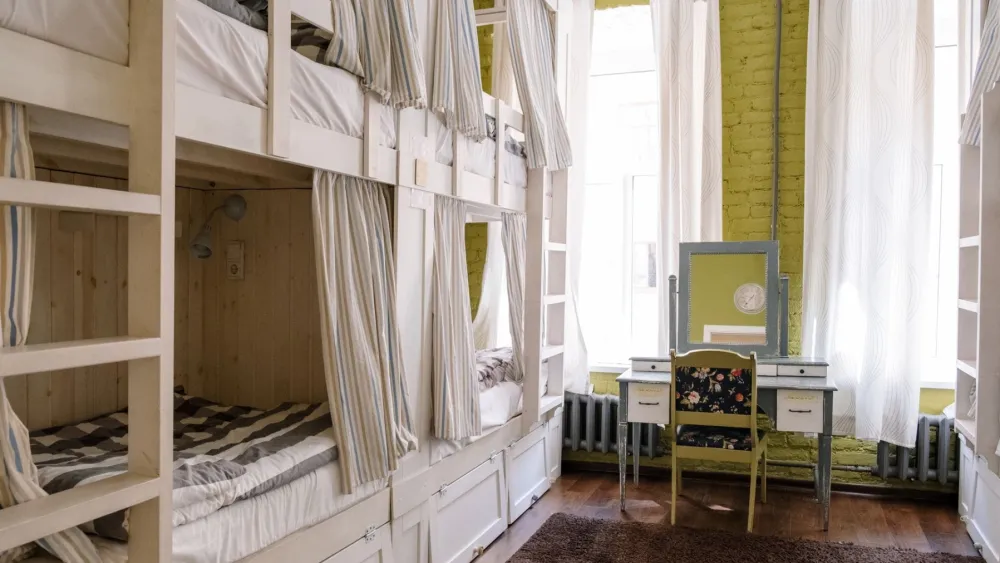
A fully furnished co-living room with an ensuite in Outram costs between $2,650 and $3,000 a month on an all-inclusive basis, a price point that sits close to a comparable condominium master bedroom rental.
Operators have pursued adaptive reuse to expand supply. Macritchie Developments and Coliwoo Holdings acquired the REHAU Building for $40.0m, with plans to convert it into student accommodation managed by Coliwoo whilst retaining ground-floor commercial units.
Coliwoo's ownership structure, as at 31 March 2026, comprised 32% owned properties, 53% leased, and 15% managed.
The operator repositions properties at $50,000 or less per room, with conversions taking around six months and stabilisation a further six months.
The company has identified Jakarta, Bangkok, Kuala Lumpur, and Johor Bahru as near-term expansion targets, with Tokyo, Sydney, and Melbourne under longer-term consideration.
Overseas expansion will rely on joint ventures with local partners, differing from the own-lease-manage model used domestically.
























 Read Here
 Advertise
 Sign Up