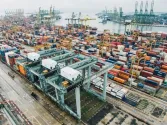
HPH Trust reversed loss with a $325.63m profits in 2019
Lower container throughput eased its cost of services.
Hutchison Port Holdings Trust (HPH Trust) reversed a 2018 loss with a profit of $325.63m (HK$1.82b) in 2019, the company announced. In contrast, revenue dipped 3.1% to $1.99b (HK$11.12b) over the same period.
In Q4, the trust reversed YoY to a $64.53m (HK$361m) profit, although its revenue fell 11% to $476.92m (HK$2.67b).
However, excluding its non-cash impairment losses of $2.2b (HK$12.29b) in 2018, HPH Trust’s profit crashed 29% in Q4 and dropped 10.8% in the whole 2019.
Partly due to lower throughput, as well as lower repair and maintenance, the cost of services it rendered fell 15% YoY to $171.47m (HK$959.3m) in Q4. Other operating expenses also declined 5.4% to $24.60m (HK$137.6m), primarily due to the savings in rent and rates.
The combined container throughput of its Kwai Tsing, Hong Kong container terminals HIT, COSCO-HIT and ACT slipped 9.3% YoY during the quarter, primarily due to the decrease in transshipment cargoes.
Meanwhile, the container throughput of Yantian International Container Terminals (YICT) was 9.2% below last year, primarily driven by the decrease in US and empty cargoes, as a result of the frontloading of US cargoes in the fourth quarter of 2018.
The average revenue per twenty-foot equivalent unit (TEU) for its Hong Kong portfolio fell YoY in Q4, mainly due to an increased transshipment mix and agency fee provision adjustment following the latest tariff negotiation. For China, it grew from last year.
























 Read Here
 Advertise
 Sign Up